
How to Grow Cosmos in Containers the Right Way — Beginner-Proof Step-by-Step

Growing Cosmos in Containers Is Easier Than You Think
If you’ve been wanting to grow cosmos but don’t have a garden bed, good news — a container works just as well, sometimes even better. This guide is for you if you’re a beginner with a balcony, patio, or small outdoor space and you want big, colorful blooms without a lot of fuss.
Here’s what you’ll walk away knowing: which container size and soil mix actually set your cosmos up to thrive, how to plant and care for them so they bloom longer, and how to fix the most common problems before they get out of hand.
No guesswork, no complicated steps — just a clear, practical walkthrough so your container cosmos look great all season long.
Why Cosmos Thrive in Containers
You Might Also Love These Ideas


Key Advantages of Growing Cosmos in Pots
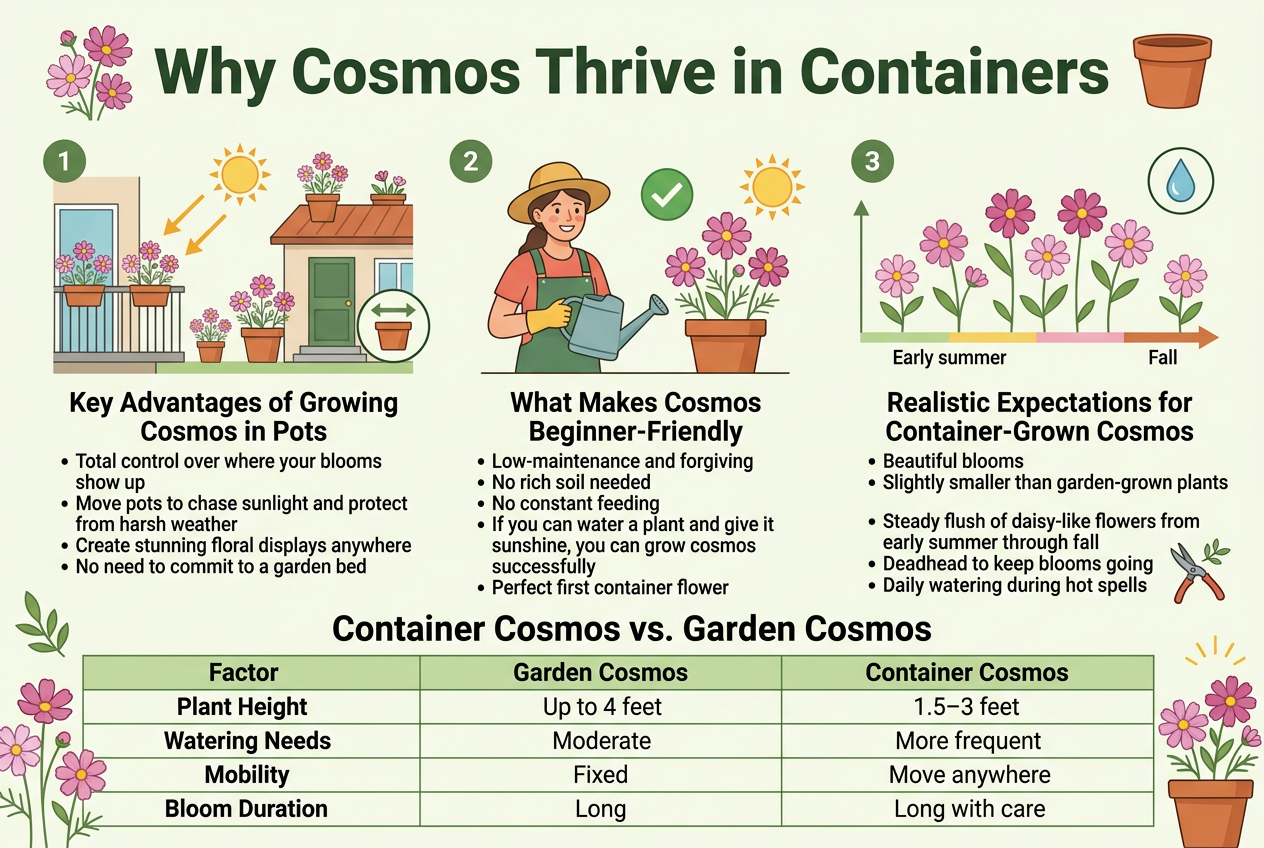
Growing cosmos in containers gives you total control over where your blooms show up — your balcony, patio, doorstep, or rooftop all become fair game. You can move your pots to chase sunlight, protect them from harsh weather, and create stunning floral displays anywhere you want without committing to a garden bed.
What Makes Cosmos Beginner-Friendly
Cosmos are genuinely low-maintenance flowers that practically grow themselves once you get them started. They don’t demand rich soil, constant feeding, or complicated care routines. If you can water a plant and give it sunshine, you can grow cosmos successfully. They’re forgiving of beginner mistakes, which makes them a perfect first container flower for you.
Realistic Expectations for Container-Grown Cosmos
Your container cosmos will bloom beautifully, but they’ll stay slightly smaller than garden-grown plants — and that’s completely fine for pots. You can expect a steady flush of daisy-like flowers from early summer right through fall if you keep up with deadheading. Plan for daily watering during hot spells since containers dry out faster than ground soil.
| Factor | Garden Cosmos | Container Cosmos |
|---|---|---|
| Plant Height | Up to 4 feet | 1.5–3 feet |
| Watering Needs | Moderate | More frequent |
| Mobility | Fixed | Move anywhere |
| Bloom Duration | Long | Long with care |
Choosing the Right Container for Healthy Growth
Ideal Pot Size to Support Strong Root Development
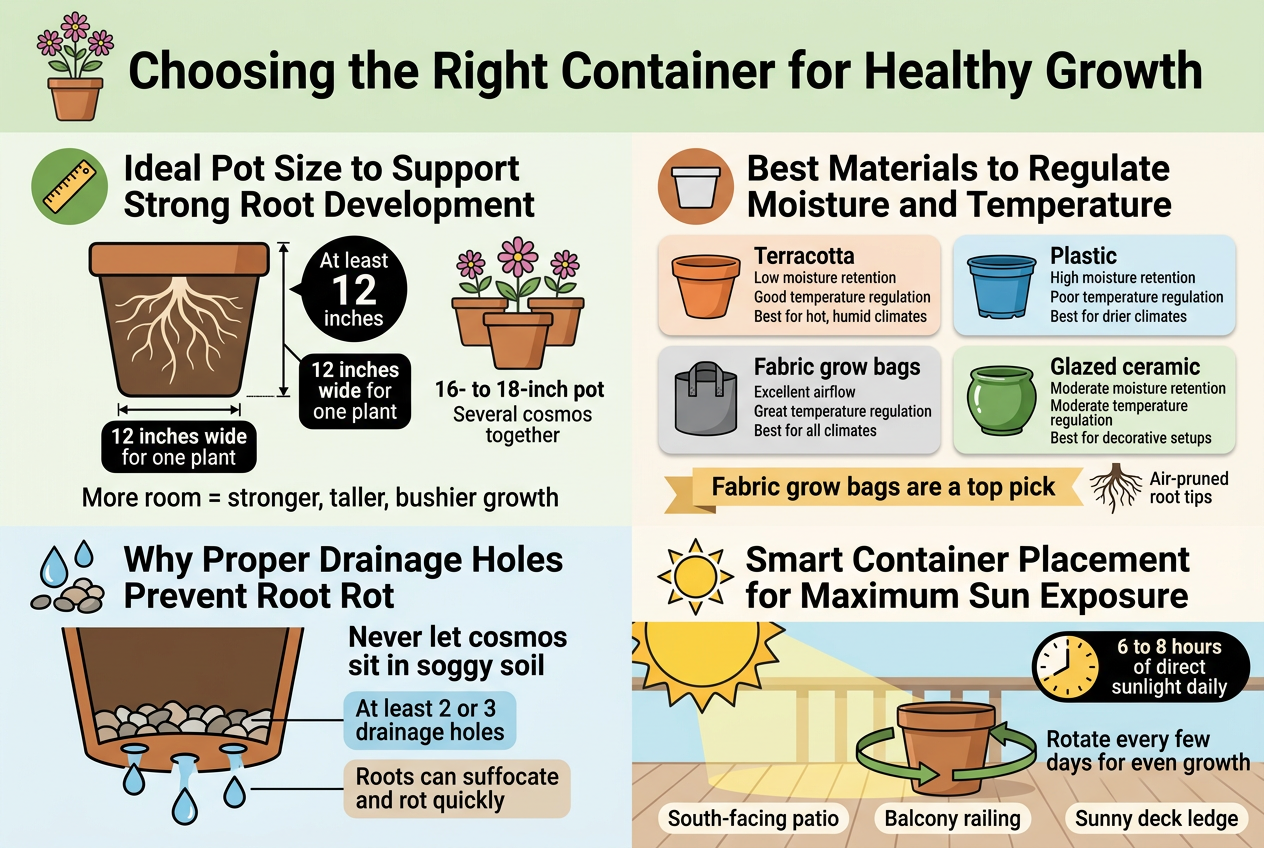
Pick a container that’s at least 12 inches deep and 12 inches wide for a single cosmos plant. If you want to grow several together, go for a 16- to 18-inch pot. Cosmos roots need enough room to spread without competing, which directly affects how tall and bushy your plant grows.
Best Materials to Regulate Moisture and Temperature
Your choice of pot material makes a real difference in how your cosmos performs all season long.
| Material | Moisture Retention | Temperature Regulation | Best For |
|---|---|---|---|
| Terracotta | Low (dries fast) | Good (stays cool) | Hot, humid climates |
| Plastic | High | Poor (heats up fast) | Drier climates |
| Fabric grow bags | Excellent airflow | Great | All climates |
| Glazed ceramic | Moderate | Moderate | Decorative setups |
Fabric grow bags are a top pick because they air-prune roots naturally, stopping root circling before it starts.
Why Proper Drainage Holes Prevent Root Rot
Your cosmos absolutely cannot sit in soggy soil. Make sure your container has at least two or three drainage holes at the bottom. If water pools around the roots, they suffocate quickly and rot sets in fast. Place a few pebbles at the base to keep drainage holes clear.
Smart Container Placement for Maximum Sun Exposure
Your cosmos need a spot that gets a full six to eight hours of direct sunlight daily. A south-facing patio, balcony railing, or sunny deck ledge works perfectly. You can also rotate your pot every few days so every side of the plant gets even light, keeping growth balanced and upright.
Selecting the Best Cosmos Varieties for Pots
Compact Varieties That Stay Manageable in Containers
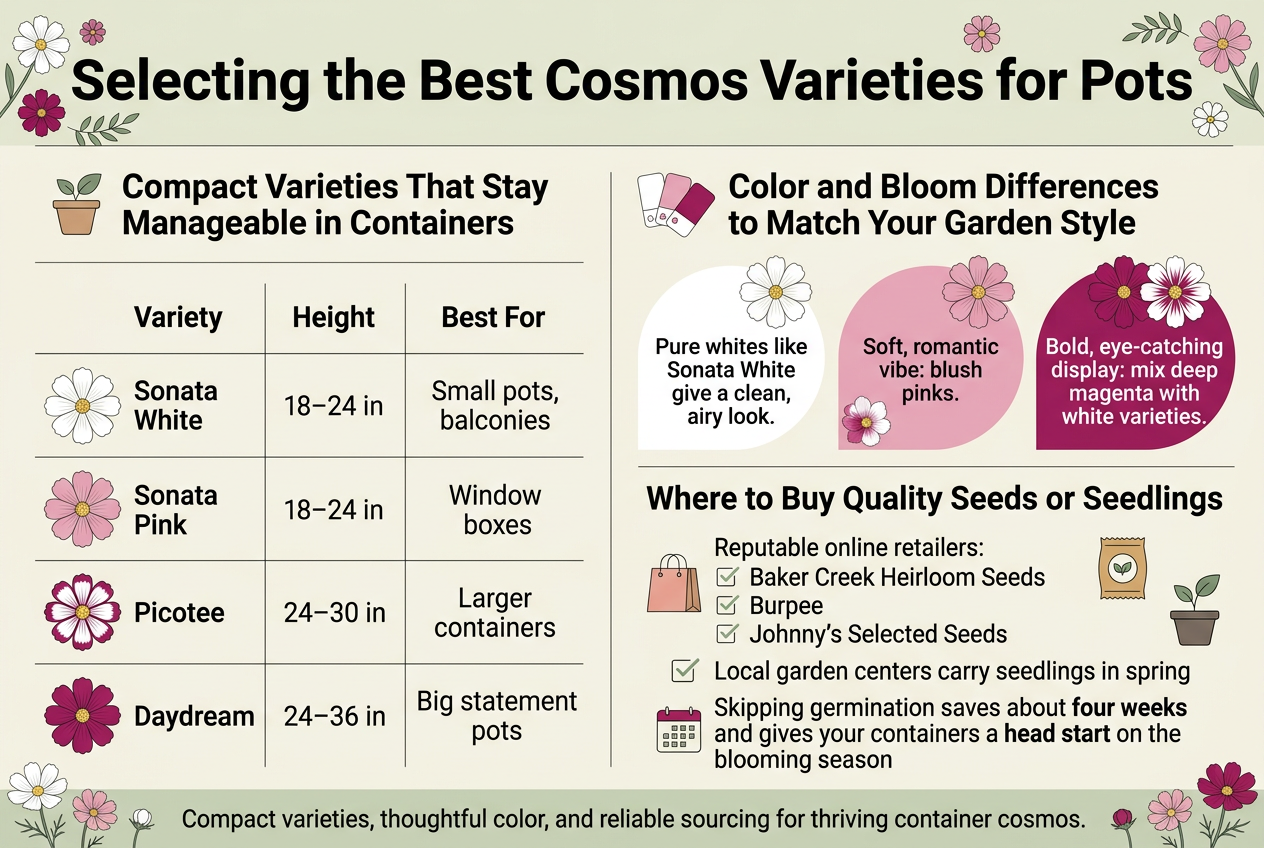
When you’re growing cosmos in pots, variety selection makes or breaks your success. Dwarf and compact types like Cosmos ‘Sonata’ and ‘Picotee’ stay under 24 inches tall, making them perfect for containers without flopping over or crowding out everything around them.
| Variety | Height | Best For |
|---|---|---|
| Sonata White | 18–24 in | Small pots, balconies |
| Sonata Pink | 18–24 in | Window boxes |
| Picotee | 24–30 in | Larger containers |
| Daydream | 24–36 in | Big statement pots |
Color and Bloom Differences to Match Your Garden Style
Your color palette completely changes the mood of your space. Pure whites like Sonata White give a clean, airy look, while deep crimsons and bi-color blooms like Picotee add drama. If you want a soft, romantic vibe, go for blush pinks. For a bold, eye-catching container display, mix deep magenta with white varieties together.
Where to Buy Quality Seeds or Seedlings
Your best bet for reliable seeds is reputable online retailers like Baker Creek Heirloom Seeds, Burpee, or Johnny’s Selected Seeds. Local garden centers carry seedlings in spring if you’d rather skip germination entirely, which saves you about four weeks of waiting and gives your containers a head start on the blooming season.
Getting the Soil Mix Right from the Start
Why Standard Potting Mix Works Better Than Garden Soil
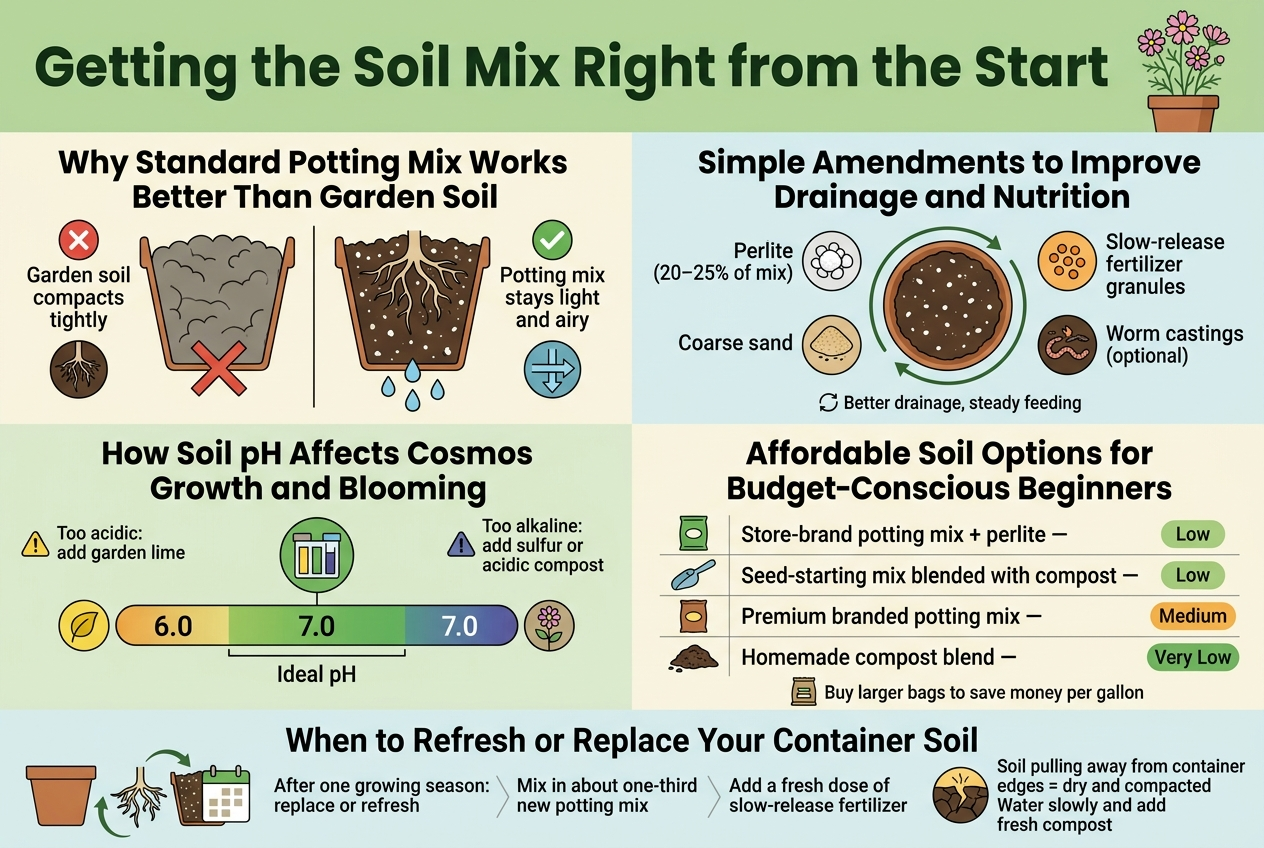
Garden soil compacts tightly inside pots, suffocating your cosmos roots and blocking the drainage they desperately need. A quality potting mix stays light and airy, letting roots spread freely while excess water escapes easily — giving your cosmos the breathable environment they need to grow strong and flower heavily all season long.
Simple Amendments to Improve Drainage and Nutrition
Your standard potting mix is a solid starting point, but a few easy tweaks make a big difference. Mix in roughly 20–25% perlite to boost drainage and prevent soggy roots. Toss in a small handful of slow-release granular fertilizer at planting time, and your cosmos will have a steady, gentle nutrient supply without you needing to fuss over feeding every week.
- Perlite (20–25% of mix): Keeps soil from compacting and improves airflow around roots
- Coarse sand: Adds extra drainage if your container tends to hold moisture
- Slow-release fertilizer granules: Feeds your plants steadily over 3–4 months
- Worm castings (optional): A gentle, natural way to boost soil biology and plant health
How Soil pH Affects Cosmos Growth and Blooming
Cosmos grow best when your soil pH sits between 6.0 and 7.0 — slightly acidic to neutral. When the pH drifts outside that range, your plants struggle to pull in nutrients even when those nutrients are sitting right there in the soil. You might notice yellowing leaves or weak blooming that makes no sense despite regular watering and feeding. A simple, inexpensive soil pH test kit from your local garden center takes the guesswork out completely. If your soil reads too acidic, work in a little garden lime. If it’s running too alkaline, a small amount of sulfur or acidic compost brings it back into the sweet spot for your cosmos.
Affordable Soil Options for Budget-Conscious Beginners
Good soil doesn’t have to cost a lot. Here are some practical, wallet-friendly options worth considering:
| Option | Cost Level | What Makes It Work |
|---|---|---|
| Store-brand potting mix + perlite | Low | Lightweight and widely available |
| Seed-starting mix blended with compost | Low | Fine texture, good for young seedlings |
| Premium branded potting mix | Medium | Pre-amended, saves you extra steps |
| Homemade compost blend | Very Low | Nutrient-rich if your compost is well-rotted |
Buying potting mix in larger bags almost always saves you money per gallon compared to smaller bags. If you have multiple containers, splitting a large bag across several pots makes solid financial sense without cutting corners on your cosmos.
When to Refresh or Replace Your Container Soil
Your container soil doesn’t last forever. After one full growing season, it breaks down, loses structure, and gets depleted of nutrients — meaning your cosmos in year two start at a disadvantage before they even germinate. At the start of each new growing season, empty your containers, shake off the old roots, and either replace the soil entirely or refresh it by blending in about one-third new potting mix along with a fresh dose of slow-release fertilizer. If you notice your soil pulling away from the container edges during the growing season, that’s a clear sign it has dried out and compacted — water it slowly to help it rehydrate, and consider working in a little fresh compost to restore its texture and keep your cosmos thriving.
Planting Cosmos Step by Step
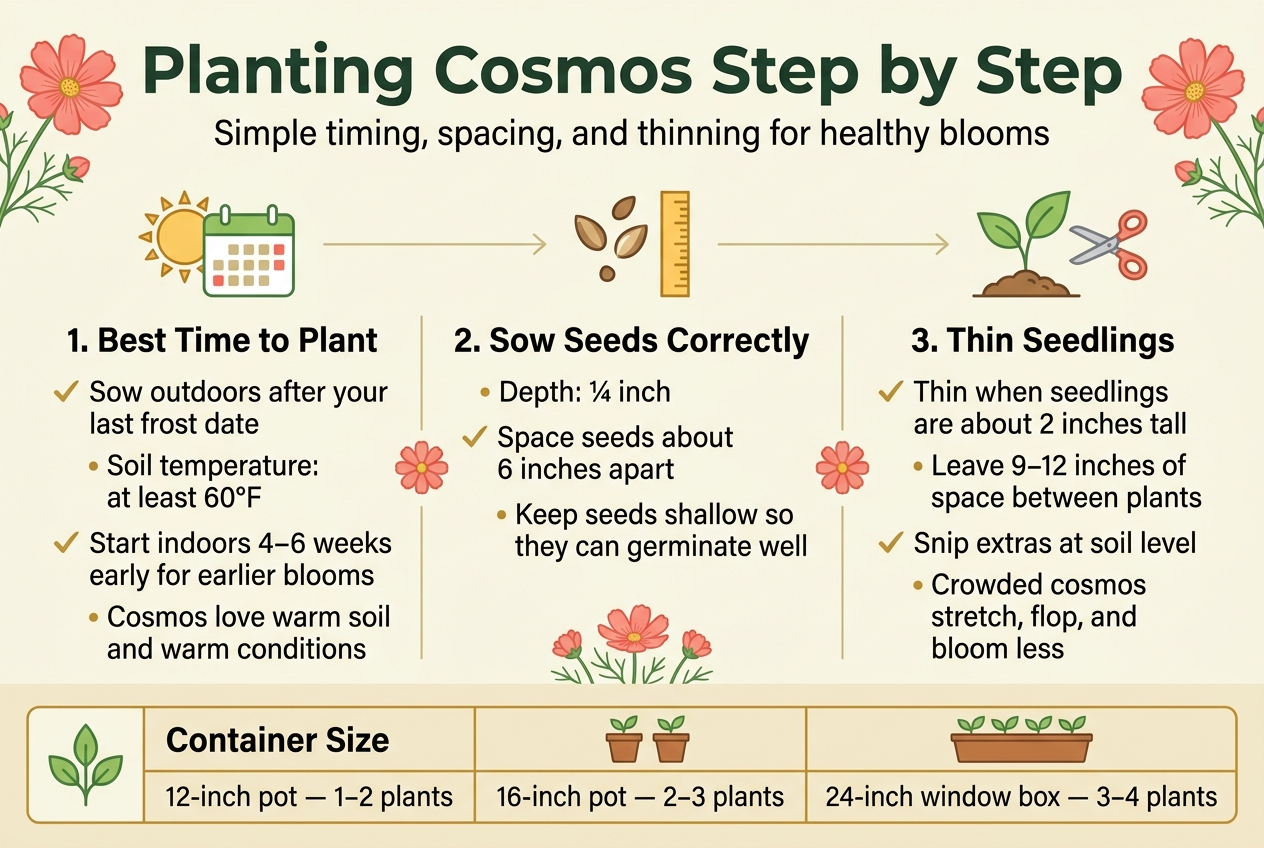
Best Time of Year to Plant for Optimal Blooms
Sow your cosmos seeds outdoors after your last frost date when soil temperatures hit at least 60°F. If you want earlier blooms, start seeds indoors 4–6 weeks before that date. Cosmos love warm conditions, so rushing them into cold soil only slows them down.
How Deep and Far Apart to Sow Seeds Correctly
Press your seeds about ¼ inch deep into the soil — cosmos seeds are tiny, so going deeper than that can prevent germination. Space seeds roughly 6 inches apart in your container to give each seedling enough room to establish roots without competing right away.
Thinning Seedlings to Give Each Plant Room to Flourish
Once your seedlings reach about 2 inches tall, thin them so each plant has at least 9–12 inches of breathing room. Snip extras at soil level rather than pulling them out, which can disturb neighboring roots. Crowded cosmos stretch, flop, and bloom less, so your patience here pays off beautifully.
| Container Size | Recommended Plants |
|---|---|
| 12-inch pot | 1–2 plants |
| 16-inch pot | 2–3 plants |
| 24-inch window box | 3–4 plants |
Watering and Feeding Your Container Cosmos
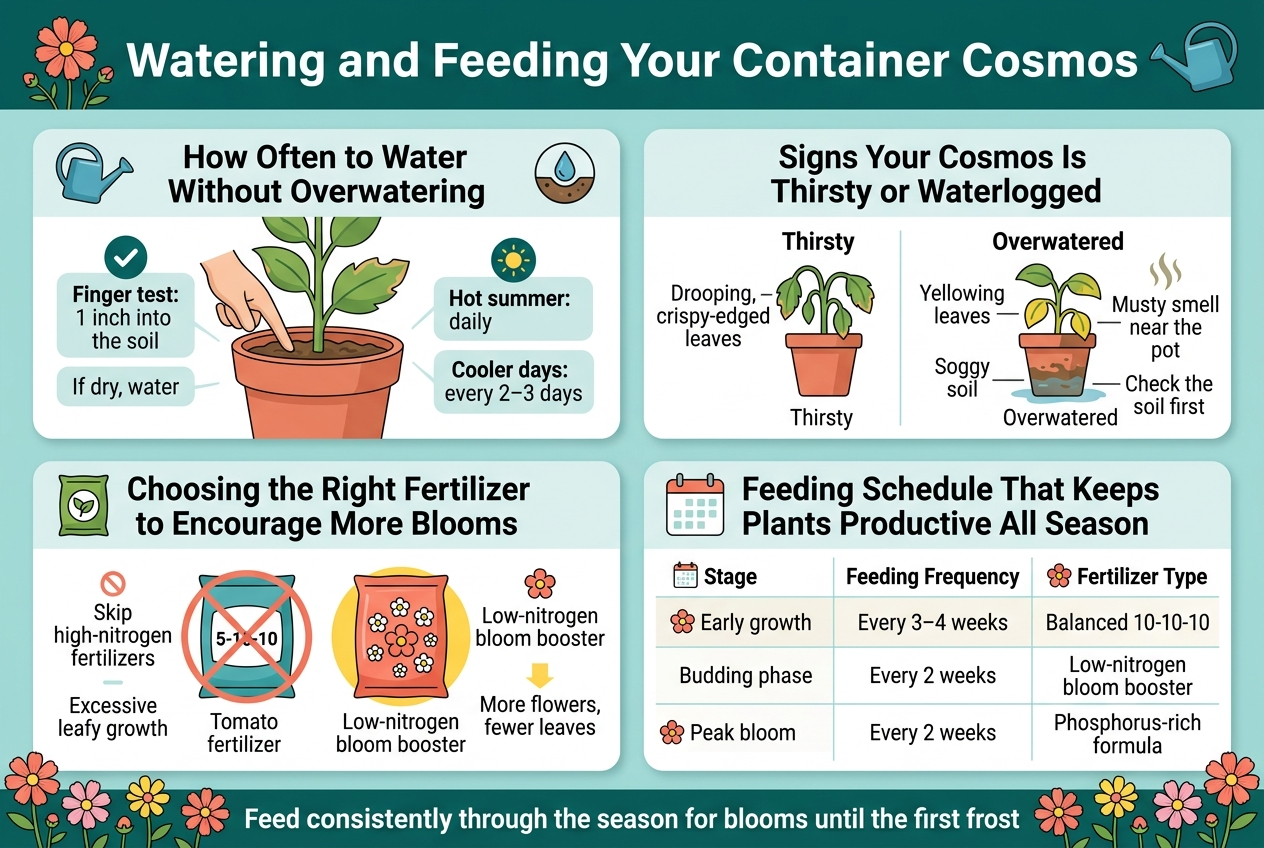
How Often to Water Without Overwatering
Stick your finger about an inch into the soil — if it feels dry, it’s time to water your cosmos. In hot summer months, your container plants may need watering daily, while cooler days might stretch that to every two or three days.
Signs Your Cosmos Is Thirsty or Waterlogged
Your cosmos will tell you what it needs if you pay attention. Drooping, crispy-edged leaves mean it’s thirsty, while yellowing leaves, soggy soil, or a musty smell near the pot signal overwatering. Always check the soil before reaching for the watering can.
Choosing the Right Fertilizer to Encourage More Blooms
Skip the high-nitrogen fertilizers — they’ll push your cosmos to grow lots of lush leaves but very few flowers. Instead, reach for a low-nitrogen, bloom-boosting formula like a 5-10-10 or tomato fertilizer, which nudges your plant toward producing more of those gorgeous daisy-like blooms you’re after.
Feeding Schedule That Keeps Plants Productive All Season
| Stage | Feeding Frequency | Fertilizer Type |
|---|---|---|
| Early growth | Every 3–4 weeks | Balanced 10-10-10 |
| Budding phase | Every 2 weeks | Low-nitrogen bloom booster |
| Peak bloom | Every 2 weeks | Phosphorus-rich formula |
Feed your cosmos consistently through the season, and you’ll keep blooms coming right up until the first frost hits your patio.
Keeping Your Cosmos Blooming Longer
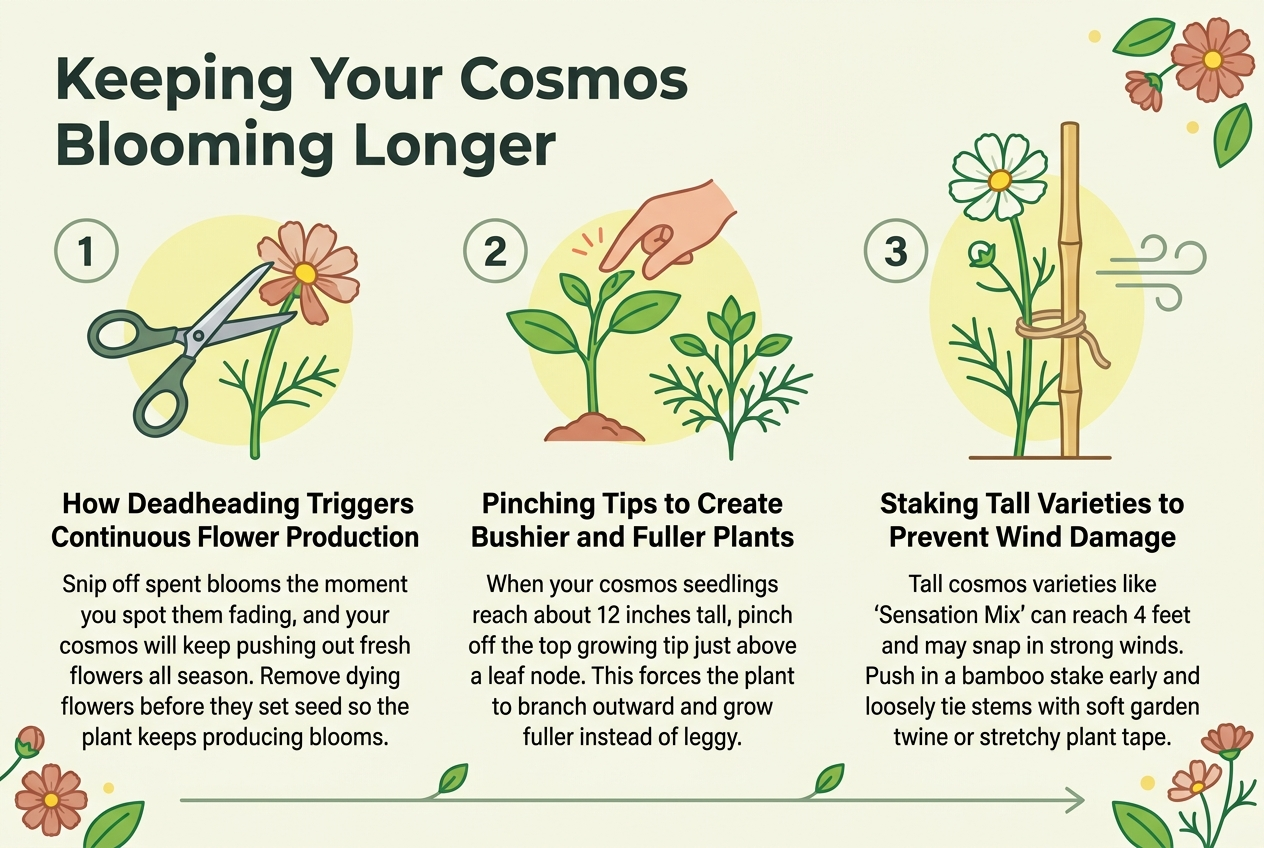
How Deadheading Triggers Continuous Flower Production
Snip off spent blooms the moment you spot them fading, and your cosmos will keep pushing out fresh flowers all season. When you remove dying flowers before they set seed, you’re basically telling the plant its job isn’t done yet — so it keeps producing blooms to try again.
Pinching Tips to Create Bushier and Fuller Plants
When your cosmos seedlings reach about 12 inches tall, pinch off the top growing tip just above a leaf node. This small move forces your plant to branch outward rather than shooting straight up, giving you a fuller, more flower-packed plant instead of a leggy one.
Staking Tall Varieties to Prevent Wind Damage
Tall cosmos varieties like ‘Sensation Mix’ can easily hit 4 feet, making them vulnerable to snapping in strong winds. Push a bamboo stake into your container soil early — before stems get too heavy — and loosely tie stems with soft garden twine or stretchy plant tape so they can still move naturally without breaking.
Solving Common Container Cosmos Problems
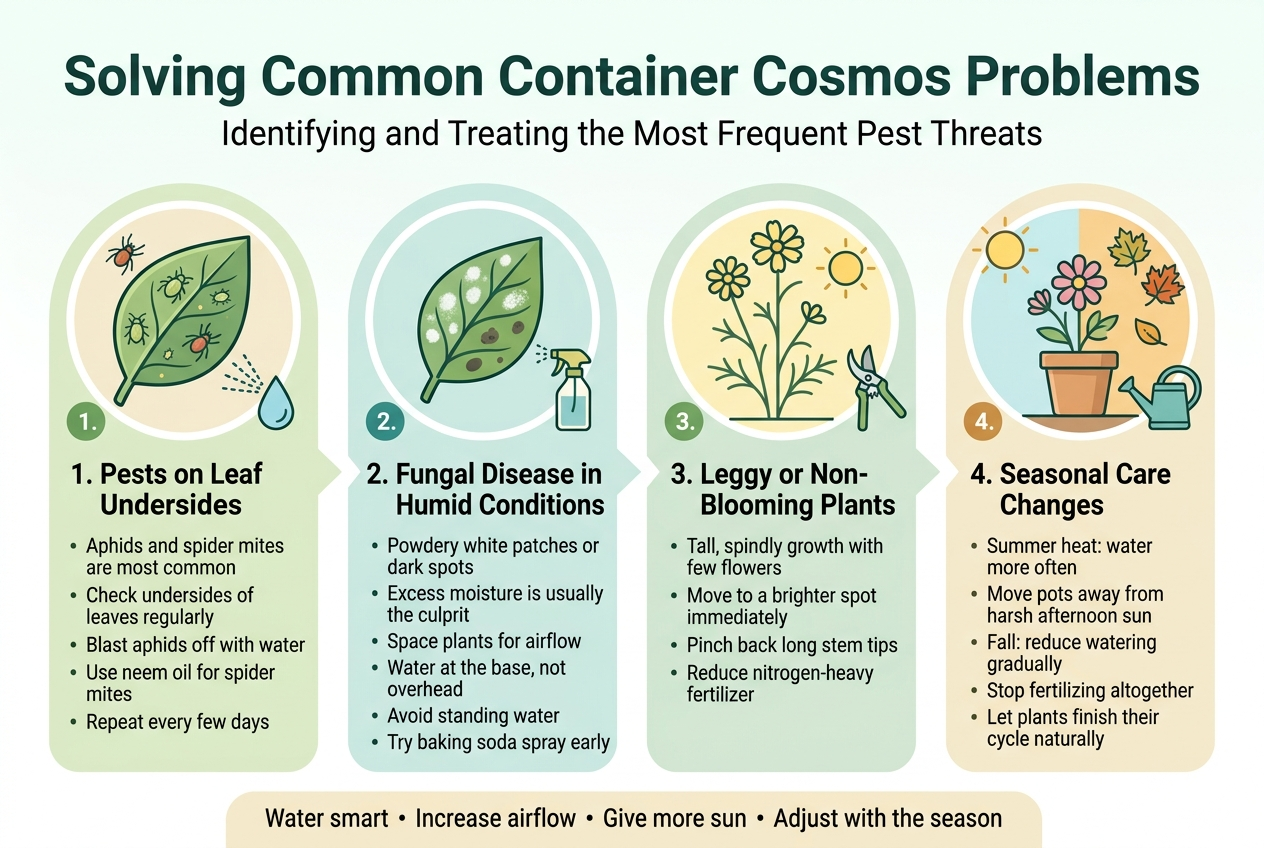
Identifying and Treating the Most Frequent Pest Threats
Aphids and spider mites are the two pests you’ll spot most often on your container cosmos. Check the undersides of leaves regularly — that’s where they hide. A strong blast of water knocks aphids off fast, and neem oil spray handles spider mites well. Repeat every few days until they’re gone.
Preventing Fungal Disease in Humid Conditions
If your cosmos leaves start showing powdery white patches or dark spots, excess moisture is usually the culprit. Space your plants so air moves freely between them, water at the base rather than overhead, and avoid letting the pot sit in standing water. A simple baking soda spray works wonders early on.
Fixing Leggy or Non-Blooming Plants Quickly
When your cosmos grows tall and spindly with few flowers, it’s screaming for more sunlight. Move your container to a brighter spot immediately. Pinch back the tips of long stems to encourage bushier growth, and cut back on nitrogen-heavy fertilizer — too much of it pushes leaves over blooms every single time.
Adjusting Care When Seasons Change
As temperatures shift, your cosmos needs different care. When summer heat peaks, water more frequently and move pots away from harsh afternoon sun. As fall arrives, reduce watering gradually and stop fertilizing altogether. Your plants will naturally slow down, so let them finish their cycle gracefully rather than pushing growth they can’t sustain.


