
10 Stunning Under Deck Skirting Ideas to Enhance Your Outdoor Space

Last spring, my neighbor Tom spent $340 on lattice skirting materials and transformed his unsightly under-deck eyesore into an attractive storage area that added $3,200 to his home appraisal while solving his pest problems and creating 180 square feet of protected storage space. His secret? Understanding that under deck skirting isn’t just about hiding ugly space—it’s about creating functional areas that boost curb appeal while solving real maintenance and pest issues.
Cheap skirting looks obviously DIY and creates ventilation problems. But strategic material choices—like properly spaced lattice, attractive composite panels, or creative stone veneer—hide structural elements while maintaining airflow and providing easy access for maintenance.
Ready to transform that ugly under-deck space into an attractive, functional area that boosts your property value? These 10 proven solutions work for any deck height, budget, or home style.


1) Vertical cedar board skirting with a natural finish
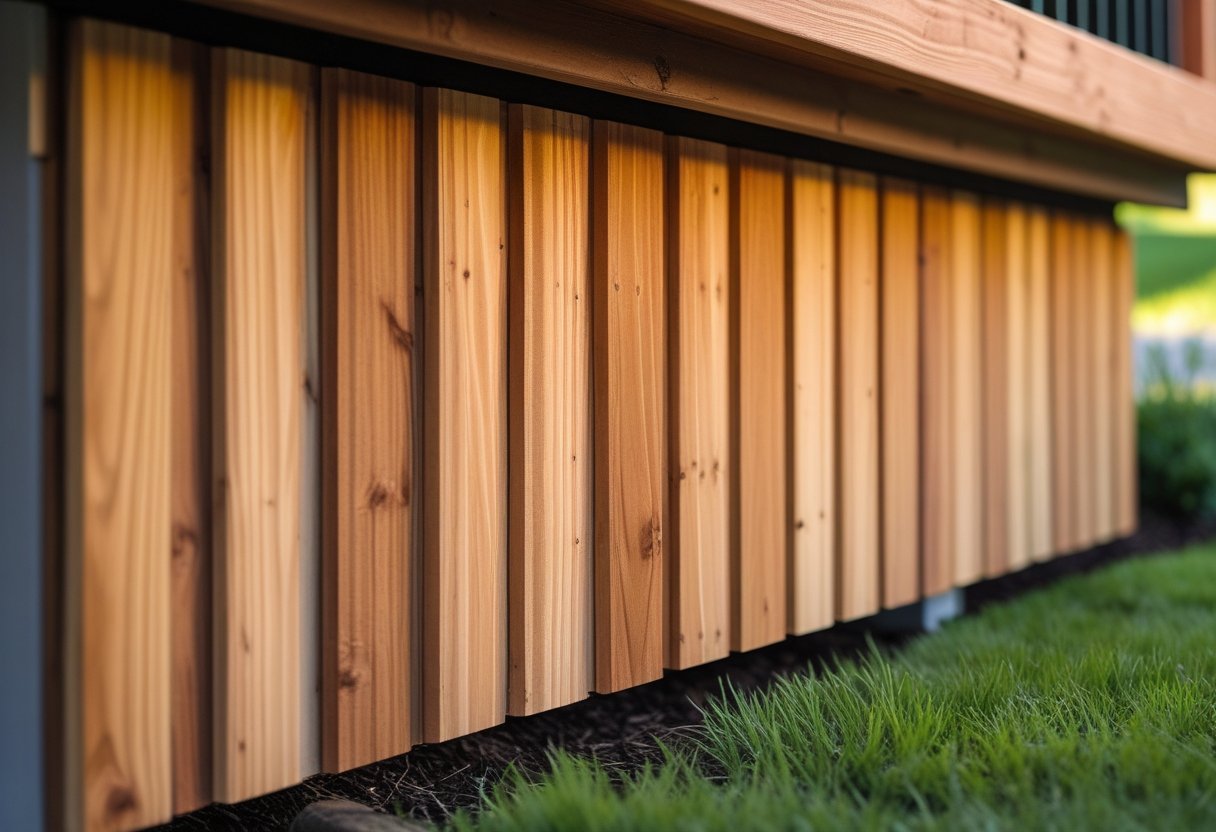
This style uses narrow cedar boards placed vertically under the deck. It creates a clean, simple look that blends well with outdoor spaces.
Cedar is durable and naturally resistant to decay and insects. The natural finish shows the wood’s grain and color clearly.
It provides good airflow under the deck while hiding the empty space. This option is both practical and visually appealing. For more ideas, see vertical deck skirting options.
2) Stone veneer panels for a durable, elegant look
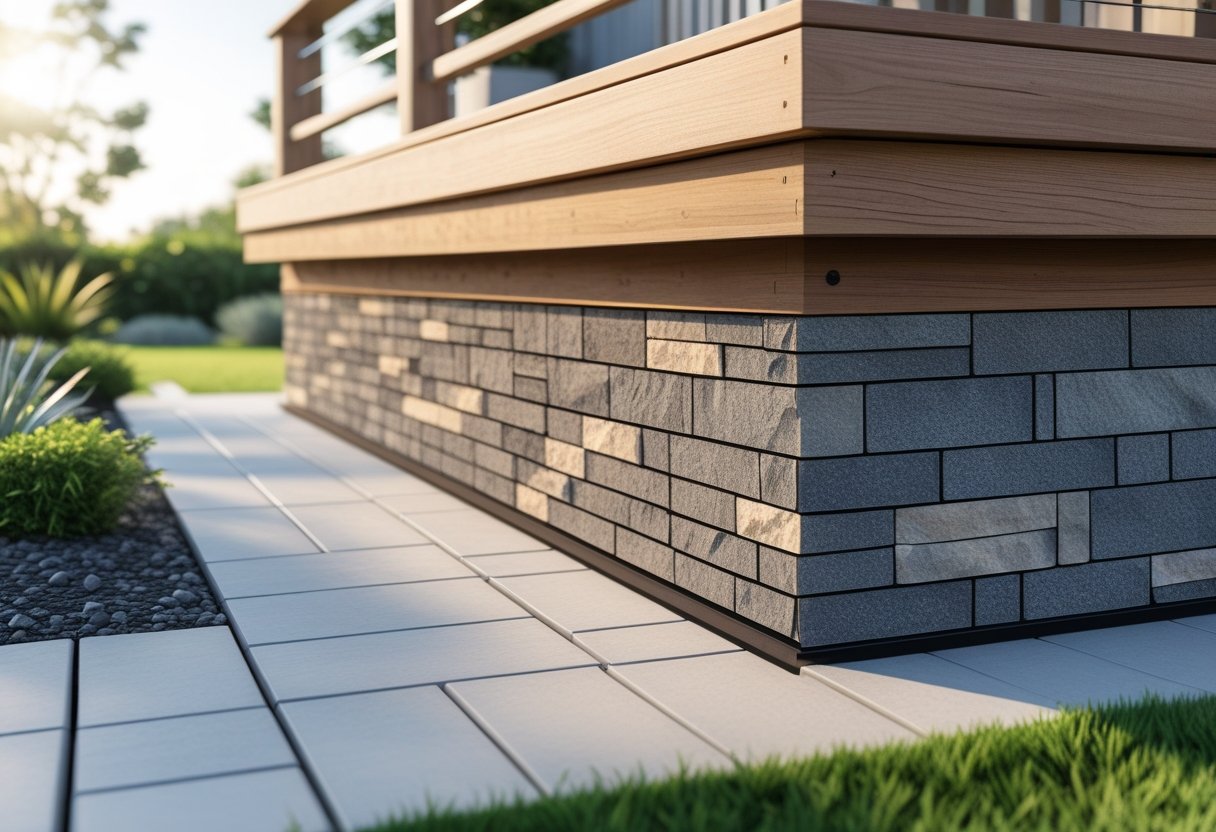
Stone veneer panels offer a strong and attractive way to cover the space under a deck. They create a natural stone appearance without the heavy weight or high cost of real stone.
This option is low maintenance and built to last, making it practical for outdoor use. Many choose stone veneer panels to add a clean, modern feel to their decks.
For a project guide or ideas, stone veneer panels are a popular choice among DIYers and professionals alike. See more about stone veneer panels here.
3) Composite lattice panels in a modern geometric pattern
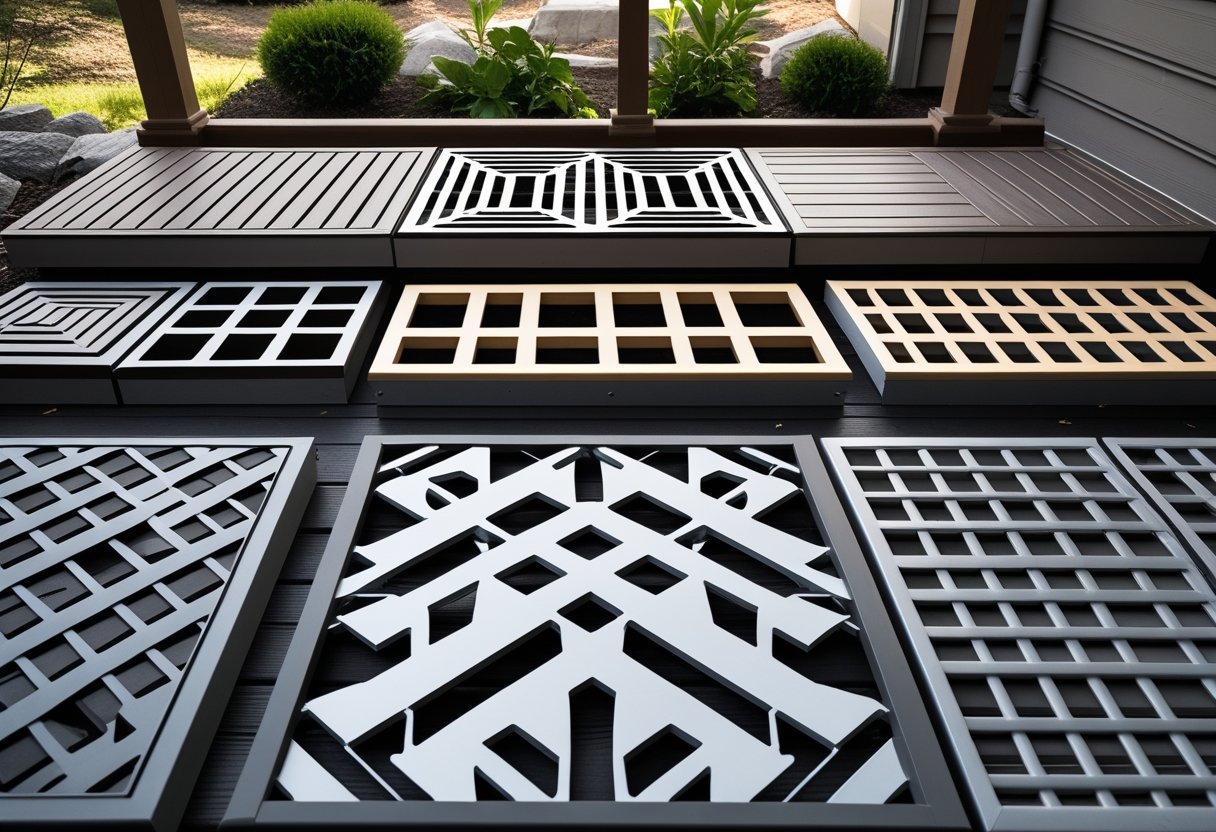
Composite lattice panels offer a durable option for under deck skirting. They resist rot and require less maintenance than wood.
Using modern geometric patterns adds a clean, updated look to the space. These designs often feature squares, diamonds, or hexagons.
This style can enhance a home’s appearance while providing good ventilation and keeping debris out. Composite panels are available in various colors and sizes to fit different needs. For options, see composite lattice panels.
4) Horizontal wood slats stained dark for contemporary style
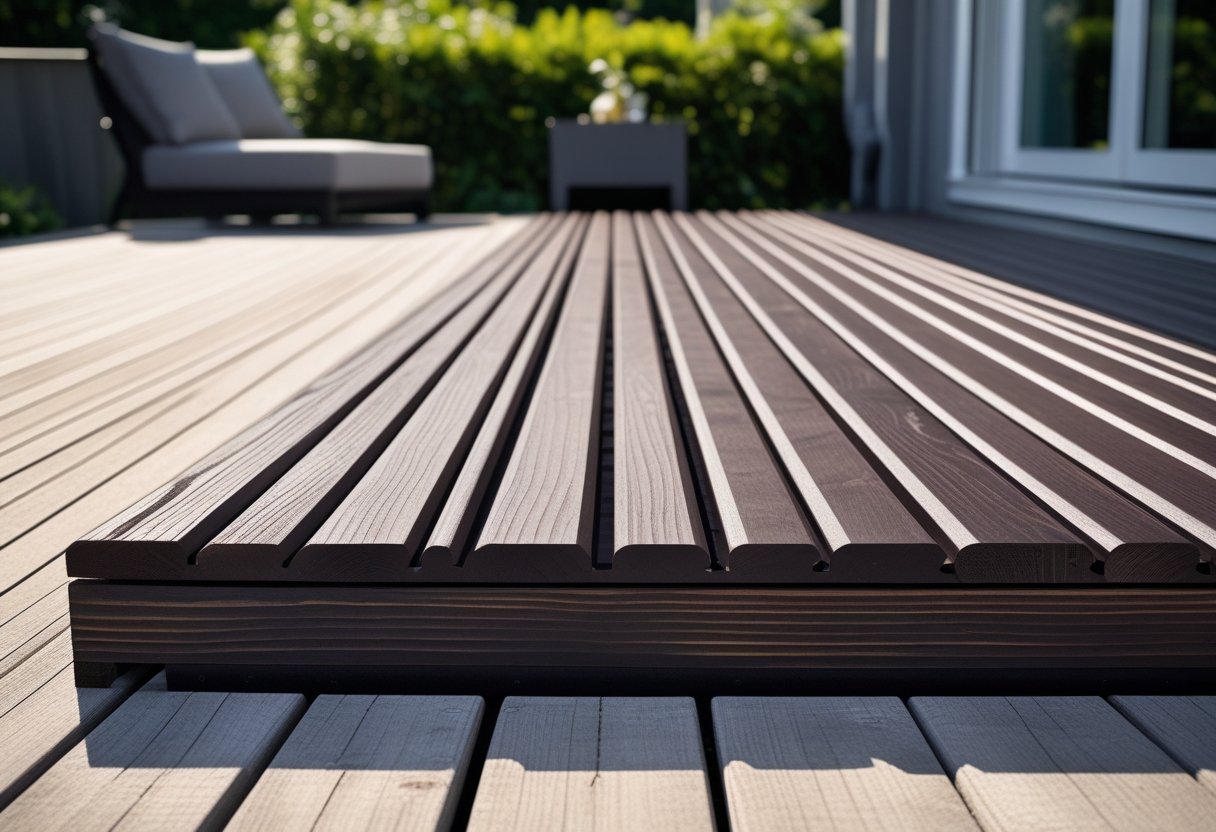
Using horizontal wood slats stained in a dark color creates a sleek, modern look under the deck. This style adds clean lines that complement contemporary homes.
The dark stain highlights the wood grain while hiding dirt and wear. It also offers a strong contrast with lighter deck materials.
This option is durable and easy to install. It provides good airflow, which helps prevent moisture buildup under the deck. More ideas can be found in the 13 Deck Skirting Ideas To Protect Your Deck guide.
5) Vinyl tongue-and-groove skirting with ventilation
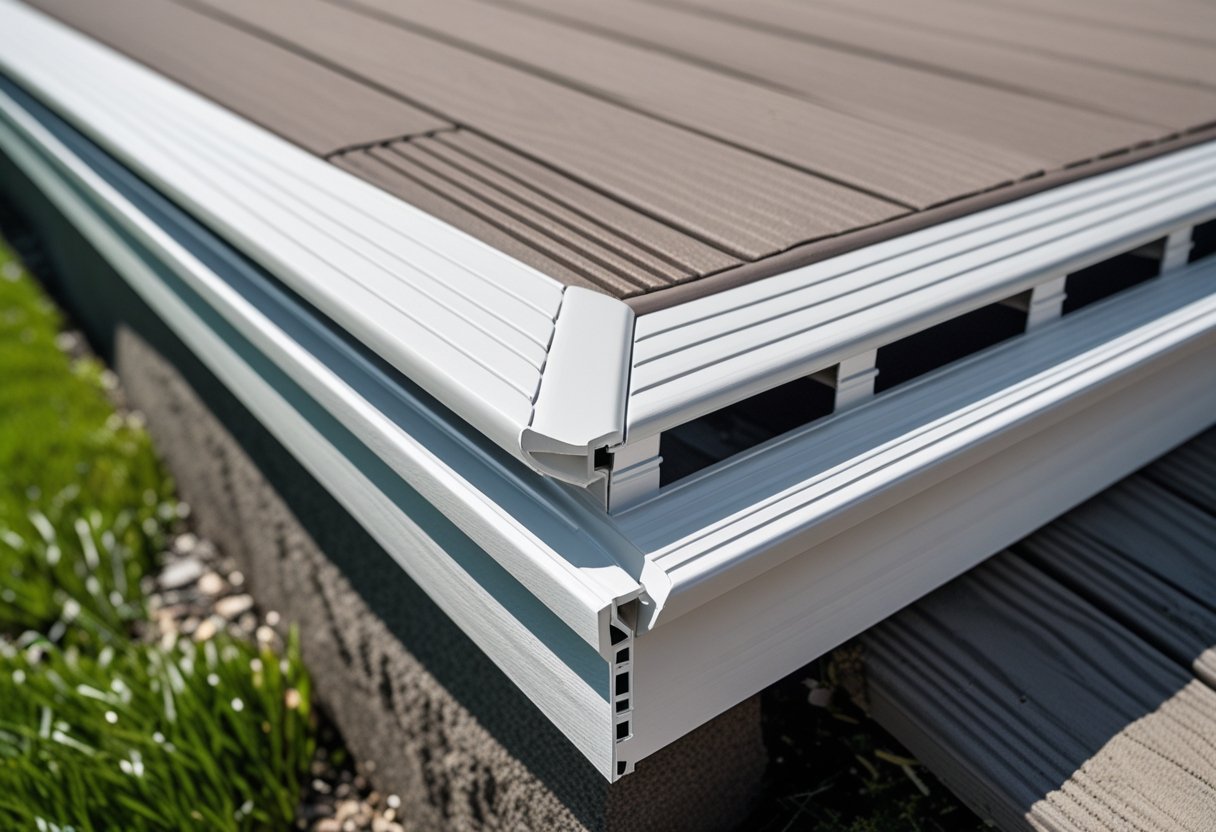
Vinyl tongue-and-groove skirting offers a clean and durable look for under decks. Its interlocking design creates tight seams that resist moisture and pests.
Adding ventilation helps prevent mold and wood rot by allowing air to flow beneath the deck. This keeps the space dry and extends the deck’s lifespan.
This type of skirting is low maintenance and easy to install, making it a practical choice for many homeowners. For more ideas, see 33 inexpensive deck skirting ideas.
6) Metal mesh skirting for industrial aesthetic and airflow
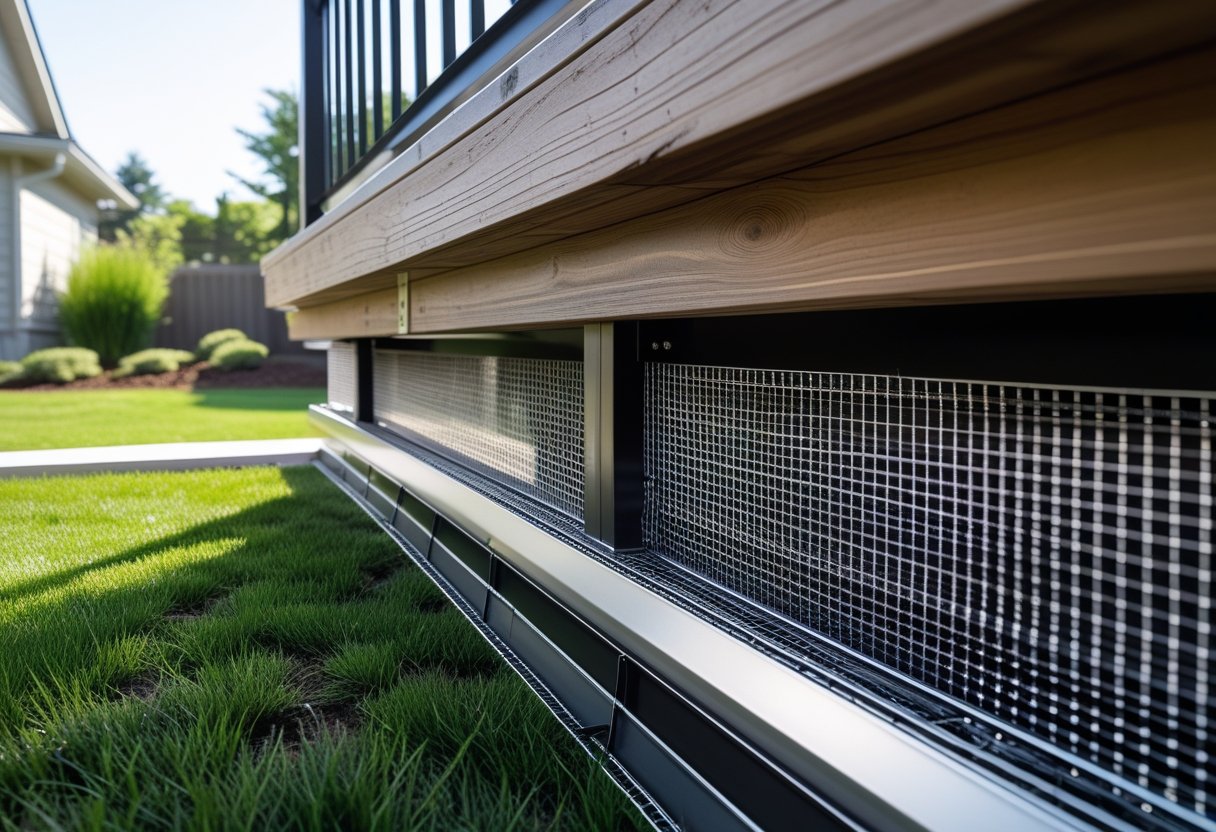
Metal mesh skirting offers a modern, industrial look. It works well for those who want a clean, simple design under their deck.
The mesh allows air to flow freely, preventing moisture buildup and keeping the space dry. It also keeps out larger pests while letting light and air pass through.
This material is durable and easy to cut to size. It can be a practical choice for a low-maintenance deck skirting solution like those found in metal deck skirting ideas.
7) Treated pine framed with decorative trellis inserts
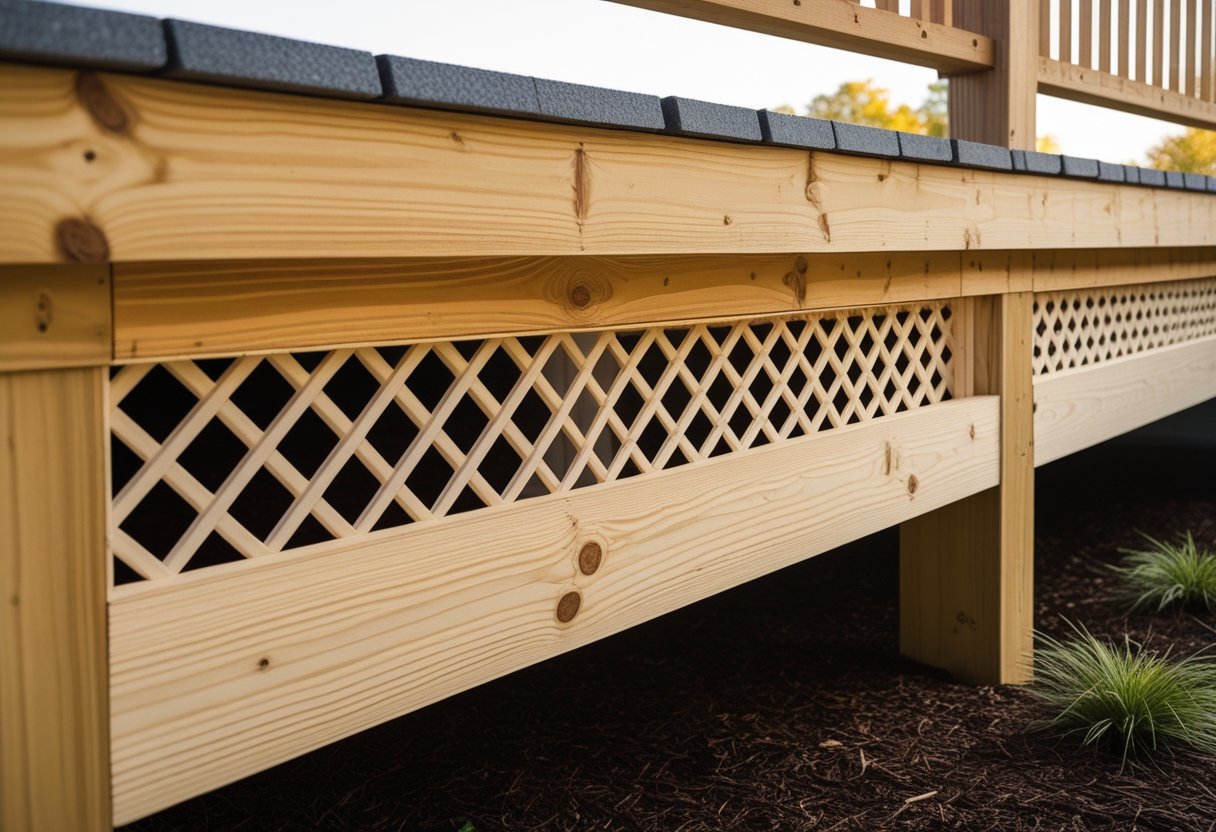
This option uses treated pine to build a strong frame around the deck base. The pine resists rot and insect damage, making it durable outdoors.
Inside the frame, decorative trellis inserts add visual interest. They allow airflow while keeping animals out.
This design is easy to install and offers a classic look. It works well for many deck styles and enhances curb appeal. For ideas, see decks with framed trellis skirting at Decks & Docks.
8) Brick veneer foundation to mimic permanent structure
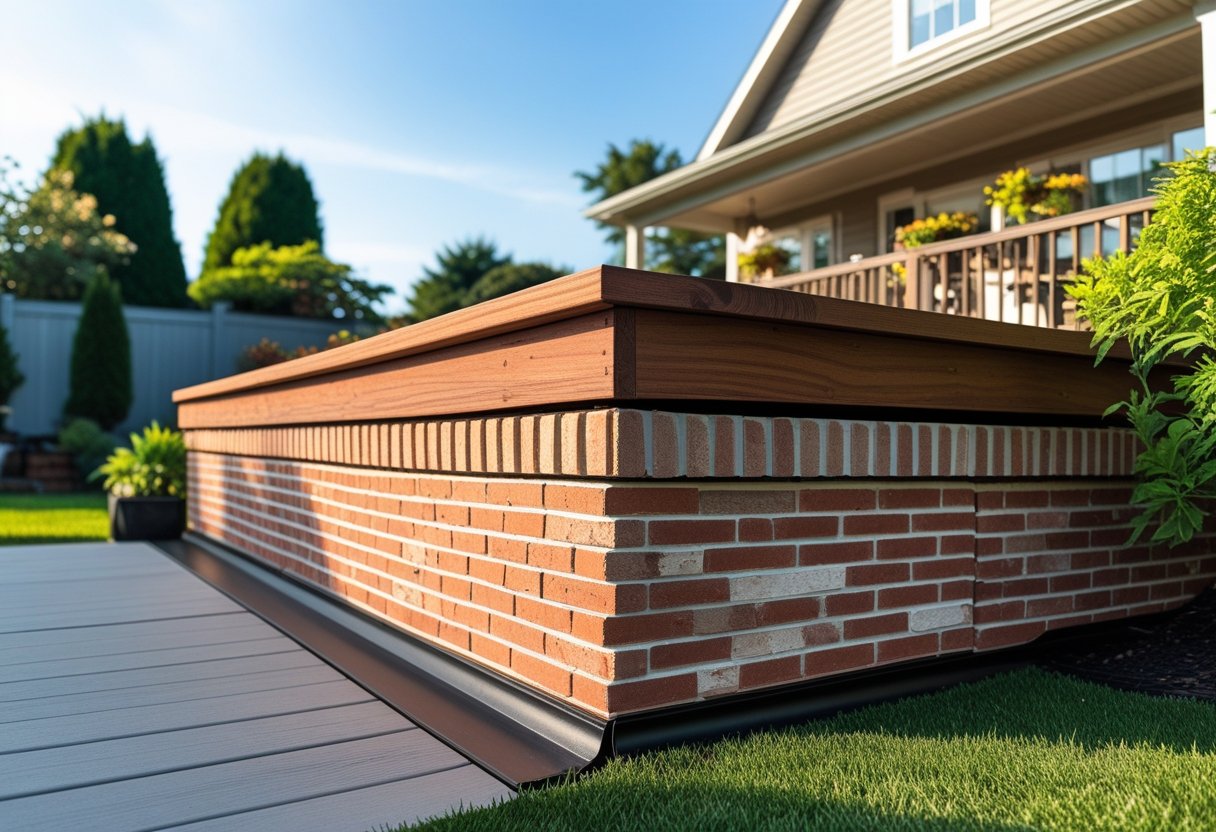
Brick veneer creates a solid, finished look for under deck skirting. It gives the deck the appearance of a permanent, built-in structure.
This option is durable and low maintenance. It works best when matched with existing stone or brick on the house.
Brick veneer also helps keep animals and pests out from underneath the deck. It can be more expensive but adds lasting value and curb appeal.
For ideas on porch skirting options like brick veneer, see this porch skirting options guide.
9) Decorative concrete blocks arranged for texture
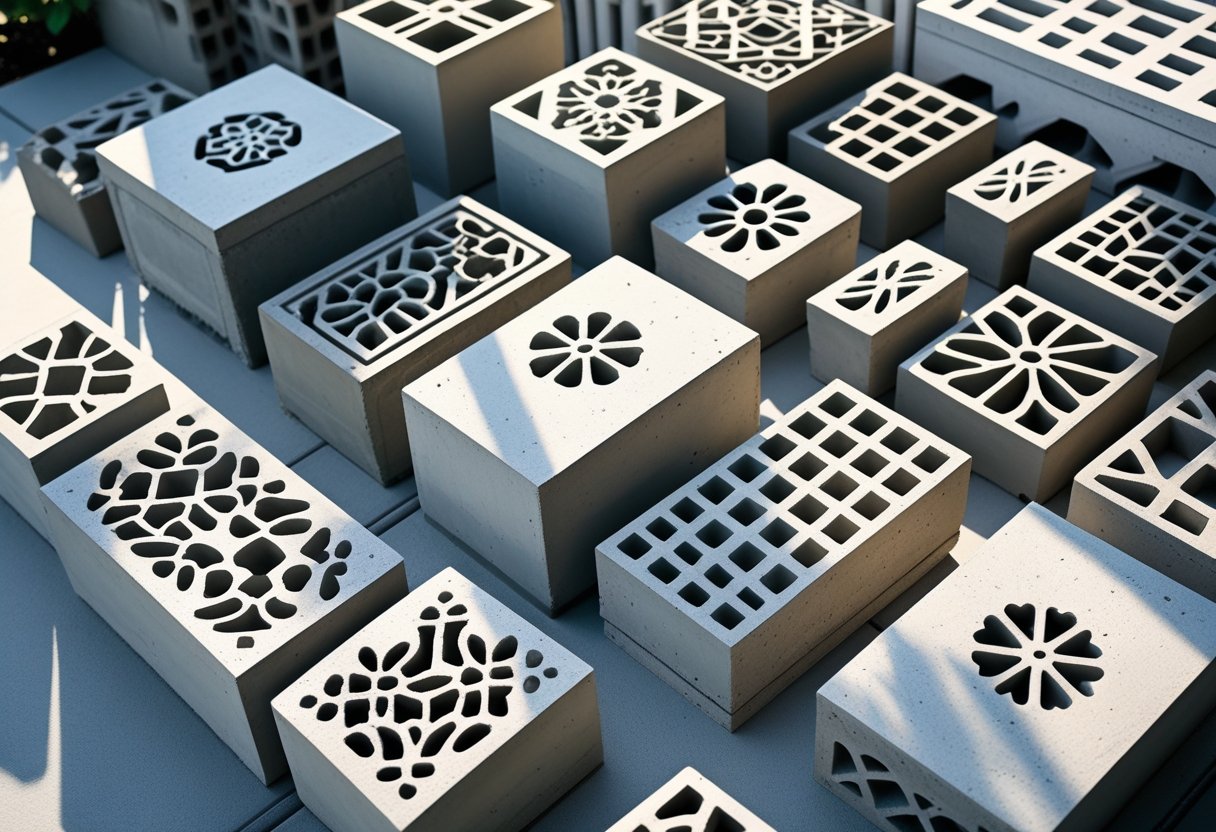
Decorative concrete blocks offer a simple way to add texture under the deck. They create a pattern that lets air flow while hiding the space below.
These blocks come in many designs and can be stacked or arranged to fit the area. This option is durable and low maintenance.
Using decorative blocks also adds a modern look without needing paint or stain. It’s a sturdy choice for long-lasting deck skirting. For more ideas, see inexpensive deck skirting options.
10) Custom-cut plexiglass panels with backlighting
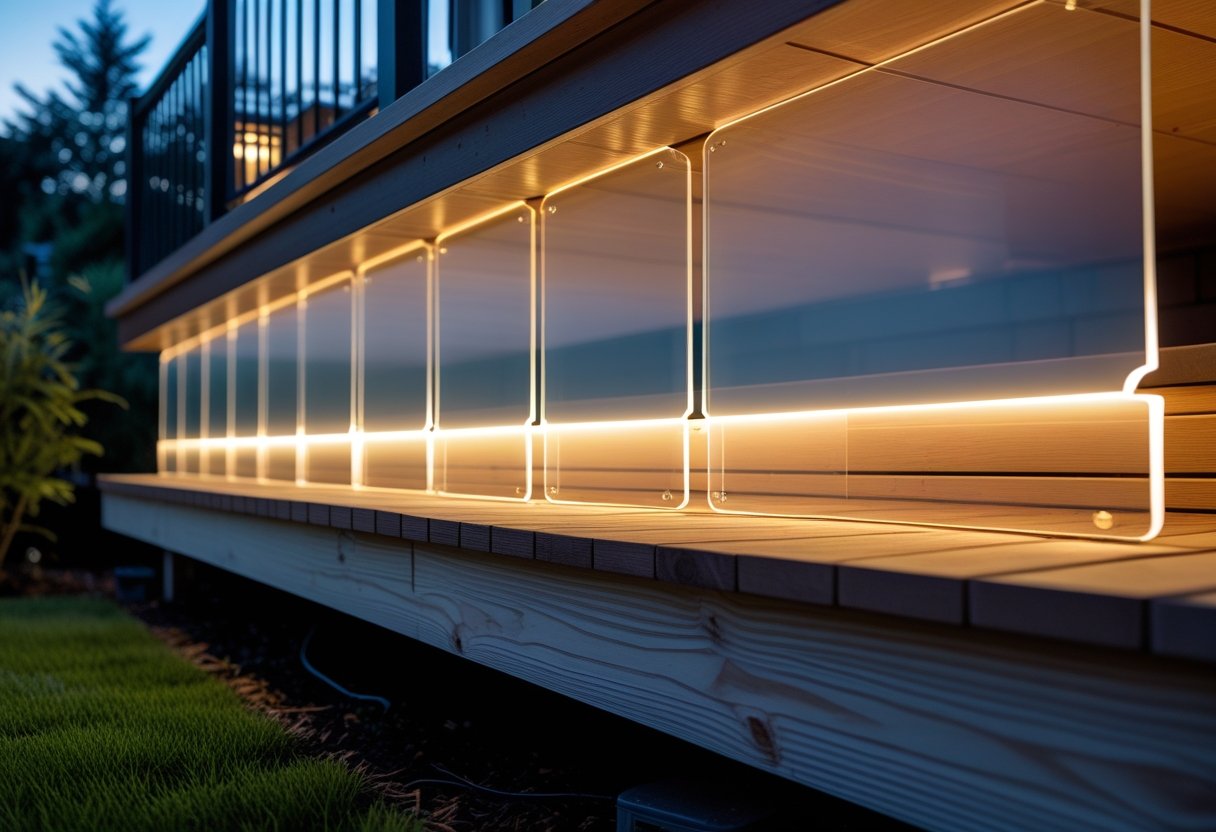
Custom-cut plexiglass panels fit perfectly under a deck and provide a modern look. The panels can be clear or frosted, depending on the desired effect.
Adding backlighting behind the panels creates a soft glow that enhances the space at night. This option also helps to highlight the under-deck area without taking up much space.
Plexiglass is durable and easy to clean, making it a practical choice for deck skirting. It resists moisture and can withstand outdoor conditions well.
Choosing the Right Materials for Under Deck Skirting
Selecting the right materials is crucial to ensure the skirting lasts and looks good. It should withstand weather, resist damage, and require little upkeep. The materials also affect the overall appearance and functionality of the space below the deck.
Weather Resistance and Durability
Materials for under deck skirting must handle rain, snow, and sun without warping or rotting. Composite boards and cellular PVC are popular because they resist moisture and insects. These options need less maintenance than wood.
Concrete, stone, and bricks are very durable and can handle harsh weather well. They also add a strong, permanent look to the deck’s base.
Wood is less expensive but must be treated to avoid decay and pests. Tropical hardwoods, known for their natural resistance, are a good choice if the budget allows.
Choosing materials carefully for weather resistance will protect the deck structure and add lasting value. For details on typical materials, see more deck skirting ideas at TimberTech.
Design Considerations for Under Deck Skirting
When choosing under deck skirting, durability is key. The material must withstand weather, moisture, and potential impacts. Options like composite, wood, and metal vary in lifespan and maintenance needs.
Ventilation is another important factor. Proper airflow prevents mold and wood rot beneath the deck. Skirting designs often include gaps or vents to allow air circulation.
Aesthetic appeal should match the home’s style. For a classic look, wood lattice is popular. Modern homes might suit metal or composite panels. Color and texture add to the overall look.
Ease of installation and access is critical. Some skirting, like vinyl or cellular PVC wraps, is easy to install and clean. Removable panels or doors allow access to plumbing or storage areas under the deck.
Security and pest control should not be overlooked. Skirting can block animals and discourage unwanted visitors under the deck. Solid materials or tight lattice work well for this purpose.
Here is a quick comparison table for common skirting materials:
| Material | Durability | Maintenance | Ventilation | Appearance |
|---|---|---|---|---|
| Wood Lattice | Moderate | Regular | Good (gaps) | Traditional |
| Composite | High | Low | Variable | Modern or classic |
| Metal | High | Low | Limited | Sleek/industrial |
| Cellular PVC | High | Low | Yes (vents) | Clean/versatile |
Proper planning helps ensure the skirting suits both function and style.
Frequently Asked Questions
Under deck skirting can be updated affordably with simple materials and designs. Many skirting styles focus on improving both looks and functionality, using durable materials or creative patterns to fit different budgets and tastes.
How can I enhance the appearance of my deck’s underside on a budget?
Wood lattice or vertical cedar boards with a natural finish are low-cost options that bring a clean, finished look. Painting or staining existing wood can also improve appearance without much expense.
What are some DIY options for deck skirting to improve curb appeal?
DIY projects often use composite lattice panels or horizontal wood slats stained dark for a modern style. These materials are easy to work with and allow customization to fit the home’s exterior.
What are some cost-effective materials suitable for deck skirting?
Vinyl tongue-and-groove skirting is affordable and requires low maintenance. Wood and composite materials also offer budget-friendly options, combining appearance with weather resistance.
What are the latest trends in modern deck skirting designs?
Modern designs favor geometric composite lattice and horizontal wood slats for a streamlined look. Stone veneer panels are gaining popularity for adding texture and an elegant style.
Can vertical patterns be used in deck skirting, and if so, how?
Yes, vertical cedar board skirting with a natural finish is a popular choice. It gives a classic appearance and promotes better water drainage and ventilation compared to horizontal patterns. For ideas on vertical skirting, visit 10 Inexpensive Deck Skirting Ideas.


