Skip to content

[email protected] | About Us |ย Privacy Policy | Terms Of Use

Facebook Pinterest
logo
  • Home ImprovementExpand
    • Deck
    • Barn Doors
    • Patio
    • Bathroom
    • Garden Beds
    • Winter Home Prep
  • Mobile HomeExpand
    • Crawl Space
    • Skirting
  • BackyardExpand
    • Landscaping
    • Curb Appeal
    • Water Features
  • Porch
  • Garden
  • Contact
logo
Curb Appeal

Easy Crockpot Homemade Dog Food Recipe for Busy Owners

Finding time to prepare healthy meals for your dog can feel impossible when you’re juggling work, family, and everything else life throws at you. If you’re a busy pet owner who wants to give your furry friend nutritious homemade meals without spending hours in the kitchen, this easy crockpot homemade dog food recipe is exactly what you need.

Your slow cooker can become your best friend for creating wholesome dog food that simmers while you tackle your daily tasks. Making homemade dog food gives you complete control over what goes into your pup’s bowl, and it’s often more affordable than premium commercial brands.

In this guide, you’ll discover the key benefits of switching to crockpot-prepared meals for your dog and learn which essential ingredients create the perfect nutritional balance. You’ll also get a simple step-by-step recipe that practically makes itself, plus important food safety tips to keep your four-legged family member healthy and happy.

Contents

Toggle
  • Benefits of Making Homemade Dog Food in Your Crockpot
      • Save Money on Premium Pet Food Costs
      • Control Every Ingredient for Your Dog’s Health
      • Accommodate Special Dietary Needs and Allergies
      • Batch Cook for Maximum Time Efficiency
  • Essential Ingredients for Nutritious Crockpot Dog Food
      • Choose the Right Protein Sources for Your Dog’s Size
      • Add Healthy Vegetables That Dogs Can Digest
      • Include Safe Grains and Carbohydrates for Energy
  • Step-by-Step Crockpot Dog Food Recipe
      • Prep All Ingredients in Under 15 Minutes
      • Layer Ingredients for Even Cooking
      • Set the Perfect Temperature and Timing
      • Test for Doneness and Safety
  • Food Safety Guidelines for Homemade Pet Meals
      • Proper Storage Methods to Maintain Freshness
      • Safe Cooling and Freezing Techniques
      • Signs to Watch for Spoilage
  • Serving Portions and Feeding Schedule Tips
      • Calculate the Right Amount Based on Dog Weight
      • Transition Gradually from Commercial Food
      • Monitor Your Dog’s Response and Adjust Accordingly
      • You Might Also Like!

Benefits of Making Homemade Dog Food in Your Crockpot

Create a full-bleed 3:2 infographic illustration in a clean modern style with a light cream background, dark green and warm orange accents, bold sans-serif typography, and clear visual hierarchy. Place a large bold title across the top center: "Benefits of Making Homemade Dog Food in Your Crockpot". Under the title, arrange four wide rounded-corner content blocks in a 2x2 grid across the page, each with a colored number badge, a simple icon, a bold section heading, and short supporting text.Top left block: green badge with "1", icon of a dollar sign and grocery basket. Heading: "Save Money on Premium Pet Food Costs". Supporting text: "Spend a fraction of premium brand prices, buy ingredients in bulk, and eliminate commercial markup costs."Top right block: blue badge with "2", icon of a fresh bowl with vegetables and a checkmark. Heading: "Control Every Ingredient for Your Dog's Health". Supporting text: "Choose fresh whole ingredients, avoid preservatives, artificial colors, and fillers, and control quality and nutrition."Bottom left block: orange badge with "3", icon of a dog bowl with a leaf and allergy symbol. Heading: "Accommodate Special Dietary Needs and Allergies". Supporting text: "Customize grain-free meals, limited protein recipes, and specific nutrients for medical needs."Bottom right block: teal badge with "4", icon of a crockpot with steam and a clock. Heading: "Batch Cook for Maximum Time Efficiency". Supporting text: "Cook large weekend batches, portion meals for the week, and save hours while serving fresh consistent food."Use subtle dog-themed details such as paw prints and a small dog silhouette near the title. Keep the layout wide, balanced, and easy to read, with icons aligned to the left of each heading and text. No photo background, no poster frame, no vertical stack.

Save Money on Premium Pet Food Costs

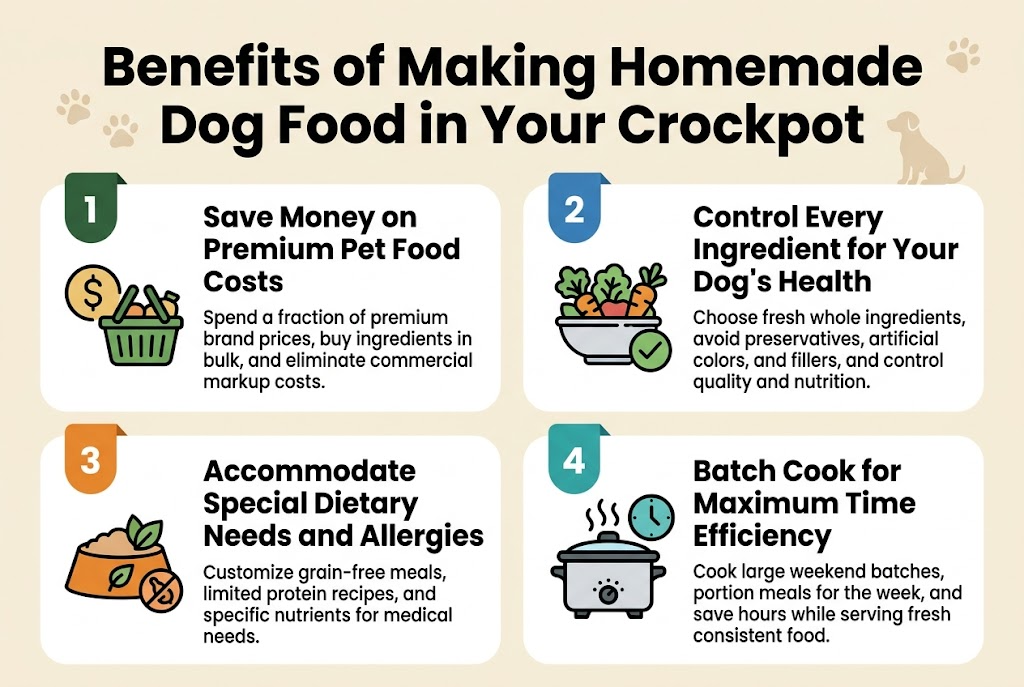
Making your own crockpot dog food cuts your pet food expenses dramatically. You’ll spend a fraction of what premium brands cost while creating meals with the same quality ingredients. Your grocery budget stretches further when you buy ingredients in bulk, and you’ll eliminate markup costs from commercial pet food companies.

Also Read  10 Creative No Grass Front Yard transformations for Stunning Curb Appeal

Control Every Ingredient for Your Dog’s Health

You know exactly what goes into your dog’s bowl when you prepare homemade meals. No mystery preservatives, artificial colors, or questionable fillers that might harm your pet’s health. You choose fresh, whole ingredients and can avoid anything that doesn’t meet your standards for quality and nutrition.

Accommodate Special Dietary Needs and Allergies

Your dog’s unique health requirements become manageable when you control the recipe. Whether your pet needs grain-free meals, limited protein sources, or specific nutrients for medical conditions, you can customize every batch. No more searching store shelves for expensive specialty foods that might still contain problem ingredients.

Batch Cook for Maximum Time Efficiency

Your crockpot does the work while you handle other tasks, making meal prep effortless. Cook large batches on weekends and portion meals for the entire week. You’ll save hours compared to daily food preparation, and your dog gets consistent, fresh meals without the daily hassle of cooking.

Essential Ingredients for Nutritious Crockpot Dog Food
Create a clean, professional full-bleed infographic illustration in a 3:2 aspect ratio with a bright pet-care color palette of teal, green, warm orange, cream, and soft gray, using modern sans-serif fonts and strong visual hierarchy. Place a bold headline across the top: "Essential Ingredients for Nutritious Crockpot Dog Food". Use a wide horizontal layout with three evenly spaced content blocks across the center, each with a labeled header, a simple icon, and short bullet-style lines of text. Include subtle dog-themed details like paw prints and rounded shapes, but keep the design uncluttered and easy to read.Left section: a blue circular icon with a chicken drumstick, turkey slice, beef cut, and salmon fish icons. Header text: "1. Choose the Right Protein Sources for Your Dog's Size". Body text beneath in short lines:"Lean chicken, turkey, and beef""Fish like salmon for omega-3 fatty acids""Dice smaller pieces for little dogs""Use larger chunks for bigger breeds""Remove bones and excess fat"Center section: a green circular icon with sweet potato, carrot, green beans, and peas. Header text: "2. Add Healthy Vegetables That Dogs Can Digest". Body text beneath:"Sweet potatoes, carrots, green beans, and peas""Provides vitamins and fiber""Avoid onions, garlic, and grapes""Chop smaller for little dogs""Larger chunks for big breeds"Right section: a golden circular icon with brown rice, quinoa, oats, and a small bowl. Header text: "3. Include Safe Grains and Carbohydrates for Energy". Body text beneath:"Brown rice, quinoa, and oats""Easy to digest in slow-cooked meals""Start with small amounts if new to grains""White rice for sensitive stomachs""Whole grains for active dogs"Use clear numbered badges for each section, with simple checkmark accents for safe ingredients and small warning triangle icons near the toxic foods line. Keep all text crisp, aligned, and highly legible on a light background. Full-bleed composition, no poster frame, no inset border, no narrow vertical stack.

Choose the Right Protein Sources for Your Dog’s Size

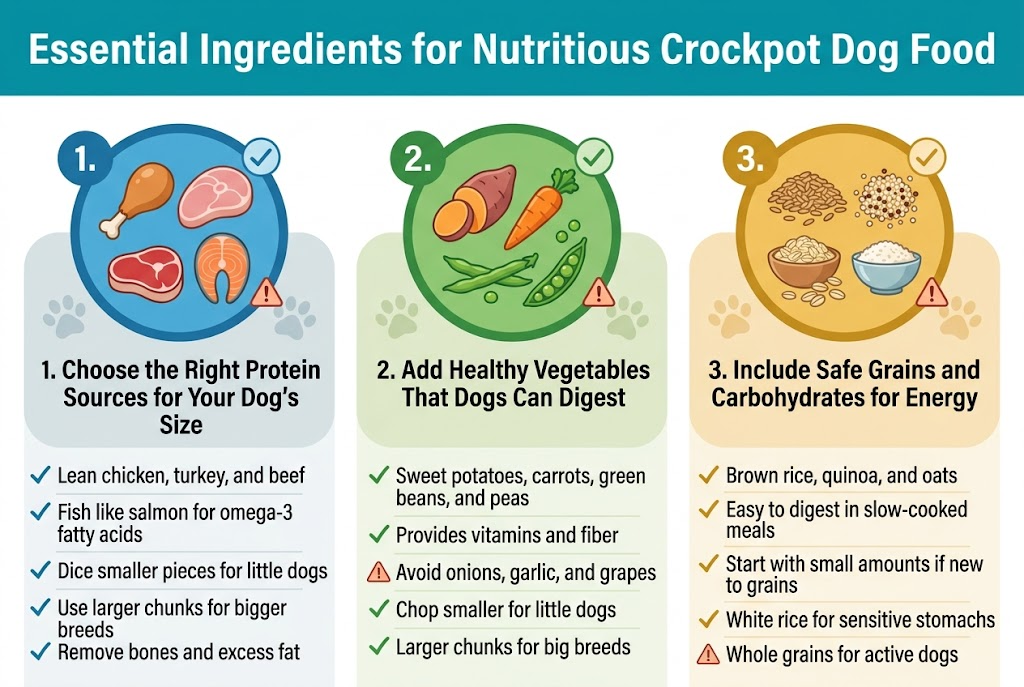
Your dog needs quality protein as the foundation of their meal. Lean chicken, turkey, and beef work perfectly for most dogs, while fish like salmon provides omega-3 fatty acids. For smaller dogs, dice proteins into tiny pieces, but larger breeds can handle bigger chunks. Always remove bones and excess fat before cooking.

Add Healthy Vegetables That Dogs Can Digest

Sweet potatoes, carrots, green beans, and peas make excellent additions to your crockpot recipe. These vegetables provide essential vitamins and fiber your dog needs. Avoid onions, garlic, and grapes as these are toxic to dogs. Chop vegetables into appropriate sizes – smaller pieces for little dogs, larger chunks for big breeds.

Also Read  12 Cool DIY Walkways That WOW: Stunning Ideas to Boost Your Curb Appeal

Include Safe Grains and Carbohydrates for Energy

Brown rice, quinoa, and oats give your dog sustained energy throughout the day. These grains are gentle on most dogs’ stomachs and easy to digest in slow-cooked meals. Start with small amounts if your dog isn’t used to grains. White rice works well for dogs with sensitive stomachs, while active dogs benefit from the extra nutrients in whole grains.

Step-by-Step Crockpot Dog Food Recipe
Create a clean, professional infographic illustration in a 3:2 aspect ratio with a full-bleed layout, wide horizontal composition, and no inset frame. Use a warm kitchen color palette of soft cream, muted orange, light green, brown, and dark charcoal accents. Use bold sans-serif typography for the heading and smaller readable sans-serif text for body copy.Top center: large bold title in dark charcoal text, "Step-by-Step Crockpot Dog Food Recipe". Directly beneath it, a smaller subtitle in muted brown text, "Prep All Ingredients in Under 15 Minutes".Below the title, organize the content into four wide horizontal sections across the page, each with a large numbered circle icon on the left and an illustrated food/cooking icon beside the text. Use clear visual hierarchy and balanced spacing.Section 1 on the upper left: a green circular icon with a knife, cutting board, and bowl. Heading text: "1. Prep All Ingredients in Under 15 Minutes". Body text: "Gather your protein, vegetables, and grains before starting. Dice sweet potatoes, carrots, and green beans into uniform pieces. Remove bones and excess fat from chicken or beef, then cut into bite-sized chunks. Rinse rice or quinoa thoroughly." Show small visual ingredients: diced sweet potatoes, carrots, green beans, chicken chunks, rice, and quinoa.Section 2 on the upper right: a brown circular icon with a crockpot showing layered ingredients. Heading text: "2. Layer Ingredients for Even Cooking". Body text: "Place denser vegetables like sweet potatoes and carrots at the bottom. Add your protein next, followed by softer vegetables like peas and green beans. Top with rice or quinoa and pour in your liquid." Show the crockpot cross-section with visible layers from bottom to top.Section 3 on the lower left: an orange circular icon with a thermometer, steam lines, and timer. Heading text: "3. Set the Perfect Temperature and Timing". Body text: "Cook on low heat for 6-8 hours or high heat for 3-4 hours. Low and slow cooking preserves nutrients better and creates tender, easily digestible meals for your dog. Add extra water if needed during cooking." Include small time badges reading "LOW 6-8 HOURS" and "HIGH 3-4 HOURS".Section 4 on the lower right: a blue circular icon with a fork, temperature gauge, and cooling bowl. Heading text: "4. Test for Doneness and Safety". Body text: "Check that all vegetables are fork-tender and meat reaches an internal temperature of 165ยฐF for poultry or 160ยฐF for ground meats. Rice should be completely soft. Let the food cool completely before serving." Add a small note badge reading "COOL BEFORE SERVING".Include subtle illustrated details of a happy dog near the bottom right looking toward a steaming bowl of finished dog food. Use clean divider lines or soft colored panels to separate sections. Keep the layout airy, legible, and infographic-style with consistent icon style and strong visual order.

Prep All Ingredients in Under 15 Minutes

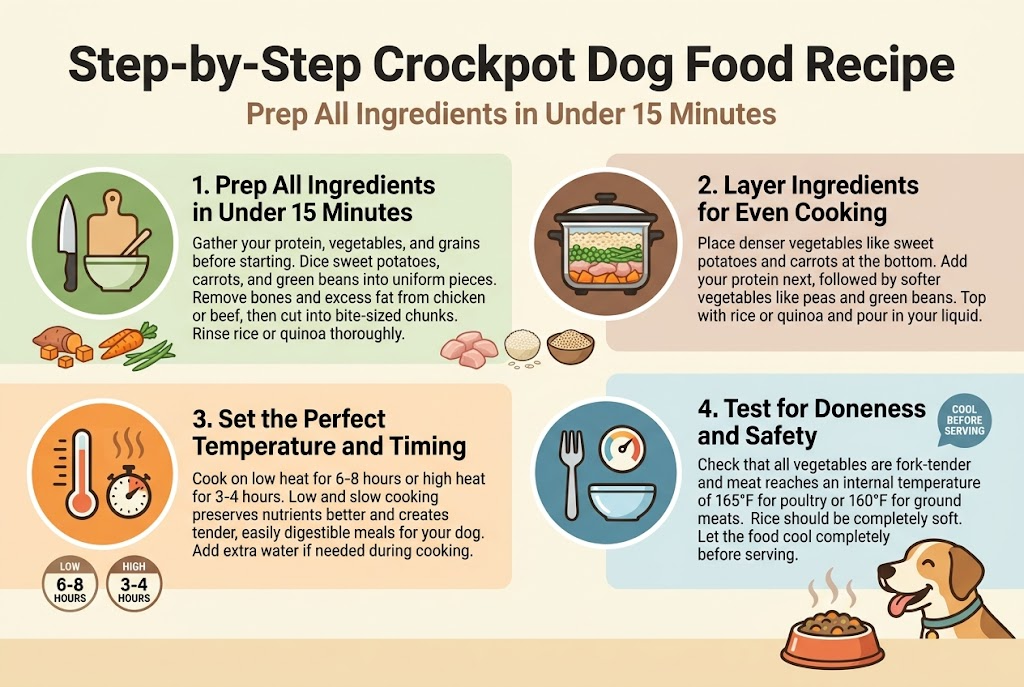
Gather your protein, vegetables, and grains before starting. Dice sweet potatoes, carrots, and green beans into uniform pieces for even cooking. Remove bones and excess fat from chicken or beef, then cut into bite-sized chunks. Rinse rice or quinoa thoroughly. Having everything prepped saves time and ensures smooth cooking.

Layer Ingredients for Even Cooking

Place denser vegetables like sweet potatoes and carrots at the bottom of your crockpot since they take longer to cook. Add your protein next, followed by softer vegetables like peas and green beans. Top with rice or quinoa and pour in your liquid. This layering method ensures everything cooks evenly without overcooking delicate ingredients.

Set the Perfect Temperature and Timing

Cook on low heat for 6-8 hours or high heat for 3-4 hours, depending on your schedule. Low and slow cooking preserves nutrients better and creates tender, easily digestible meals for your dog. Add extra water if needed during cooking to prevent sticking. Your kitchen will smell amazing, and your pup will know something special is cooking.

Test for Doneness and Safety

Check that all vegetables are fork-tender and meat reaches an internal temperature of 165ยฐF for poultry or 160ยฐF for ground meats. Rice should be completely soft and grains fully absorbed. Let the food cool completely before serving to avoid burns. Taste a small portion yourself โ€“ if it’s bland to you, it’s perfect for your dog’s sensitive palate.

Also Read  How To Make A DIY Goblet Fountain For Elegant Budget Curb Appeal

Food Safety Guidelines for Homemade Pet Meals
Create a clean, professional full-bleed infographic illustration in a 3:2 aspect ratio with a light cream background, teal and green accents, dark charcoal text, and soft rounded shapes. Use a wide horizontal layout with three equal sections across the canvas, each with a bold icon and clear text block. Place a large bold title at the top spanning the width: "Food Safety Guidelines for Homemade Pet Meals". Use a modern sans-serif font, strong hierarchy, and subtle divider lines between sections.Left section:A green refrigerator and freezer icon above the heading "Proper Storage Methods to Maintain Freshness". Under it, include three short bullet points with small check icons:"Refrigerate for up to 3 days""Freeze portions for longer storage""Use airtight containers or freezer-safe bags"Add a small label tag icon beside the line:"Label containers with the preparation date"Center section:A blue cooling bowl, ice cube tray, and thermometer icon above the heading "Safe Cooling and Freezing Techniques". Under it, include three short bullet points:"Cool food completely before refrigerating or freezing""Divide large batches into meal-sized portions""Never leave cooked food at room temperature for more than 2 hours"Add a small warning triangle icon next to:"Bacteria multiply rapidly in the temperature danger zone"Right section:A red spoilage alert icon with a sour smell line, mold spot, and slimy texture symbols above the heading "Signs to Watch for Spoilage". Under it, include three short bullet points:"Unusual odors""Slimy textures""Visible mold growth"Add a bold callout line at the bottom with a red warning icon:"If the food smells off or sour, discard it immediately"Include a final line beneath the bullets:"Watch for color or consistency changes and never serve questionable food"Use a balanced infographic style with clear spacing, rounded panels, and small pet-dish and dog bowl accents near the bottom edges. No border frame, no illustration beyond the infographic content.

Proper Storage Methods to Maintain Freshness

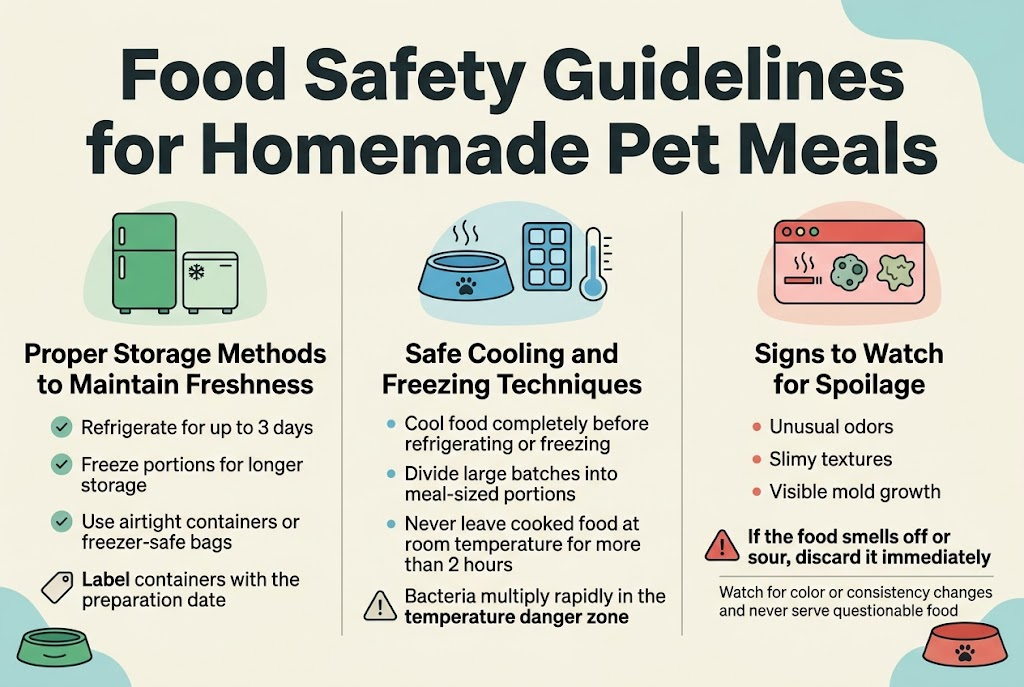
Store your homemade dog food in the refrigerator for up to three days or freeze portions for longer storage. Use airtight containers or freezer-safe bags to prevent contamination and freezer burn. Label each container with the preparation date to track freshness and rotate your dog’s meals properly.

Safe Cooling and Freezing Techniques

Cool your crockpot dog food completely before refrigerating or freezing. Divide large batches into meal-sized portions using ice cube trays or small containers for easy thawing. Never leave cooked food at room temperature for more than two hours, as bacteria multiply rapidly in the temperature danger zone.

Signs to Watch for Spoilage

Check your dog’s food daily for unusual odors, slimy textures, or visible mold growth. Trust your nose โ€“ if the food smells off or sour, discard it immediately. Watch for changes in color or consistency that differ from when you first prepared the meal, and never serve questionable food to your pet.

Serving Portions and Feeding Schedule Tips
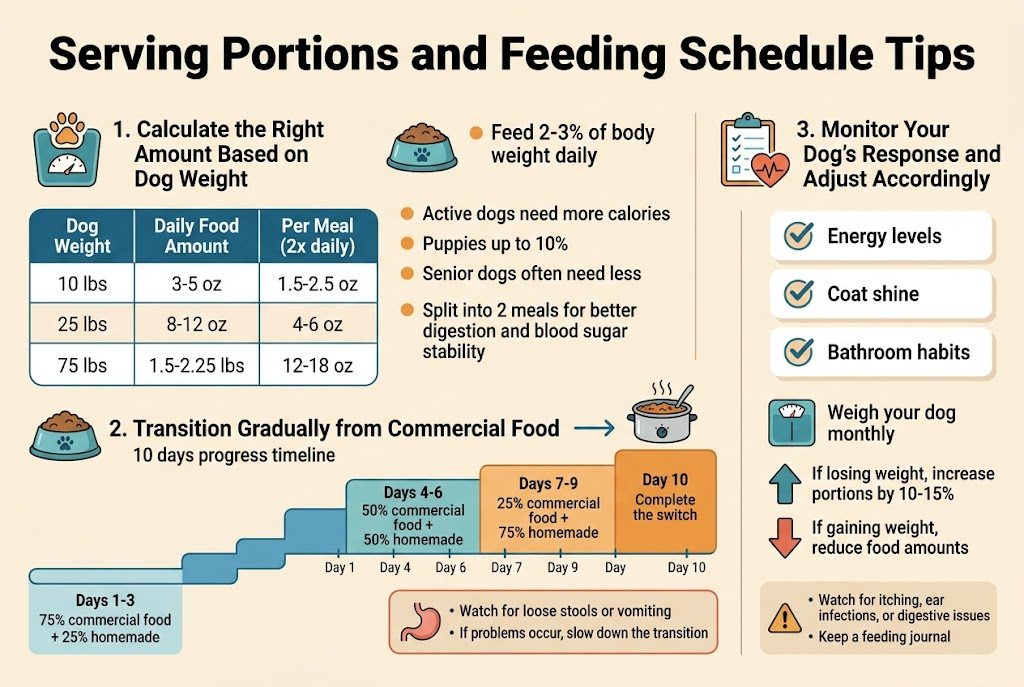
Create a clean, professional full-bleed infographic illustration in 3:2 aspect ratio with a warm pet-care palette of teal, blue, orange, and cream, using modern sans-serif fonts and bold visual hierarchy. Place a large bold title across the top: "Serving Portions and Feeding Schedule Tips". Layout: wide horizontal infographic with three main sections arranged left-to-right across the canvas, using clear blocks, icons, and a readable table. No poster frame, no inset margins, no narrow centered stack.Section 1 on the left: "1. Calculate the Right Amount Based on Dog Weight" with a paw-and-scale icon. Show a clean table with four rows and three columns labeled exactly: "Dog Weight", "Daily Food Amount", "Per Meal (2x daily)". Include these rows exactly:"10 lbs | 3-5 oz | 1.5-2.5 oz""25 lbs | 8-12 oz | 4-6 oz""50 lbs | 1-1.5 lbs | 8-12 oz""75 lbs | 1.5-2.25 lbs | 12-18 oz"Above or beside the table, add short bullet callouts with small icons: "Feed 2-3% of body weight daily""Active dogs need more calories""Puppies up to 10%""Senior dogs often need less""Split into 2 meals for better digestion and blood sugar stability"Section 2 in the center: "2. Transition Gradually from Commercial Food" with a kibble bowl to homemade crockpot bowl icon and a 10-day progress timeline. Show a horizontal stepped transition bar with four labeled stages and small day markers:"Days 1-3: 75% commercial food + 25% homemade""Days 4-6: 50% commercial food + 50% homemade""Days 7-9: 25% commercial food + 75% homemade""Day 10: Complete the switch"Add a warning box with a small stomach icon and the text:"Watch for loose stools or vomiting""If problems occur, slow down the transition"Section 3 on the right: "3. Monitor Your Dog's Response and Adjust Accordingly" with a clipboard and heartbeat/paw icon. Use three stacked monitoring cards with checkmark icons and short labels:"Energy levels""Coat shine""Bathroom habits"Below, add a monthly scale icon and the text:"Weigh your dog monthly"Then include two adjustment callouts with up/down arrows:"If losing weight, increase portions by 10-15%""If gaining weight, reduce food amounts"Add a final small note box with an allergy warning icon and the text:"Watch for itching, ear infections, or digestive issues""Keep a feeding journal"Use clear section headers, subtle dividing lines, rounded cards, and simple illustrative dog-food icons. Make all text crisp, legible, and correctly spelled. Full-color infographic style, balanced spacing, professional veterinary-pet nutrition aesthetic.

Calculate the Right Amount Based on Dog Weight

Start by feeding your dog 2-3% of their body weight daily. A 50-pound dog needs about 1-1.5 pounds of food per day, while a 20-pound dog requires 6-10 ounces. Active dogs need more calories than sedentary pets. Puppies require up to 10% of their body weight, and senior dogs often need less. Split the daily amount into two meals for better digestion and blood sugar stability.

Dog WeightDaily Food AmountPer Meal (2x daily)
10 lbs3-5 oz1.5-2.5 oz
25 lbs8-12 oz4-6 oz
50 lbs1-1.5 lbs8-12 oz
75 lbs1.5-2.25 lbs12-18 oz

Transition Gradually from Commercial Food

Mix your homemade crockpot food with your dog’s current kibble over 7-10 days. Start with 75% commercial food and 25% homemade for the first 2-3 days. Move to 50-50 for days 4-6, then 25% commercial and 75% homemade for days 7-9. Complete the switch on day 10. Watch for digestive upset like loose stools or vomiting. If problems occur, slow down the transition process and give your dog’s system more time to adjust.

Monitor Your Dog’s Response and Adjust Accordingly

Check your dog’s energy levels, coat shine, and bathroom habits weekly. Healthy dogs should maintain steady weight, have firm stools, and show good energy. Weigh your dog monthly to track changes. If they’re losing weight, increase portions by 10-15%. Weight gain means reducing food amounts. Watch for food allergies like itching, ear infections, or digestive issues. Keep a feeding journal to track what works best for your specific dog’s needs and preferences.

You Might Also Like!

  • Dog Kennel and Outdoor Dog House Layout Ideas: Stunning DIY Transformations
  • 10 backyard dog potty area ideas
    10 Genius Backyard Dog Potty Area Ideas That Stay Clean & Smell-Free
  • Cozy Dog House With Fenced Yard Design Ideas: 10 Jaw-Dropping DIY Transformations
Rafay Khan

Post navigation

Previous Previous
Backyard Stick Library Idea for Dogs at the Park: Genius DIY 10-Item Transformation
NextContinue
10 Homemade Dog Food Recipes Every Dog Parent Should Know

You Might Also Like!

  • Dog Kennel and Outdoor Dog House Layout Ideas: Stunning DIY Transformations
  • 10 backyard dog potty area ideas
    10 Genius Backyard Dog Potty Area Ideas That Stay Clean & Smell-Free
  • Cozy Dog House With Fenced Yard Design Ideas: 10 Jaw-Dropping DIY Transformations

Search More!

About DearWorld

We share practical DIY tips, budget-friendly ideas, and creative inspiration for mobile homes, backyards, patios, porches, gardens, and skirting. Helping you make every space feel like home โ€” one project at a time.

  • About Us
  • Privacy Policy
  • Terms & Conditions
  • Blog

© 2026 Dear World - WordPress Theme by Kadence WP

Facebook Instagram Pinterest
Scroll to top
  • Home Improvement
    • Deck
    • Barn Doors
    • Patio
    • Bathroom
    • Garden Beds
    • Winter Home Prep
  • Mobile Home
    • Crawl Space
    • Skirting
  • Backyard
    • Landscaping
    • Curb Appeal
    • Water Features
  • Porch
  • Garden
  • Contact
Search