
12 Cheap Deck Railing Ideas That Transform Your Outdoor Space on a Budget

One Saturday morning, you step onto your deck, coffee in hand, only to notice the railing wobbling a little too much for comfort. It’s faded, dated, and honestly makes the whole space feel older than it is. You dream of a railing that looks stunning and keeps your family safe—but the thought of a huge price tag instantly shuts that dream down.
Here’s the secret most homeowners miss: updating your deck railing doesn’t have to drain your wallet. In fact, with the right ideas, you can completely transform your outdoor space for a fraction of the cost.
This guide reveals 12 genius budget railing upgrades—from simple DIY fixes to clever add-ons that look way more expensive than they are. And here’s the best part: you don’t need to be a carpenter to pull them off.
Ready for a jaw-dropping transformation? Wait until you see #3—it’s the kind of budget hack you’ll wish you had tried years ago.


1) Wooden picket railing with fresh paint
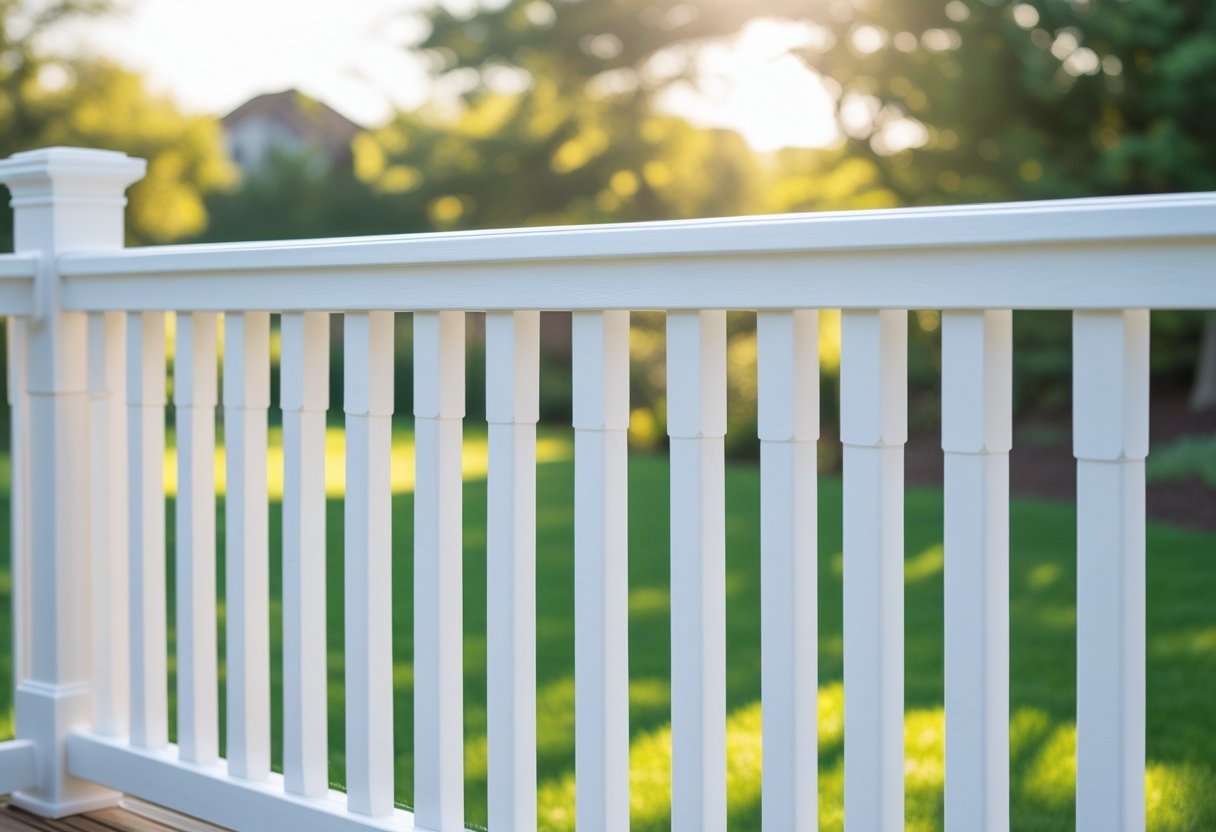
Wooden picket railings are a simple, affordable way to upgrade your deck. A fresh coat of paint can make them look new and brighten your outdoor space without much effort or cost.
You can choose classic white for a clean look or go bold with colors that match your home. The wood is easy to work with and can be repaired or replaced section by section.
Benefits of wooden picket railings:
- Affordable materials
- Easy to paint or stain
- Customizable style
- Simple DIY installation
Make sure to prep the wood well before painting. Sand rough spots and apply a primer to help the paint last longer. Need help picking your materials? Let’s look at that next.
2) Cable rail system by Westbury VertiCable
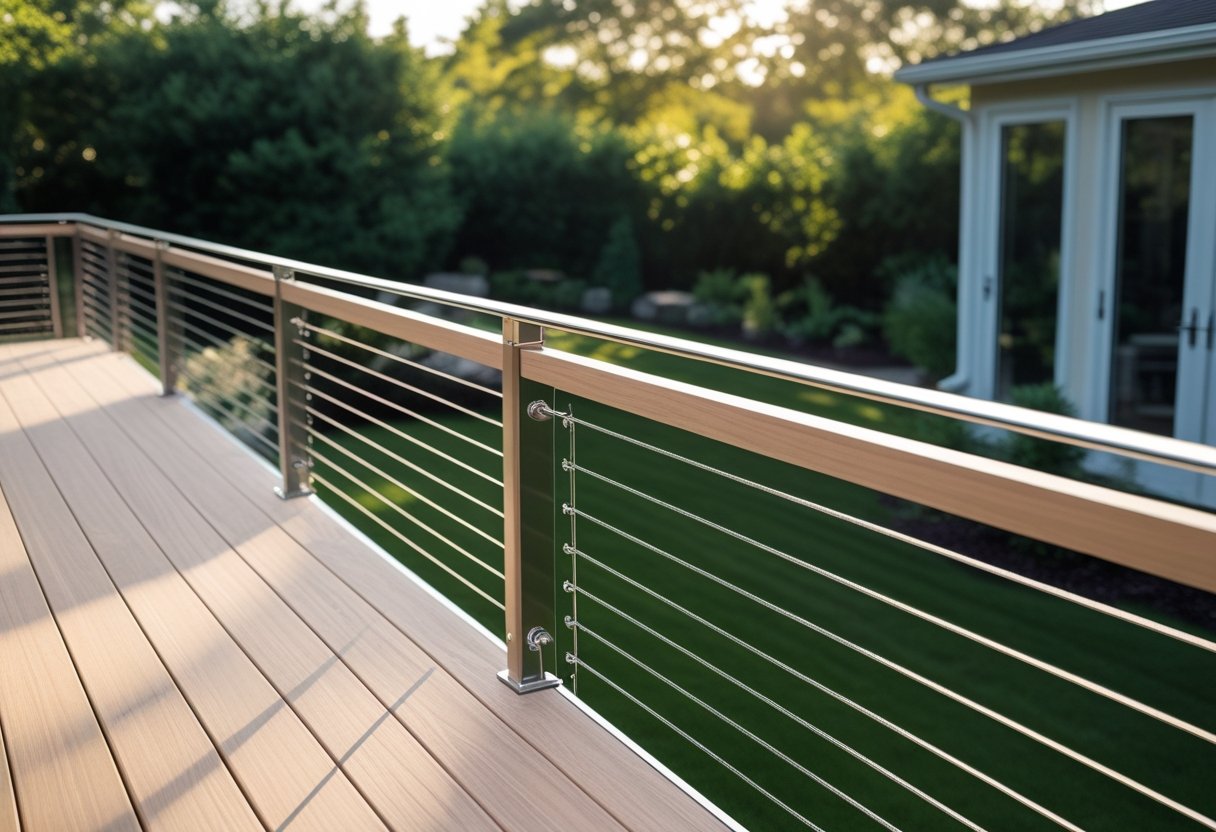
Westbury VertiCable offers an easy-to-install cable railing system with aluminum posts and pre-tensioned cables. It’s low maintenance and gives you a clean, modern look while keeping your deck safe. You get clear views without bulky railings blocking your sight.
The system comes mostly assembled, so your installation time is shorter. You can use it with existing wood posts or new aluminum posts, which are adjustable to keep things level. The cables run vertically, adding stability and safety for kids and pets.
You also have plenty of color options—12 powder-coated finishes to match your style. The materials are built to last and resist weather, so you won’t have to worry about constant upkeep.
Key points:
- Pre-tensioned cable panels for easy install
- 12 color options
- Adjustable 2-inch posts
- Low maintenance aluminum frame
Need help picking your materials? Let’s look at that next.
3) Vinyl railing with decorative post caps
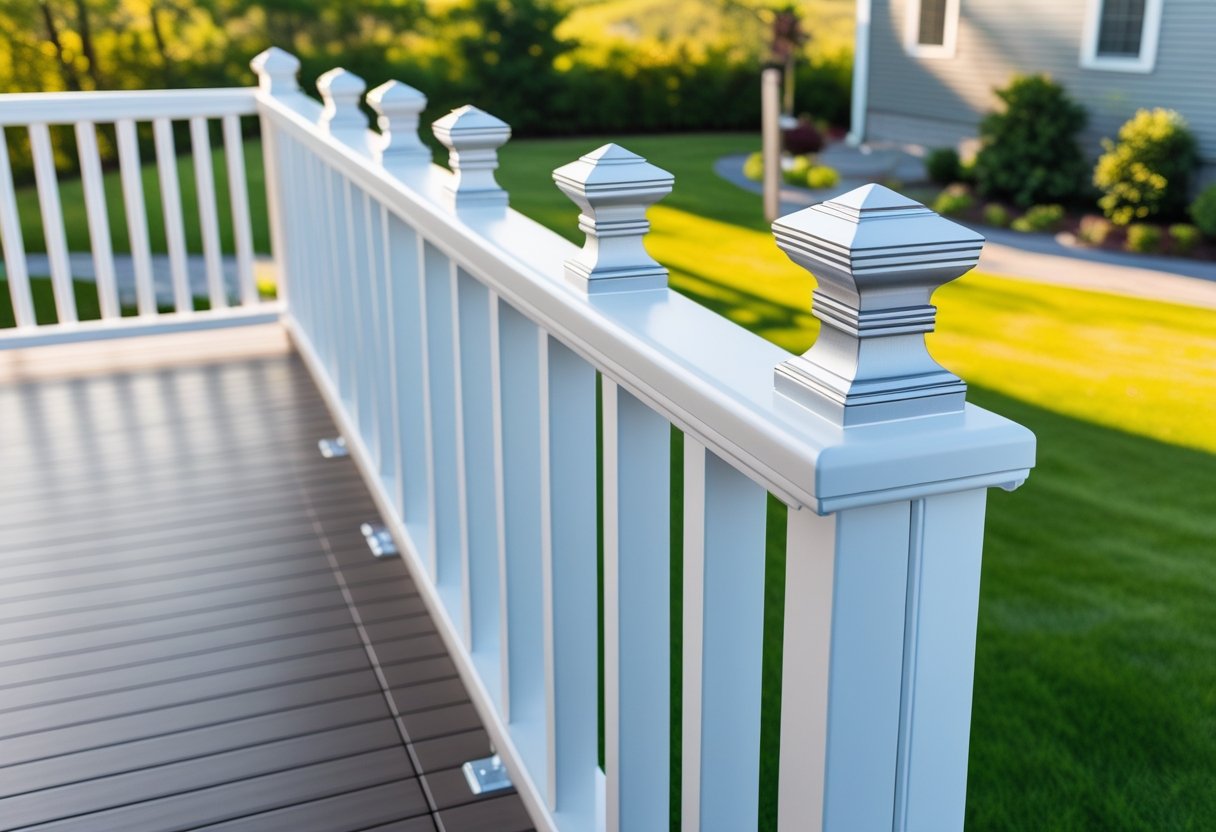
Vinyl railing is a budget-friendly, low-maintenance option that looks clean and lasts long. Adding decorative post caps upgrades the simple vinyl look with a touch of style without much extra cost.
You don’t need to worry about painting or sealing vinyl. It resists fading and moisture better than wood. Post caps come in many styles, including classic pyramid, flat, or even solar-lit versions, perfect for personalizing your deck.
Some popular post cap materials include:
- Vinyl (easy to match and maintain)
- Copper (adds a metal shine)
- Stainless steel (modern look)
Choosing the right post caps can give your deck a finished, polished appearance while keeping costs low. Need help picking your materials? Let’s look at that next.
4) Bamboo railing for a tropical vibe
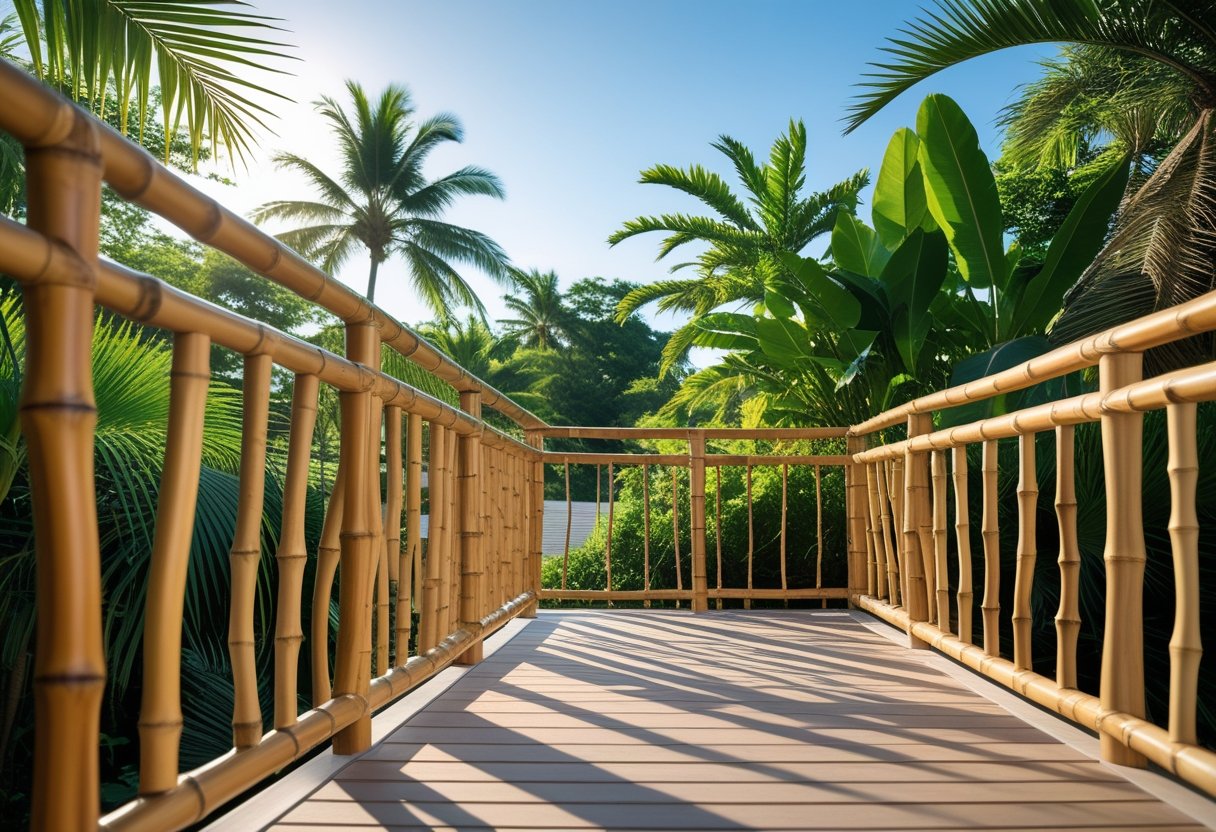
Bamboo railing offers an affordable way to give your deck a fresh, tropical look. It’s strong, natural, and easy to install, making it a great choice for those who want style without spending a lot.
You’ll like how bamboo brings a bit of nature right to your outdoor space. It works well if you want something different from standard wood or metal railings. Plus, bamboo is eco-friendly and adds warmth to any deck.
Here’s what bamboo railing gives you:
- Lightweight but durable material
- Unique tropical or island feel
- Low maintenance compared to wood
If you want a simple way to make your deck feel relaxing and a bit exotic, bamboo railing is worth considering.
Need help picking your materials? Let’s look at that next.
5) Metal horizontal railing with powder coating
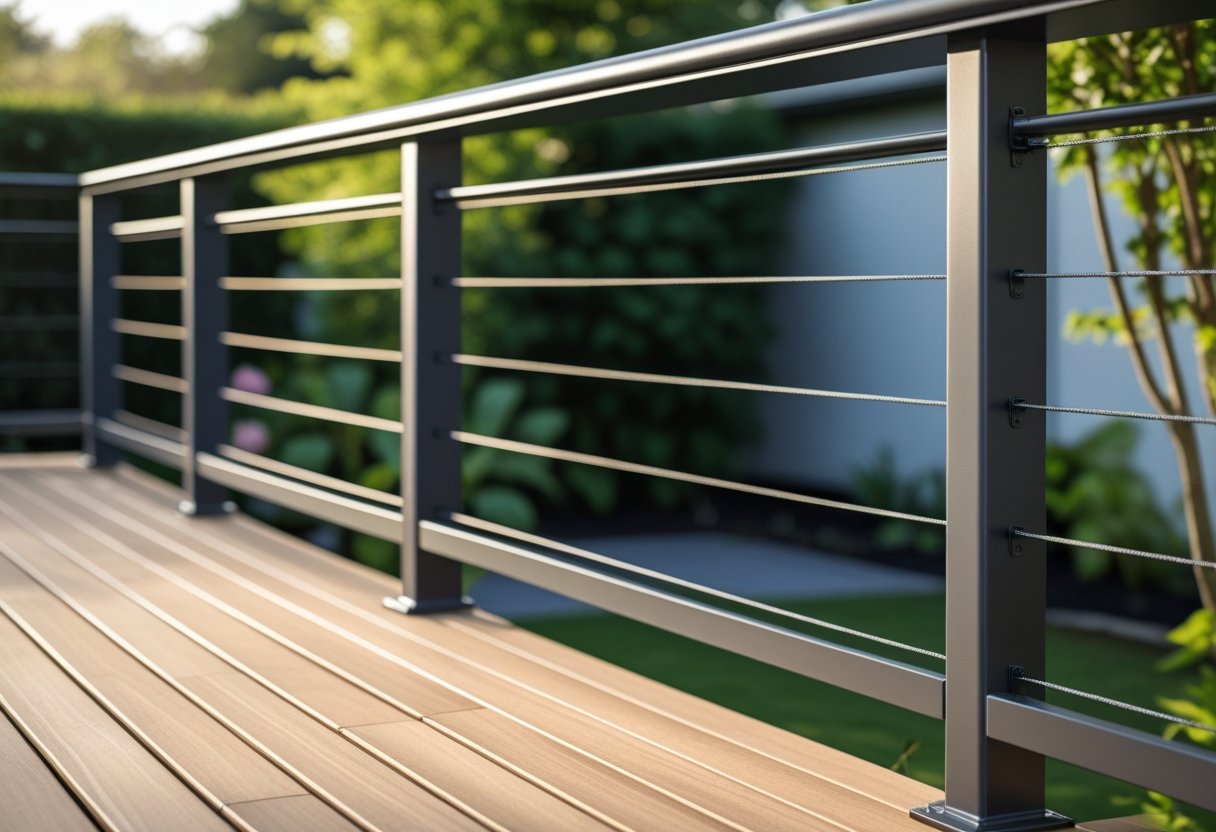
Metal horizontal railings with powder coating are a durable and affordable way to update your deck. They offer a modern look while resisting rust and weather damage. The powder coating keeps the finish fresh and vibrant for years.
These railings use horizontal rods or bars, which create a sleek, clean design. Powder-coated metal is great if you live in a coastal or rainy area because it won’t easily corrode. Plus, it’s lightweight and strong, making installation easier and safer.
Here’s what you get with powder-coated metal railings:
- Rust resistance
- Low maintenance
- Long-lasting color
- Modern style
This option works well if you want a stylish upgrade without spending a lot. Need help picking your materials? Let’s look at that next.
6) Glass panels for unobstructed views
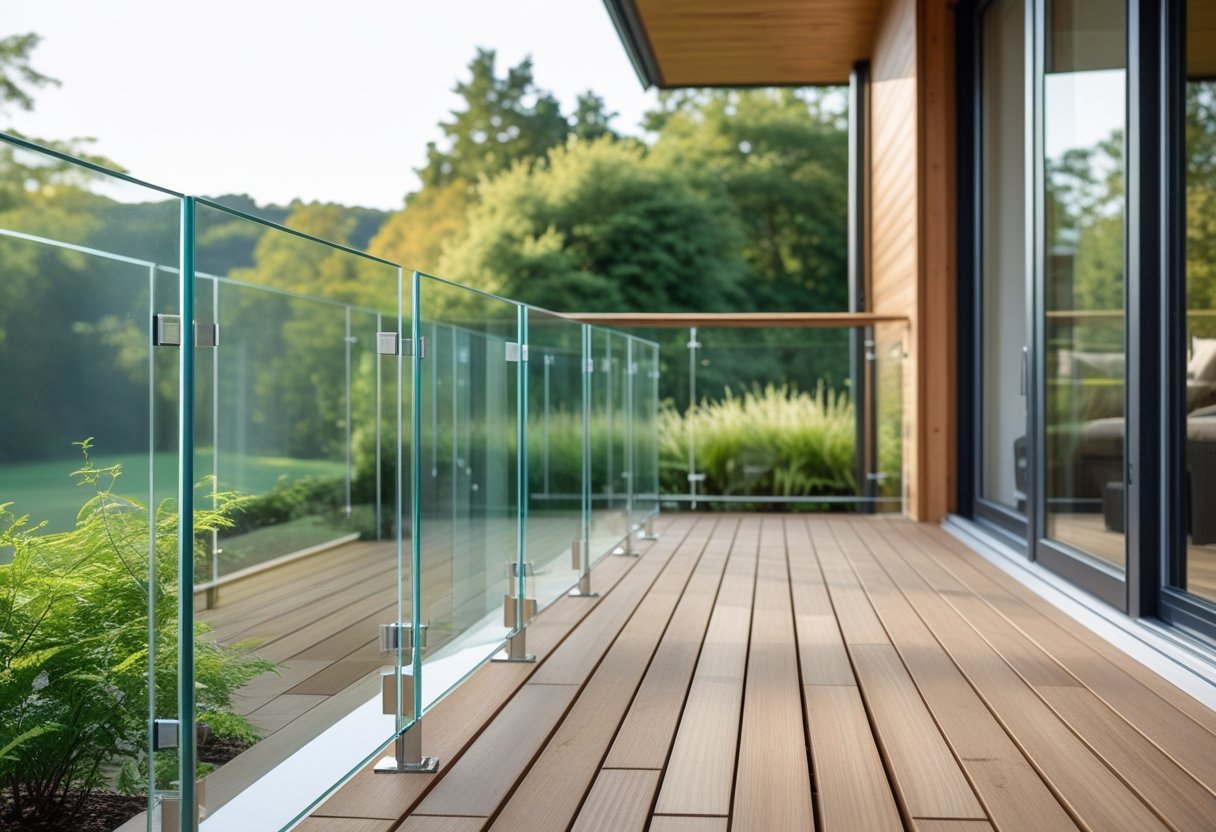
Glass panels give you clear, open views without blocking your sightlines. They add a modern look while keeping your deck safe. This option lets you enjoy your backyard or scenery fully.
You’ll find tempered glass panels in different sizes to fit most deck railings. They work well with metal or wood frames. Glass panels also let light pass through, making your outdoor space feel bigger and brighter.
Benefits of glass panels:
- Clear views without interruption
- Easy to clean and maintain
- Durable and weather-resistant
- Modern, sleek design
Remember to choose tempered glass for safety. It resists breakage and is built for outdoor use.
Need help picking your materials? Let’s look at that next.
7) DIY sunburst wooden railing design
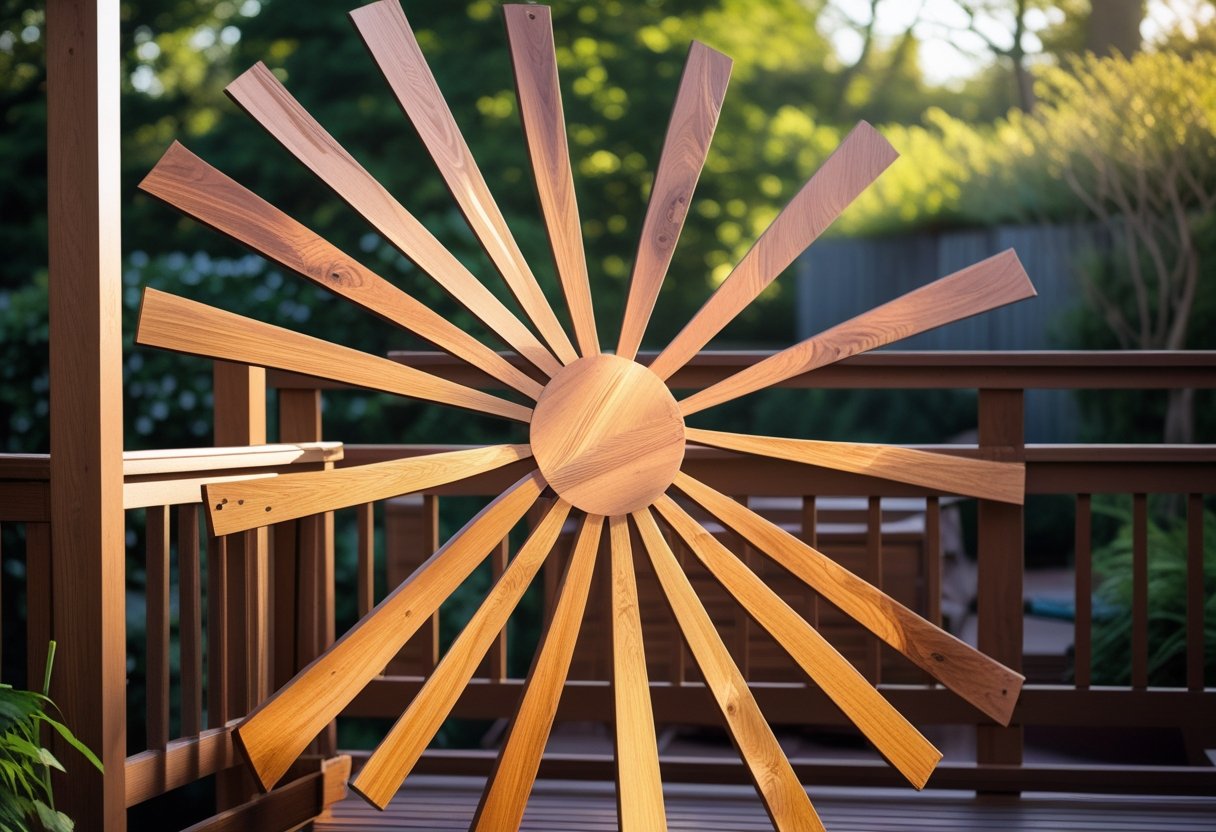
A sunburst wooden railing adds a unique look to your deck without costing too much. It uses simple wood pieces arranged in a pattern that looks like rays coming from a center point. You can build it yourself with basic tools and some patience.
Start by choosing wood that fits your deck style. Measure the space between the top and bottom rails carefully. Cut thin wooden slats to create the “rays” and attach them so they spread out evenly from a center disk. Make sure the gaps between slats meet safety codes, usually no more than 4 inches to keep it child-safe.
Materials to prepare:
- Wooden slats (1×2 or 1×3 boards)
- Center disk or board for the middle
- Screws or nails
- Wood sealer or paint for protection
Need help picking your materials? Let’s look at that next.
8) Composite railing with drink rail adapter
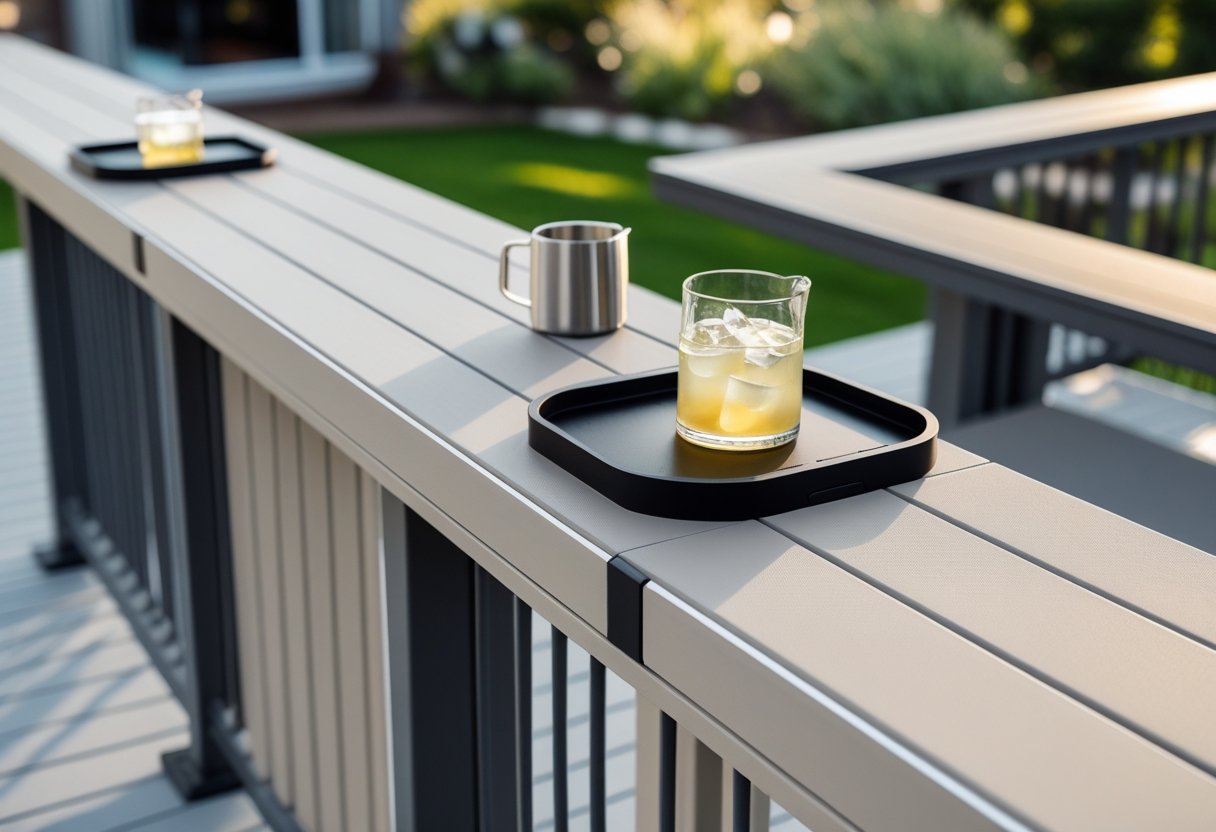
Composite railing with a drink rail adapter gives you a sturdy deck railing and a flat surface for drinks or plates. It’s a practical way to add functionality without extra work. You get the durability of composite with the convenience of a built-in drink shelf.
The drink rail adapter lets you attach your deck boards easily to create a smooth, wide top surface. This makes it perfect for hanging out or hosting. Since composite materials resist weather and fading, your railing stays strong and good-looking over time.
This setup usually comes as a kit with adjustable posts and pre-assembled parts. It fits well with decks that use composite boards like TimberTech or Trex. You can pick from different lengths and colors to match your style.
Key features:
- Durable, weather-resistant materials
- Easy installation with factory parts
- Smooth surface for drinks and small items
Need help picking your materials? Let’s look at that next.
9) Chippendale style wooden railing
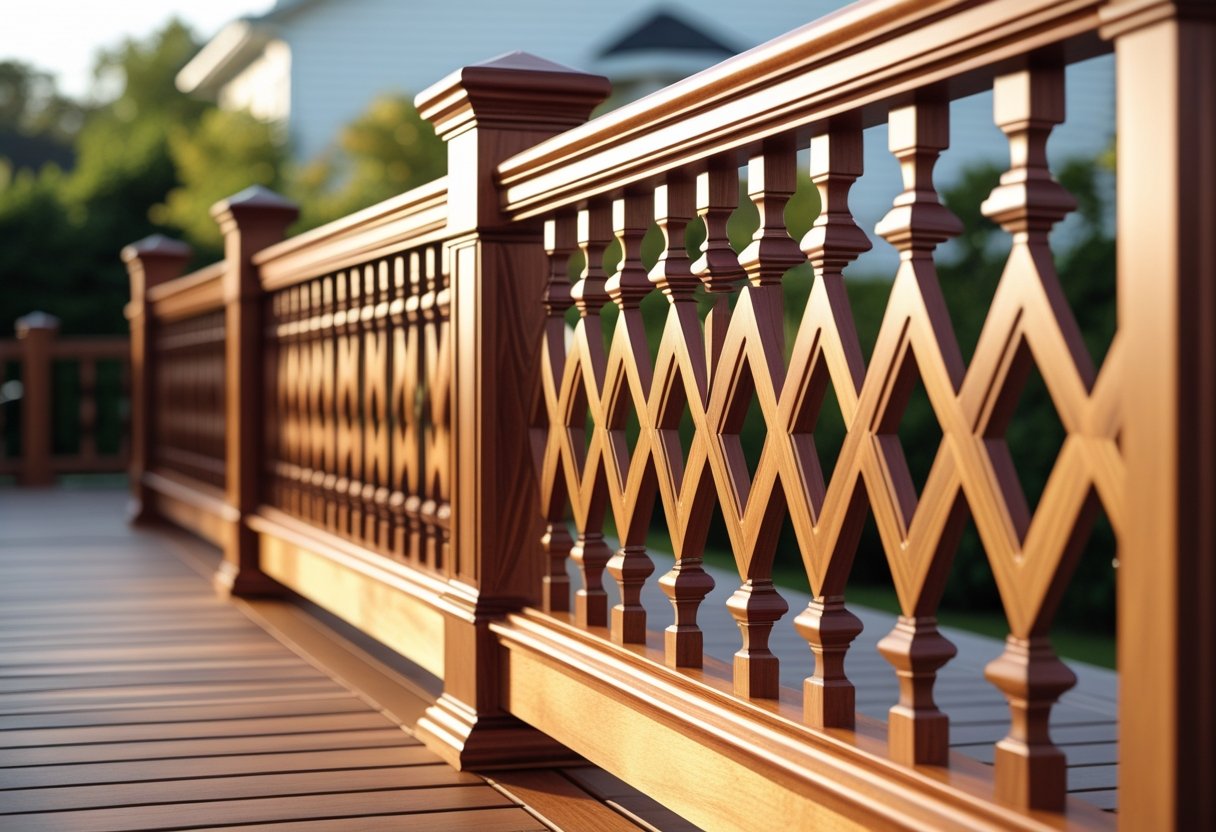
Chippendale style wooden railing adds a stylish, geometric look to your deck without costing a lot. It uses interlocking diagonal patterns that are eye-catching but still simple to build yourself. This design blends classic charm with a modern twist.
If you want something unique, Chippendale railings can make your deck stand out. They are usually made of wood and fit well with many house styles. You don’t need fancy tools to create this pattern, making it a good DIY choice.
Here’s what you need for Chippendale railings:
- Wood boards cut into diagonal pieces
- Nails or screws for fastening
- Basic measuring and cutting tools
This design offers sturdy support and fresh looks. Need help picking your materials? Let’s look at that next.
10) Simple wood railing with trimmed edges
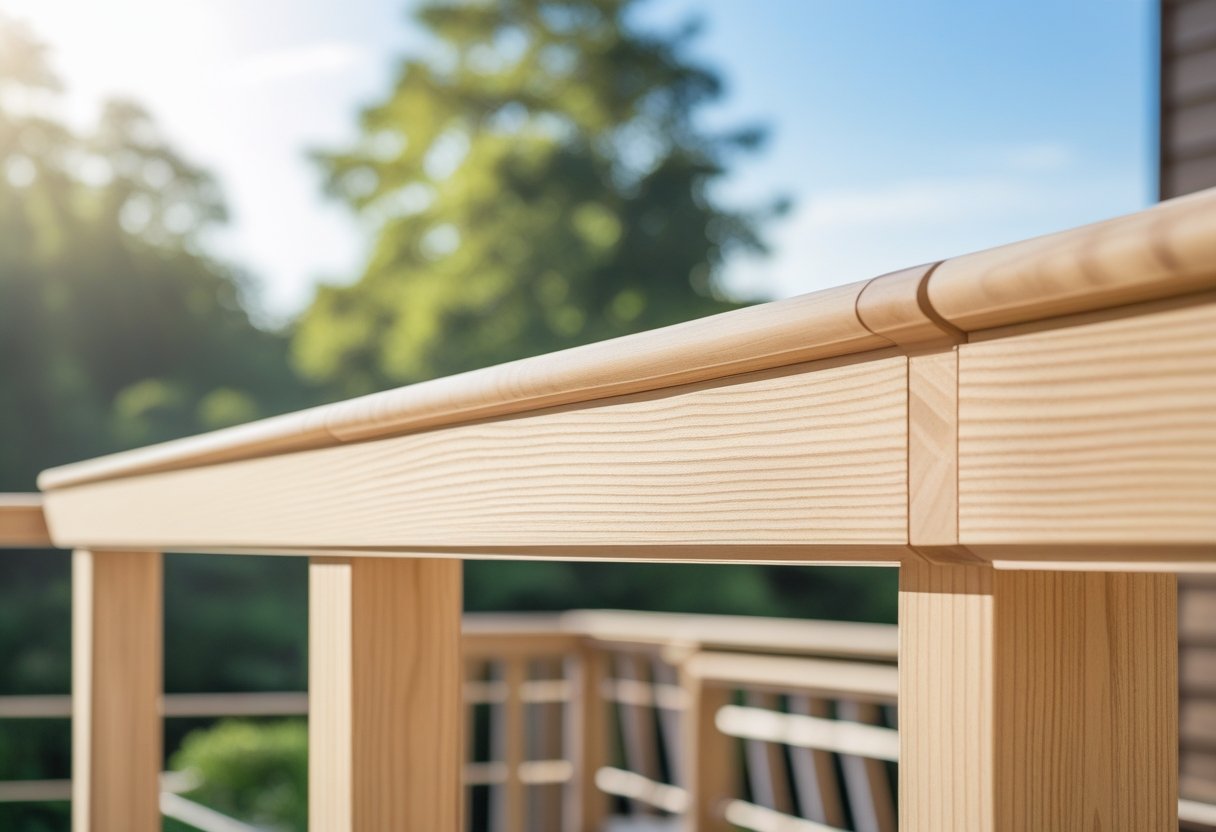
A simple wood railing with trimmed edges offers a clean, classic look that fits many deck styles. It’s easy to build, budget-friendly, and adds a neat, finished touch without much fuss.
You’ll want to use smooth, sturdy wood like cedar or pine. The trimmed edges create a polished frame that lifts the overall design. It keeps things straightforward but elegant.
This style works well if you like natural wood tones or want to paint your railing. Plus, it’s easy to customize with baluster spacing and height.
Key benefits:
- Low-cost materials
- Simple cuts and assembly
- Timeless look
- Easy to maintain or paint
Need help picking your materials? Let’s look at that next.
11) Affordable metal mesh railing
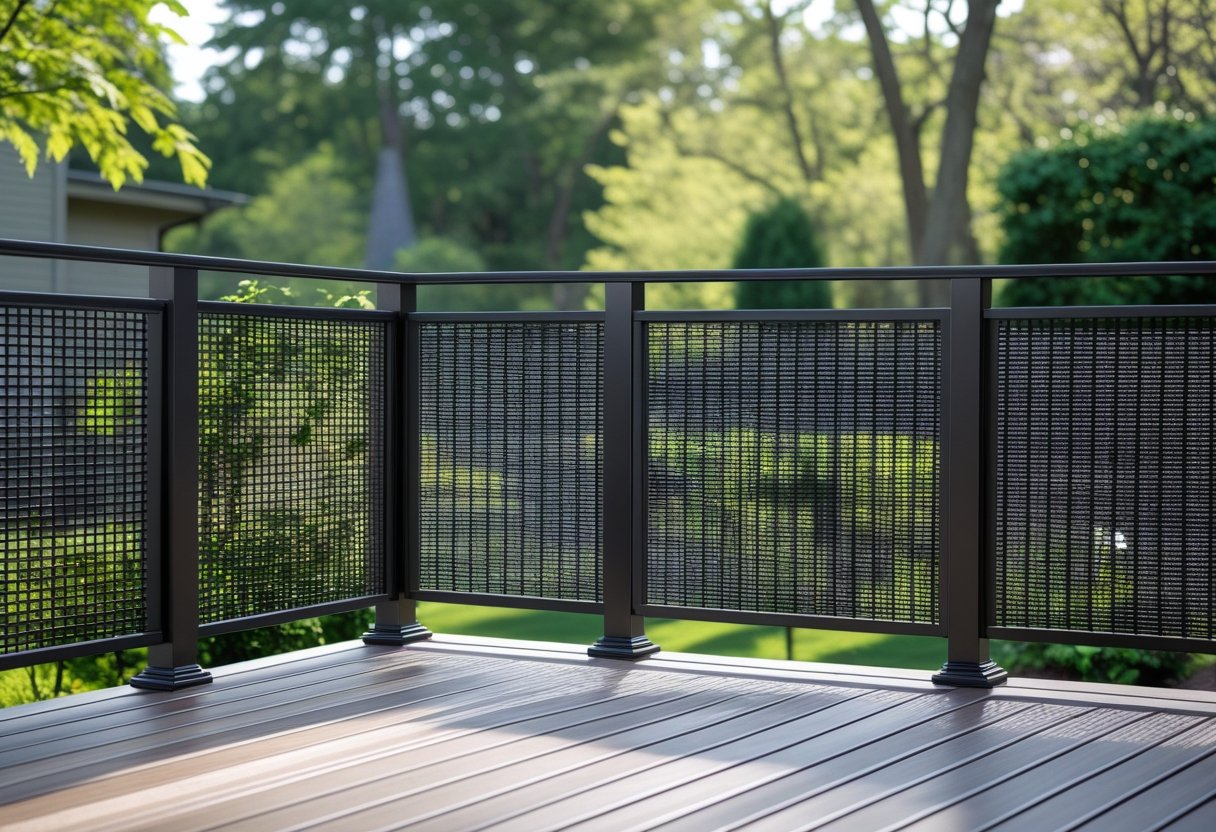
Metal mesh railing is a budget-friendly choice that offers strength and style. It gives your deck a modern look while being easy to install and maintain.
This type of railing uses metal panels with a mesh pattern. It keeps your deck safe without blocking views or light. Plus, it works well with wood or metal posts, so you can match your deck’s style.
Here are some perks of metal mesh railing:
- Durable and weather-resistant
- Allows good airflow and visibility
- Simple to clean and maintain
- Can be painted to fit your design
If you want a railing that’s sturdy but not heavy, metal mesh is a great pick. Need help picking your materials? Let’s look at that next.
12) Rustic reclaimed wood railing
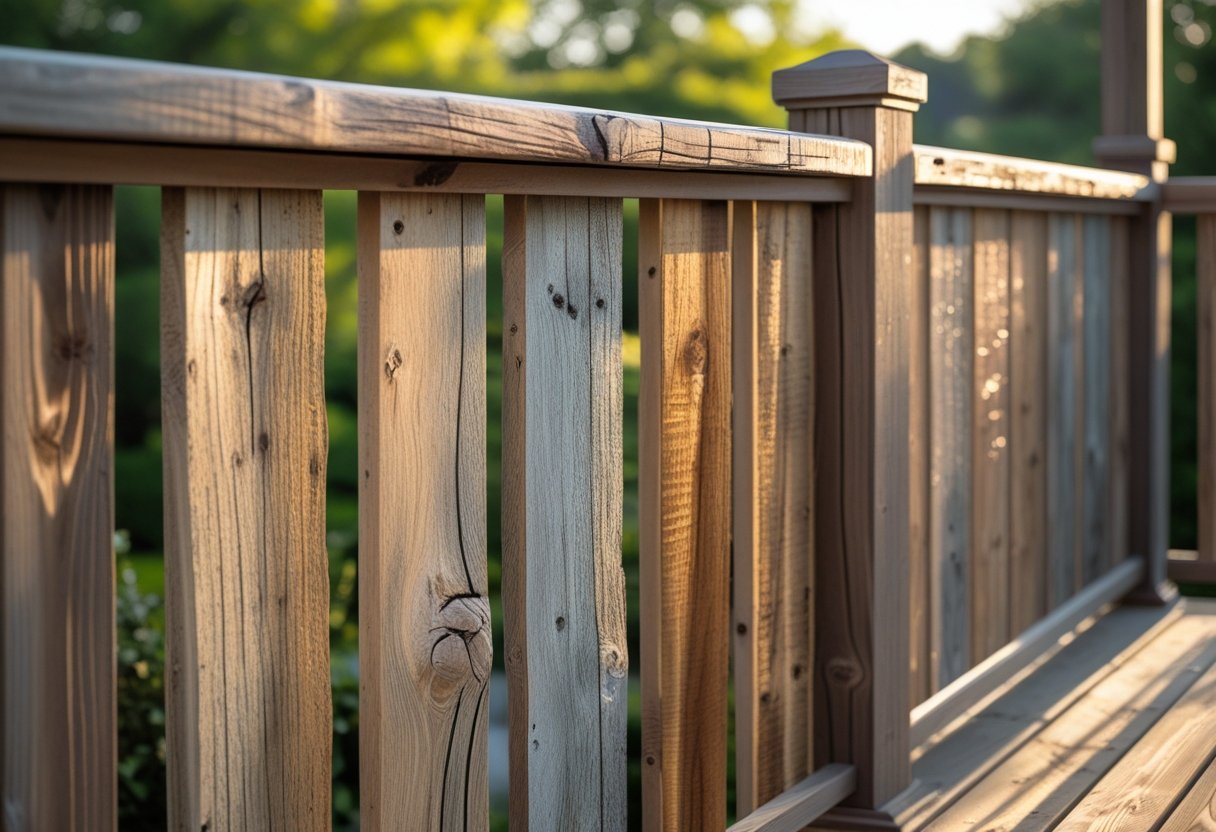
Rustic reclaimed wood railings bring charm and character to your deck without costing much. Using old wood saves money and adds a unique, natural look that fits well with outdoor spaces.
You can find reclaimed wood from barns, fences, or pallets. Each piece tells a story, giving your deck a warm, lived-in feel. Plus, it’s eco-friendly since you’re reusing materials.
This type of railing works well with simple designs. You can keep the wood rough or sand it smooth for a cleaner look. Sealing the wood helps protect it from weather damage.
Benefits of reclaimed wood railing:
- Affordable and sustainable
- Adds unique texture and color
- Easy to customize and repair
Want to see how rustic wood compares to other railing styles? Let’s explore that next.
Factors to Consider Before Upgrading Your Deck Railing
Upgrading your deck railing can transform your entire outdoor space — but rushing into it could lead to costly mistakes. Before you choose a design, it’s smart to step back and think about a few key factors. These decisions affect safety, budget, and style. Here’s what to lock in before you buy or build.
Safety & Building Code Compliance
Your railing isn’t just a design feature — it’s a safety essential. Make sure your chosen design meets local codes for height, spacing, and material. Most areas require:
- Railing height of at least 36–42 inches
- Baluster spacing less than 4 inches apart (to prevent child accidents)
- Use of approved materials for structural integrity
Check with your city or HOA before installing — non-compliance can lead to fines or forced removal.
Intended Use of the Deck
How you use your deck should shape how you design your railing. Do you host large groups? Have pets or kids running around? Or maybe you just want a peaceful coffee spot?
- High-traffic decks may need sturdier materials like aluminum or cable systems
- Family decks benefit from vertical balusters or mesh to prevent climbing
- Entertaining decks might add drink rails or wide-top caps for function
Match your railing to how you live outdoors.
Budget Constraints & Long-Term Value
Cheap doesn’t always mean smart — and expensive doesn’t always mean better. Consider not just the upfront cost, but the lifetime value. Ask yourself:
- Can I DIY this railing or will I need a pro?
- Will this material need repainting, sealing, or replacing soon?
- Is it compatible with my existing posts or deck boards?
Sometimes, spending a little more upfront saves you big down the road.
Aesthetic Match With Your Home
Your deck railing should feel like a natural extension of your home — not an afterthought. Think about:
- Matching trim colors or finishes with your home’s exterior
- Choosing patterns (like Chippendale or sunburst) that echo your home’s era
- Using complementary materials (wood + cable, composite + metal) for a balanced look
A well-matched railing boosts curb appeal and resale value.
Local Climate & Maintenance Needs
Where you live has a huge impact on what works. In wet or coastal climates, wood may rot fast. In dry, hot zones, metal may heat up and expand.
- Choose powder-coated aluminum for humid/rainy zones
- Composite resists UV damage in high-sun areas
- Avoid untreated wood unless you’re sealing it yourself
Your environment should guide your materials to save effort and money later.
Creative Ways to Personalize Affordable Deck Railings
Personalizing your deck railing doesn’t have to cost a fortune. In fact, small, creative changes can make your entire outdoor space feel customized and high-end — without blowing your budget. Whether you’re working with wood, vinyl, or metal, there are clever ways to add style, character, and function. Here are some of the best low-cost ideas to make your railing truly yours.
Add Decorative Post Caps or Solar Lights
One of the easiest and most budget-friendly upgrades is swapping out plain post caps for something eye-catching. You’ll find a wide range of styles — from sleek stainless steel to classic copper or rustic wood. Solar post caps offer double-duty design by adding soft lighting at night, making your space feel cozy and safe. Most caps are easy to install with adhesive or a simple screw, and they instantly give your railing a finished, designer look.
Use Contrasting Paint or Stain Colors
Painting or staining your railing in a contrasting color is a powerful way to highlight its structure. For wood railings, try painting the top and bottom rails a dark tone while keeping balusters light — or vice versa. This adds visual depth without any major changes. For vinyl or composite, consider applying peel-and-stick decorative accents or painting select sections with outdoor-grade paint that sticks to synthetic materials. Always test a small spot first to ensure good adhesion.
Incorporate Planter Boxes or Hanging Hooks
A few small planter boxes attached to the railing can completely change the mood of your deck. Choose herbs, cascading flowers, or succulents for low-maintenance beauty. If boxes feel bulky, use simple hanging hooks to support flower pots, lanterns, or even outdoor string lights. These add personality and seasonal charm without any permanent alterations. Just make sure the added weight doesn’t strain your railing structure.
Mount a DIY Drink Rail or Shelf
Turn your top rail into a multipurpose space by attaching a slim wooden board or composite deck board. This creates a ledge where guests can set drinks, phones, or snacks — great for entertaining or quiet mornings. You can mount the shelf using L-brackets or railing adapters, and stain it to match or contrast. This simple addition increases function and style while staying under budget.
Mix Materials for a Custom Look
You don’t have to stick to one material. Try combining wood posts with metal balusters, or vinyl rails with rope or cable sections. These mixed-material designs add a custom, high-end vibe while using affordable components. Hardware stores often sell mix-and-match railing kits, and you can piece them together for your own unique setup. Just make sure all parts are outdoor-rated and securely installed.
FAQ: Deck Railing Ideas on a Budget
1. What’s the cheapest way to upgrade a deck railing?
Painting or staining existing wooden railings is often the cheapest upgrade. It costs little, refreshes the look, and adds curb appeal without replacing materials.
2. Are vinyl railings cheaper than wood?
Yes, vinyl railings are generally more affordable than premium wood types and require less maintenance. They’re a smart budget option for long-term savings.
3. Can I build a DIY deck railing legally?
In most areas, yes — as long as your DIY railing meets local building codes, especially height and spacing requirements. Check with your city’s permit office first.
4. What railing height is required by code?
Deck railing height is usually 36–42 inches depending on your local code. Always confirm with your municipality before starting a project.
5. Is cable railing more expensive than wood?
Yes, cable railing systems like Westbury VertiCable tend to cost more upfront than basic wood, but they offer better views, low maintenance, and modern appeal.
6. What is the most low-maintenance railing material?
Vinyl and composite railings are the lowest-maintenance options. They don’t need staining, resist moisture, and hold up well in most climates.
7. Can I mix materials in one deck railing design?
Absolutely. Mixing wood with metal, or vinyl with cable, creates a custom look and often reduces cost by using leftover or budget-friendly components.
8. What are solar post caps, and are they worth it?
Solar post caps sit on top of your deck posts and provide lighting at night. They’re easy to install, cost-effective, and enhance both safety and style.
9. Are glass railings safe and budget-friendly?
Glass panel railings are safe when made from tempered glass. While not the cheapest, they’re worth considering for unobstructed views and modern style.
10. What’s a creative way to add function to a railing?
Install a drink rail adapter — it adds a flat surface to set cups or snacks and doubles as a design feature without much extra cost or effort.


