
The Mobile Home Window Trim Trick That Adds Instant Curb Appeal

If you own a mobile home and want it to look more like a permanent, site-built house, you’re not alone. Thousands of mobile homeowners search for exactly this every day — not because they’re ashamed of what they have, but because they want their home to reflect the care and pride they put into it.
The good news? The right mobile home landscaping can close that visual gap more than you’d think.
This guide is for mobile and manufactured homeowners who want real, actionable upgrades — not vague advice. You’ll learn why mobile homes tend to look different from site-built houses in the first place, what the single biggest visual trick is that grounds your home and makes it look anchored to the land, and which front yard landscaping moves give you the most credibility fast. You’ll also get a look at how skirting upgrades can work alongside your landscaping to tie everything together.
No fluff, no guesswork — just the stuff that actually works.


Understanding Why Mobile Homes Look Different from Site-Built Houses
The Visual Gaps That Give Away a Mobile Home Instantly
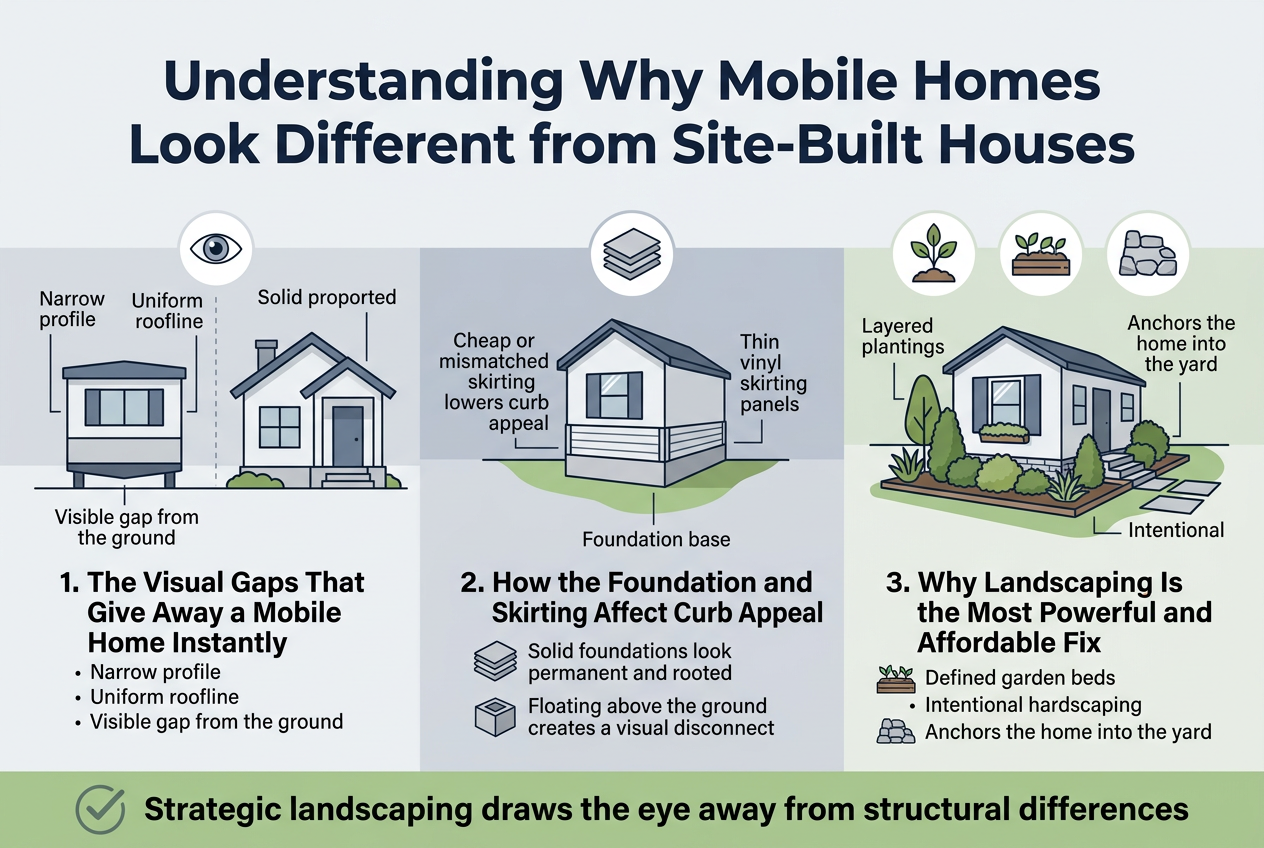
When you look at a mobile home next to a site-built house, your eye immediately picks up on a few telling details — the narrow profile, the uniform roofline, and that visible gap between the bottom of the home and the ground. These subtle cues signal “manufactured” before you even consciously register why.
How the Foundation and Skirting Affect Curb Appeal
Your skirting is doing a lot of heavy lifting, and when it looks cheap or mismatched, it drags down the entire appearance of your home. Site-built houses sit on solid foundations that look permanent and rooted. When your home appears to be floating above the ground on thin vinyl panels, it creates a visual disconnect that no paint color or front door upgrade can fully fix on its own.
Why Landscaping Is the Most Powerful and Affordable Fix
Here’s the thing — you don’t need to pour a concrete foundation to make your home look grounded. Strategic landscaping draws the eye away from the structural differences and anchors your home into the yard naturally. Layered plantings, defined garden beds, and intentional hardscaping can trick the eye into seeing permanence, and you can pull it off for a fraction of what structural upgrades would cost you.
The Core Trick That Changes Everything: Grounding the Home Visually
Using Plants and Hardscaping to Create a Permanent Foundation Look
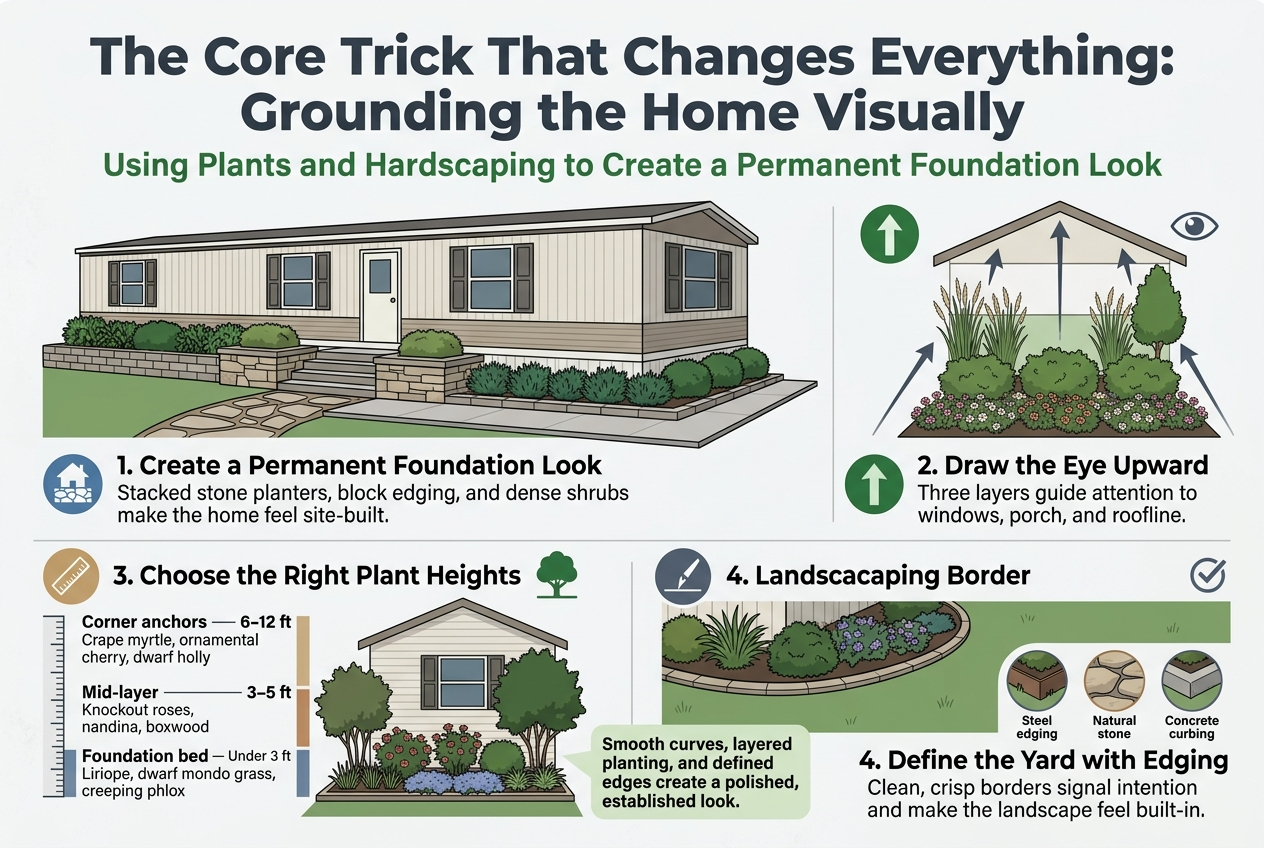
Your biggest ally in making a mobile home look site-built is creating the illusion of a solid, permanent foundation. Stacked stone planters, concrete block edging, and dense shrub rows placed directly against your skirting make your home feel like it grew out of the ground rather than sitting on top of it. When you pair hardscaping materials like flagstone pathways or poured concrete borders with low-growing evergreen shrubs, you build a visual anchor that completely changes how people perceive your home’s structure.
How Layered Landscaping Draws the Eye Away from the Chassis
Layering your plantings in three distinct tiers — ground-level flowers, mid-height shrubs, and taller ornamental grasses or small trees — naturally pulls your visitors’ gaze upward toward your windows, roofline, and front door instead of toward the base of your home. You want people admiring your shutters and porch, not scanning for your wheel wells or chassis. A thick, lush planting bed works like a visual magician’s hand, redirecting attention exactly where you want it.
Choosing the Right Plant Heights to Frame the Home Naturally
Your plant selections should scale with your home’s proportions. Keep plants nearest your foundation under 3 feet so they soften the base without blocking windows. Push mid-range shrubs like knock-out roses or nandinas to about 4–5 feet at the corners, and let a small ornamental tree like a crape myrtle anchor one side of your yard reaching 8–12 feet. This progression creates a natural framing effect that makes your home look intentionally placed and well-established.
| Plant Zone | Height Range | Best Plant Options |
|---|---|---|
| Foundation bed | Under 3 ft | Liriope, dwarf mondo grass, creeping phlox |
| Mid-layer | 3–5 ft | Knockout roses, nandina, boxwood |
| Corner anchors | 6–12 ft | Crape myrtle, ornamental cherry, dwarf holly |
Using Borders and Edging to Define a Structured, Built-In Appearance
Clean, crisp edging does something powerful — it signals intention. When your landscaping beds have sharp, defined borders, your entire yard reads as deliberate and polished rather than accidental. You can use steel landscape edging, natural stone, or even simple concrete curbing to separate your beds from your lawn. Run your edging in smooth, gentle curves around your foundation plantings, and you create the kind of structured look that makes neighbors assume your home has been there for decades.
Front Yard Landscaping Strategies That Add Instant Credibility
A. Creating a Welcoming Pathway That Signals Permanence
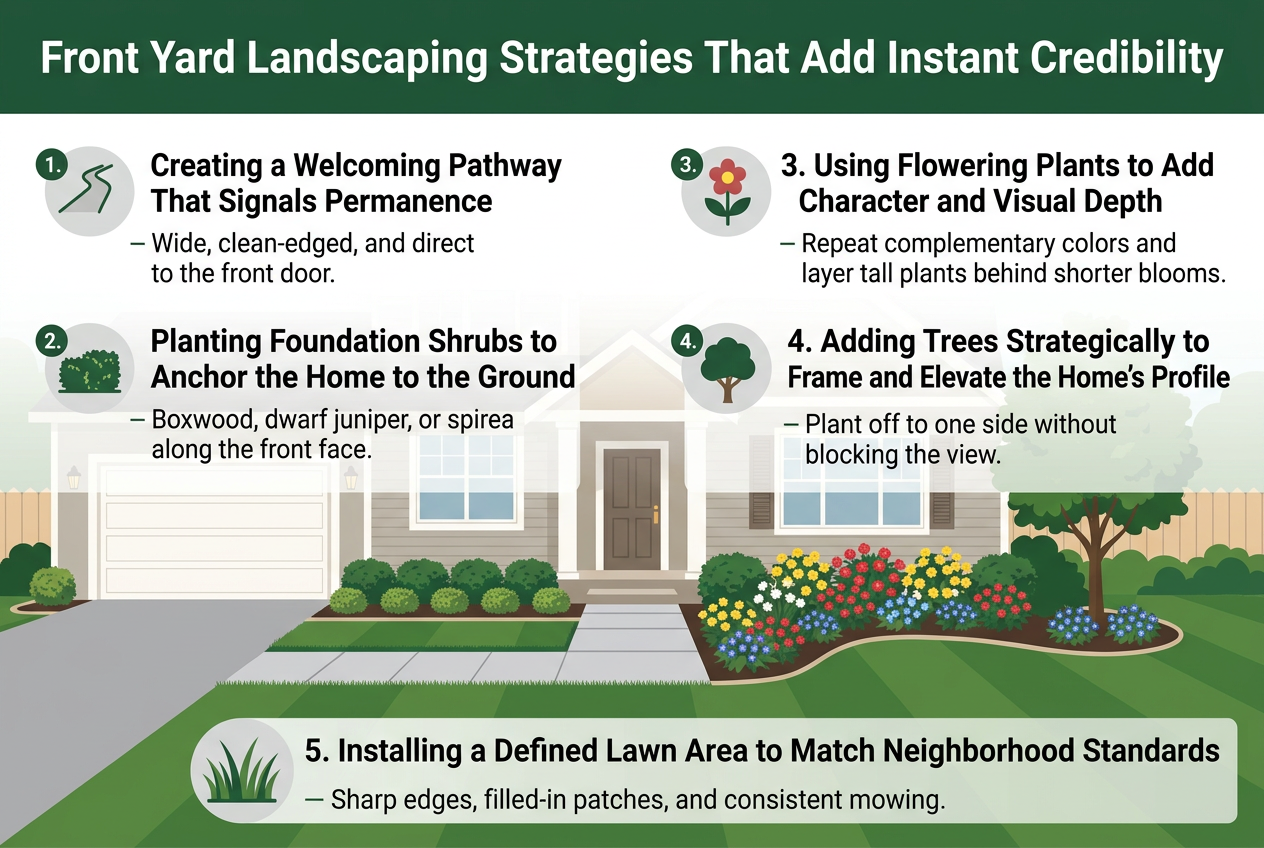
Your front pathway does more heavy lifting than you might think. A simple poured concrete or flagstone path leading from the driveway to your front door immediately tells visitors — and your own eyes — that this home belongs exactly where it sits. Edge it cleanly, keep it wide enough for two people to walk side by side, and watch how quickly it changes the whole first impression.
B. Planting Foundation Shrubs to Anchor the Home to the Ground
Your home’s base is where most people’s eyes go first, and bare skirting surrounded by open ground screams “temporary.” Plant low-growing shrubs like boxwood, dwarf junipers, or spirea directly along the front face of your home to visually connect it to the earth beneath it. Space them evenly, keep them trimmed, and you’ll be shocked how much weight they add to the overall look.
C. Using Flowering Plants to Add Character and Visual Depth
Flowers bring your yard to life in a way that nothing else can match. Pick a color palette that complements your home’s exterior — maybe soft whites and yellows against a gray siding, or bold reds against tan — and repeat those colors in clusters throughout your beds. Layering taller plants in the back with shorter bloomers up front creates that rich, layered look you see in high-end neighborhoods.
D. Adding Trees Strategically to Frame and Elevate the Home’s Profile
A single well-placed tree can do more for your home’s appearance than a truckload of flowers. Plant a medium-sized ornamental tree — like a crape myrtle, dogwood, or Japanese maple — off to one side of your front yard to frame the home without blocking it. Trees signal age, stability, and intentionality, and they’re one of the fastest ways to make a mobile home look like it’s been rooted to a spot for decades.
E. Installing a Defined Lawn Area to Match Neighborhood Standards
Your lawn is the canvas everything else sits on, so keep it tight. Edge your grass along walkways and beds with a sharp border, fill in any patchy spots with seed or sod, and mow on a consistent schedule. A well-defined, healthy lawn ties your entire yard together and signals that your home is just as cared-for and permanent as every site-built house on your street.


