
The Solar Fountain Trick That Runs All Day for Free (No Wiring Required)

You want a fountain running in your garden or on your patio, but you don’t want to dig trenches, hire an electrician, or pay more on your electricity bill every month. Good news — a solar fountain can do exactly that, and once it’s set up, it basically takes care of itself.
This guide is for you if you’re a homeowner, renter, or anyone who wants moving water in their outdoor space without the hassle of traditional wiring or complicated installations.
Here’s what you’ll get out of this:
- How a solar-powered fountain actually works and why the right setup keeps it running from sunrise to sunset
- How to pick the best solar fountain kit for your specific space, whether that’s a small balcony or a large backyard
- Where to place it so your fountain gets maximum sunlight and never sputters out mid-afternoon
No electrical experience needed. No tools required. Just a sunny spot and the right kit — and your fountain will be going all day long, completely free to run.


What Makes a Solar Fountain Run All Day Without Wiring
How Solar-Powered Water Pumps Work in Simple Terms
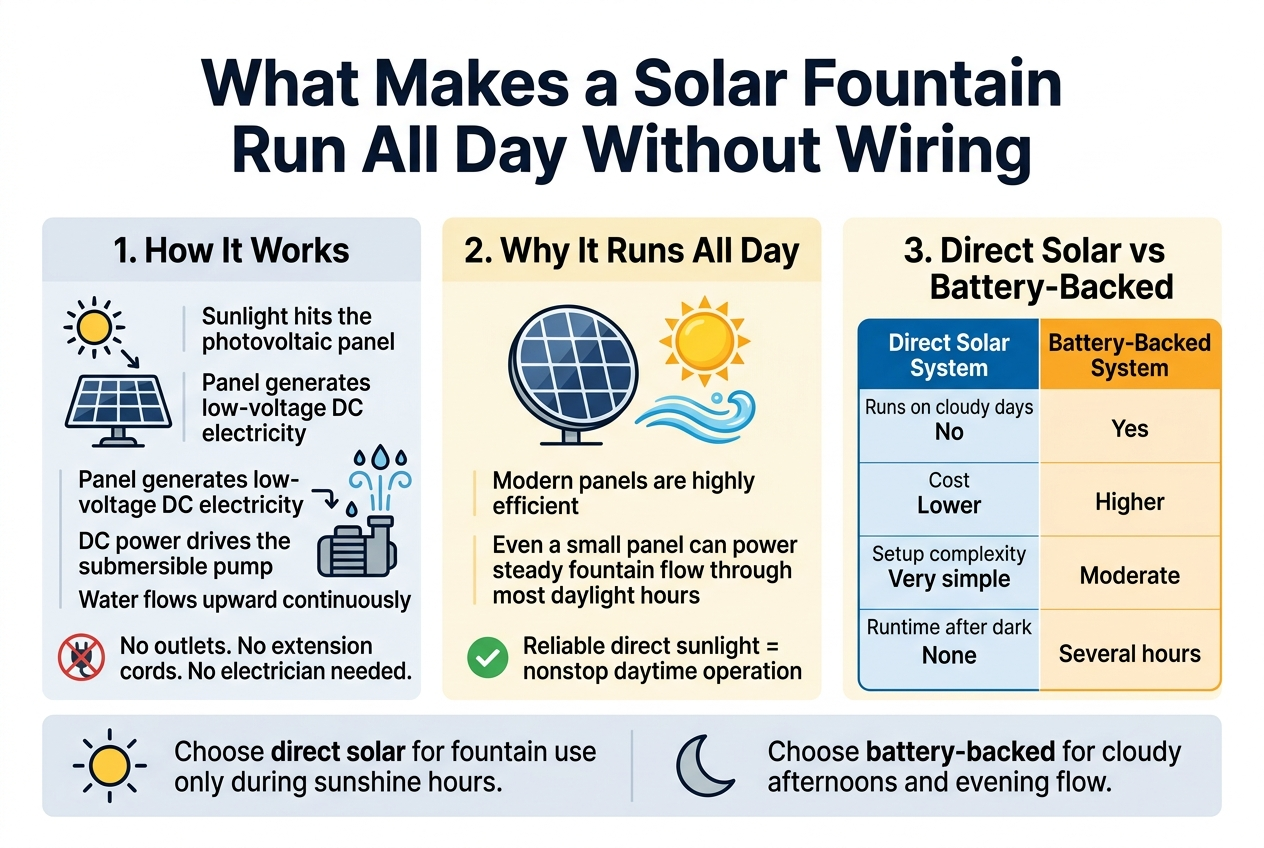
Your solar fountain runs by converting sunlight directly into electricity through a small photovoltaic panel, which powers a compact submersible pump that pushes water upward continuously. When sunlight hits your panel, it generates a low-voltage DC current that drives the pump motor — no outlets, no extension cords, no electrician needed.
Why Modern Solar Panels Deliver Enough Power for Continuous Flow
Today’s solar panels are dramatically more efficient than older models, and even a panel the size of a dinner plate can generate enough consistent wattage to keep your fountain flowing steadily through most daylight hours. Your pump gets a reliable stream of energy as long as your panel stays in good direct light, making nonstop operation completely realistic for a typical sunny day.
The Key Difference Between Direct Solar and Battery-Backed Systems
| Feature | Direct Solar System | Battery-Backed System |
|---|---|---|
| Runs on cloudy days | No | Yes |
| Cost | Lower | Higher |
| Setup complexity | Very simple | Moderate |
| Runtime after dark | None | Several hours |
Your choice between these two systems comes down to what you actually need. If you want your fountain running only during sunshine hours, a direct solar setup works perfectly and keeps your cost low. If you want water flowing on cloudy afternoons or into the evening, a battery-backed kit stores extra energy throughout the day and keeps your fountain going long after the sun dips.
Choosing the Right Solar Fountain Kit for Your Space
Best Fountain Styles for Gardens, Patios, and Balconies
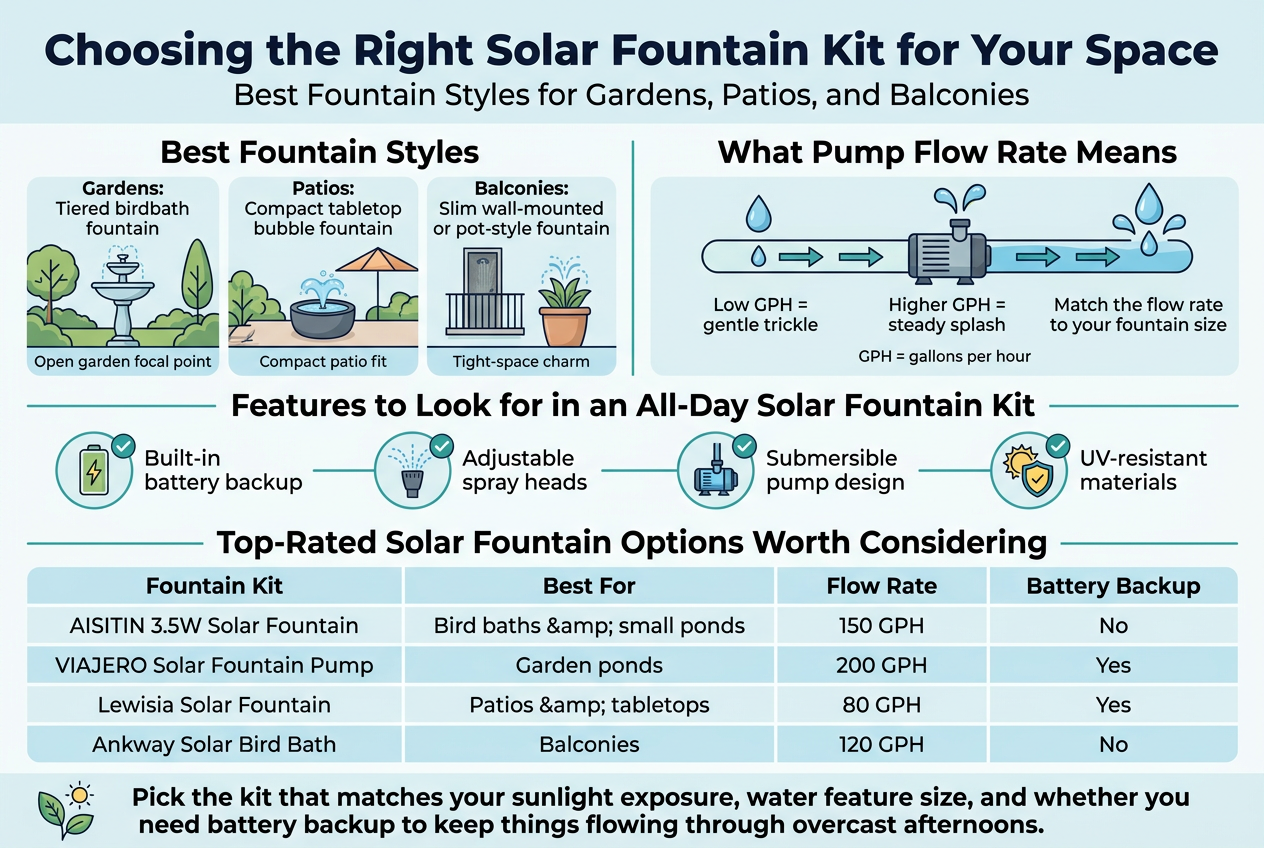
Your space size and style guide everything. For open gardens, a tiered birdbath fountain creates a stunning focal point. Patios work beautifully with a compact tabletop bubble fountain. Balconies? Go with a slim wall-mounted or pot-style fountain that fits tight spaces without sacrificing charm or water flow.
What Pump Flow Rate Means and Why It Matters
Your pump’s flow rate — measured in gallons per hour (GPH) — tells you how much water moves through your fountain continuously. A low GPH means a gentle trickle, while higher GPH delivers that satisfying, steady splash. Match the flow rate to your fountain’s size so water doesn’t overflow or run dry.
Features to Look for in an All-Day Solar Fountain Kit
When you’re shopping, prioritize these features:
- Built-in battery backup — keeps your fountain running even when clouds roll in
- Adjustable spray heads — lets you customize the water pattern to your liking
- Submersible pump design — quieter, more efficient, and easier to set up
- UV-resistant materials — prevents cracking and fading through hot summers
Top-Rated Solar Fountain Options Worth Considering
| Fountain Kit | Best For | Flow Rate | Battery Backup |
|---|---|---|---|
| AISITIN 3.5W Solar Fountain | Bird baths & small ponds | 150 GPH | No |
| VIAJERO Solar Fountain Pump | Garden ponds | 200 GPH | Yes |
| Lewisia Solar Fountain | Patios & tabletops | 80 GPH | Yes |
| Ankway Solar Bird Bath | Balconies | 120 GPH | No |
Pick the kit that matches your sunlight exposure, water feature size, and whether you need that battery backup to keep things flowing through overcast afternoons.
The Secret to Maximizing Sunlight for Nonstop Operation
Ideal Placement Tips to Capture the Most Sun Exposure
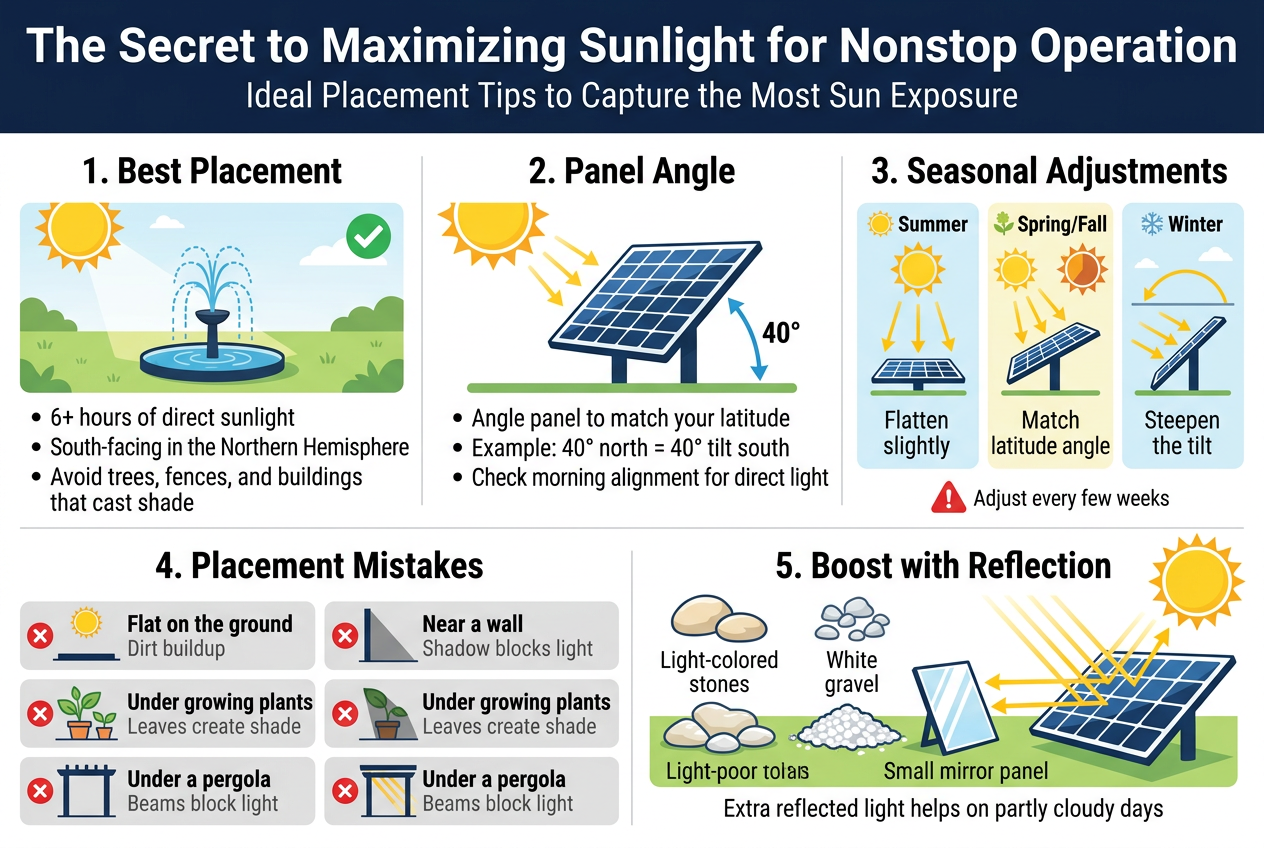
Pick a spot that gets at least six hours of direct sunlight daily — south-facing areas in the Northern Hemisphere are your best bet. Avoid placing your fountain under trees, near fences, or close to buildings that cast shadows during peak afternoon hours, since even partial shade can cut your pump’s output dramatically.
How to Angle and Adjust the Solar Panel for Peak Performance
Tilt your solar panel so it faces the sun at roughly the same angle as your latitude — for example, if you live at 40° north, angle the panel around 40° toward the south. Many kits come with adjustable brackets, so take a few minutes each morning to check whether the panel is catching light directly rather than at a glancing angle.
Seasonal Adjustments That Keep Your Fountain Running Longer
- Summer: Flatten the panel slightly since the sun sits higher in the sky
- Spring/Fall: Return to your latitude angle for balanced exposure
- Winter: Steepen the tilt to catch the lower sun arc
Checking your angle every few weeks keeps your fountain pumping consistently rather than sputtering by mid-afternoon.
Common Placement Mistakes That Drain Your Fountain’s Power
| Mistake | Why It Hurts Performance |
|---|---|
| Placing panel flat on the ground | Collects dirt and misses angled sunlight |
| Positioning near a wall | Morning or afternoon shadow blocks key hours |
| Ignoring nearby growing plants | Seasonal leaf growth creates new shade |
| Setting up under a pergola | Structural beams block intermittent light |
Using Reflective Surfaces to Boost Solar Energy Intake
Place light-colored stones, white gravel, or a small mirror panel near your solar fountain to bounce extra light onto the panel. Your panel absorbs both direct and reflected light, so surrounding it with bright, reflective materials can add a surprising boost on partly cloudy days when every bit of extra energy counts.
Setting Up Your Solar Fountain Without Any Tools or Wiring
Step-by-Step Assembly for a Hassle-Free Setup
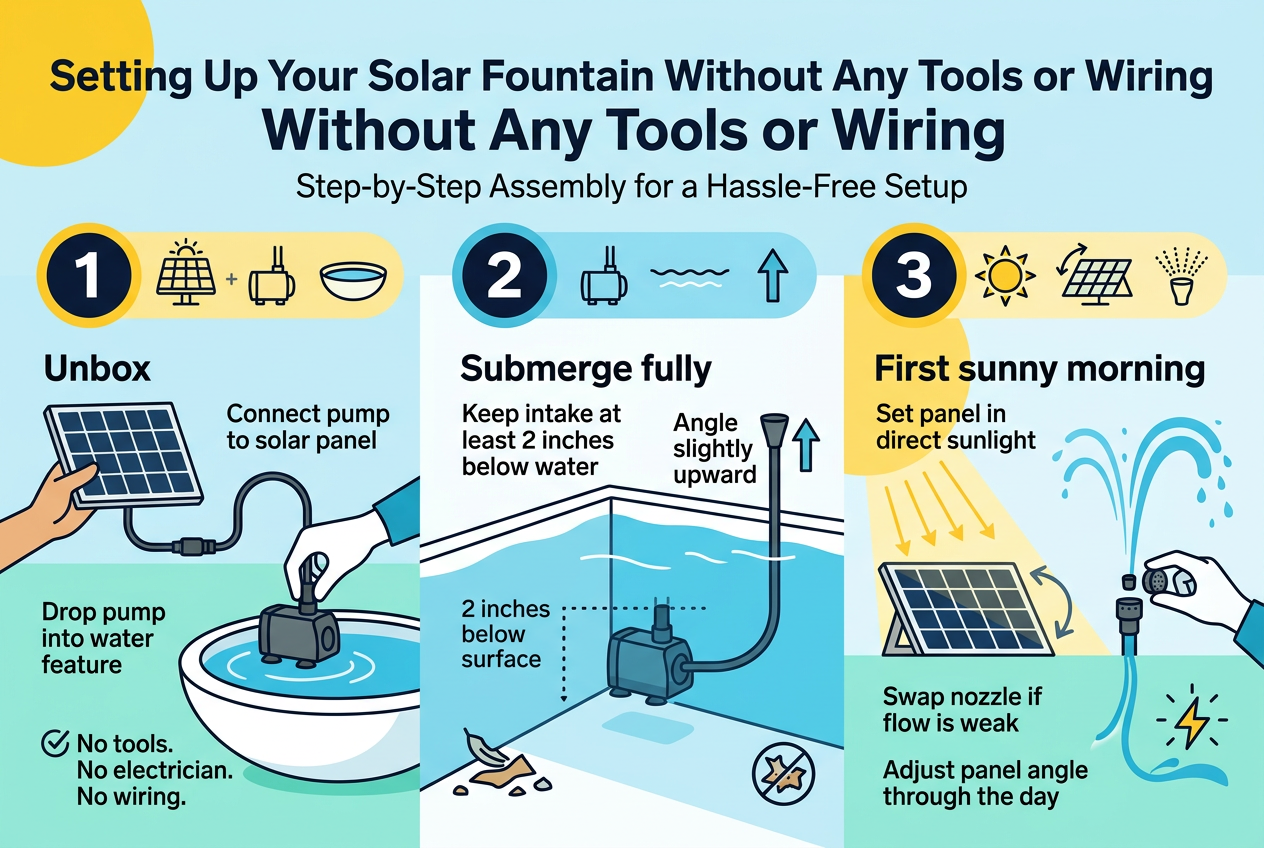
Getting your solar fountain up and running is refreshingly simple. Pull everything out of the box, connect the pump to the solar panel using the attached cable, and drop the pump into your water feature. That’s genuinely it — no tools, no electrician, no tangled wiring nightmares.
How to Position the Pump Correctly in Your Water Feature
Where you place your pump makes a huge difference in how well your fountain performs. Submerge it fully so the intake sits at least two inches below the water surface, keeping it away from debris-heavy corners. Angle the nozzle slightly upward so your water arc looks clean and controlled rather than chaotic.
Testing Your Fountain on the First Day for Optimal Flow
On your first sunny morning, set your solar panel in direct sunlight and watch your fountain come alive within seconds. If the flow seems weak, swap out the nozzle attachment — most kits include multiple heads for different spray heights. Adjust your panel angle throughout the day to chase the strongest sun position, and you’ll quickly find your fountain’s sweet spot for maximum, all-day performance.
Keeping Your Solar Fountain Running Strong All Season
Simple Cleaning Routine to Prevent Clogs and Buildup
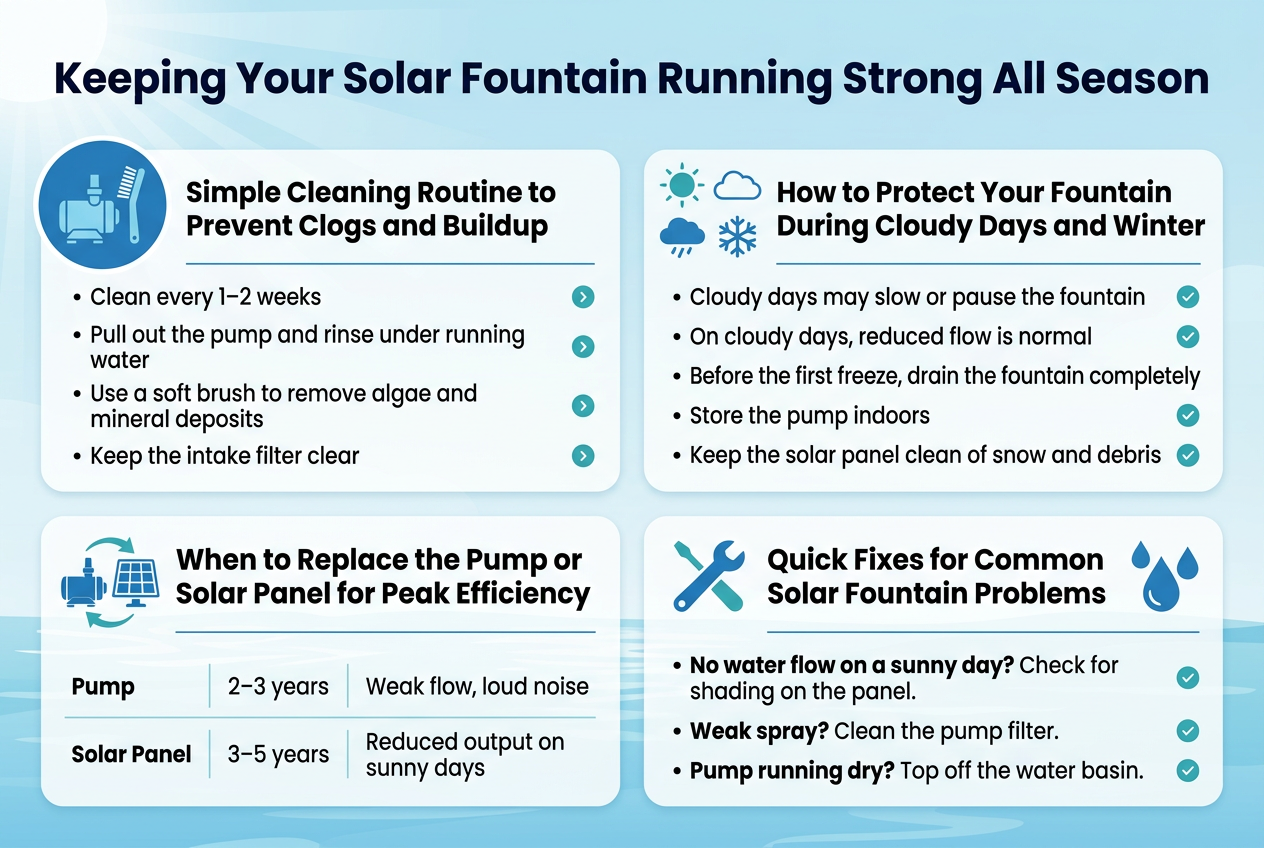
Your solar fountain works hard every day, so give it a quick clean every one to two weeks. Pull out the pump, rinse it under running water, and use a soft brush to scrub away any algae or mineral deposits. Keeping the intake filter clear means your pump moves water freely without straining.
How to Protect Your Fountain During Cloudy Days and Winter
On cloudy days, your fountain may slow down or pause — that’s completely normal since it runs purely on sunlight. In winter, drain your fountain completely before the first freeze hits your area. Store the pump indoors to prevent cracking, and keep your solar panel clean of snow and debris so it’s ready to go when spring returns.
When to Replace the Pump or Solar Panel for Peak Efficiency
| Component | Average Lifespan | Signs It Needs Replacing |
|---|---|---|
| Pump | 2–3 years | Weak flow, loud noise |
| Solar Panel | 3–5 years | Reduced output on sunny days |
Watch for those warning signs early so your fountain never skips a beat.
Quick Fixes for Common Solar Fountain Problems
- No water flow on a sunny day? Check that nothing is shading your panel.
- Weak spray? Clean the pump filter — it’s probably clogged.
- Pump running dry? Top off your water basin; low water levels burn out pumps fast.


