
5 Easy DIY Dog Enrichment Games You Can Make at Home

Your dog needs mental exercise just as much as physical activity to stay happy and healthy. If you’re a dog owner looking for budget-friendly ways to keep your pup’s mind sharp, these 5 easy DIY dog enrichment games will transform everyday household items into engaging activities.
You don’t need expensive store-bought toys or special training to create these mental challenges. We’ll show you how to make a snuffle mat from fleece strips that taps into your dog’s natural foraging instincts, create interactive puzzle feeders using cardboard boxes, and set up scent work games with items you already have at home.
Each project takes 30 minutes or less to complete and costs under $10. Your dog will get the mental workout they crave while you save money and bond through creative play.
Understanding Your Dog’s Mental Stimulation Needs
You Might Also Love These Ideas


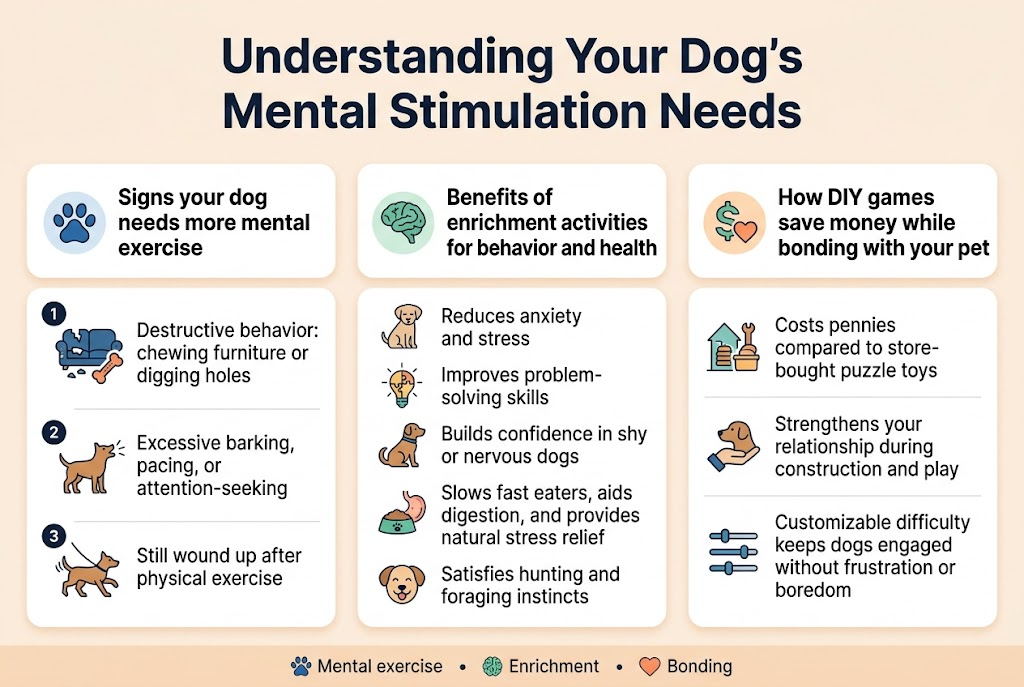
Signs your dog needs more mental exercise
You’ll notice your dog becoming destructive, chewing furniture or digging holes when they’re mentally understimulated. Excessive barking, pacing, or attention-seeking behaviors often signal boredom. Watch for restlessness after physical exercise – if your pup still seems wound up despite a long walk, their brain needs a workout too.
Benefits of enrichment activities for behavior and health
Mental stimulation reduces anxiety and stress in dogs, leading to calmer behavior at home. Regular brain games improve problem-solving skills and build confidence in shy or nervous dogs. These activities also slow down fast eaters, aid digestion, and provide natural stress relief. Your dog’s overall happiness increases when their hunting and foraging instincts are satisfied through enrichment.
How DIY games save money while bonding with your pet
Creating enrichment games from household items costs pennies compared to store-bought puzzle toys that can run $20-50 each. You’ll strengthen your relationship by spending quality time together during both construction and play sessions. DIY projects let you customize difficulty levels perfectly for your dog’s abilities, ensuring they stay engaged without getting frustrated or bored.
Snuffle Mat Made from Fleece Strips
Materials needed and preparation steps
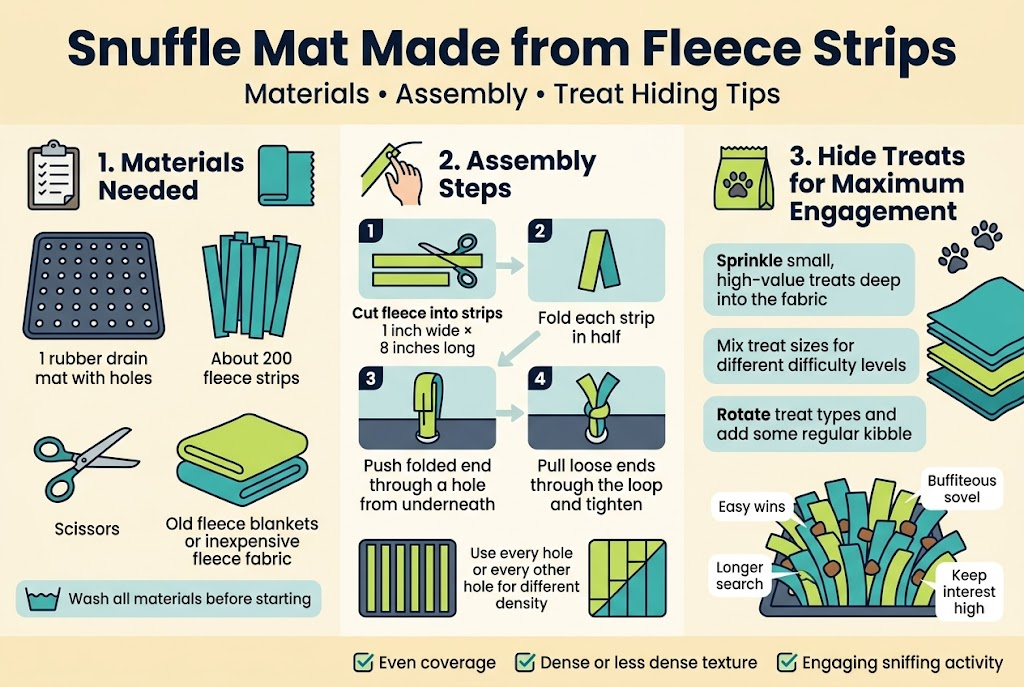
You’ll need one rubber drain mat with holes, about 200 fleece strips cut into 8-inch lengths, and scissors. Cut old fleece blankets or buy inexpensive fleece fabric from any craft store. Wash all materials before starting to remove any chemical residues that might irritate your dog’s nose during sniffing activities.
Step-by-step assembly instructions
Start by cutting your fleece into strips approximately 1 inch wide and 8 inches long. Take each strip and fold it in half, then push the folded end through a hole in the drain mat from underneath. Pull the loose ends through the loop you’ve created and tighten to secure. Continue this process across the entire mat, placing strips in every hole or every other hole depending on how dense you want the final product. Work systematically from one corner to ensure even coverage.
How to hide treats effectively for maximum engagement
Sprinkle small, high-value treats throughout the fleece strips, pushing them deep into the fabric layers. Use treats of varying sizes to create different difficulty levels – tiny training treats for easy wins and larger pieces for extended searching. Rotate treat types to maintain interest, and consider adding a few pieces of your dog’s regular kibble mixed with special rewards to make every sniff potentially rewarding.
Frozen Kong Alternatives Using Household Items
Ice cube tray puzzle feeders with treats
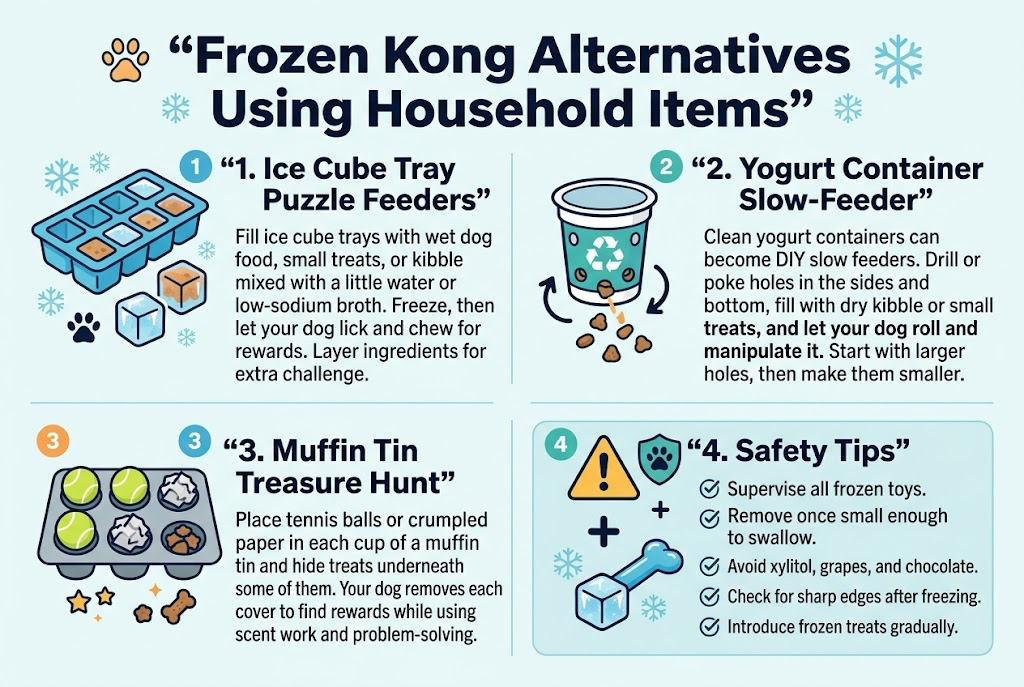
Fill ice cube trays with a mixture of wet dog food, small treats, or kibble mixed with a bit of water or low-sodium broth. Once frozen, pop out the cubes and let your dog work to lick and chew their way to the rewards. You can also layer different ingredients for extra challenge.
Yogurt container slow-feeder creation
Clean yogurt containers make perfect DIY slow feeders when you drill or poke holes throughout the sides and bottom. Fill with dry kibble or small treats, and your dog will need to roll and manipulate the container to get food out. Start with larger holes and make them smaller as your dog masters the game.
Muffin tin treasure hunt setup
Place tennis balls or crumpled paper in each cup of a muffin tin, hiding treats underneath some of them. Your dog will need to remove each ball to discover which cups contain rewards. This game combines physical manipulation with scent work, keeping your pup mentally engaged for extended periods.
Safety tips for freezer-based enrichment toys
Always supervise your dog with frozen toys and remove them once they become small enough to swallow whole. Avoid ingredients toxic to dogs like xylitol, grapes, or chocolate. Check that containers don’t have sharp edges after freezing, and introduce frozen treats gradually to prevent stomach upset from too much cold food.
Interactive Puzzle Feeders from Cardboard
Toilet Paper Roll Treat Dispensers
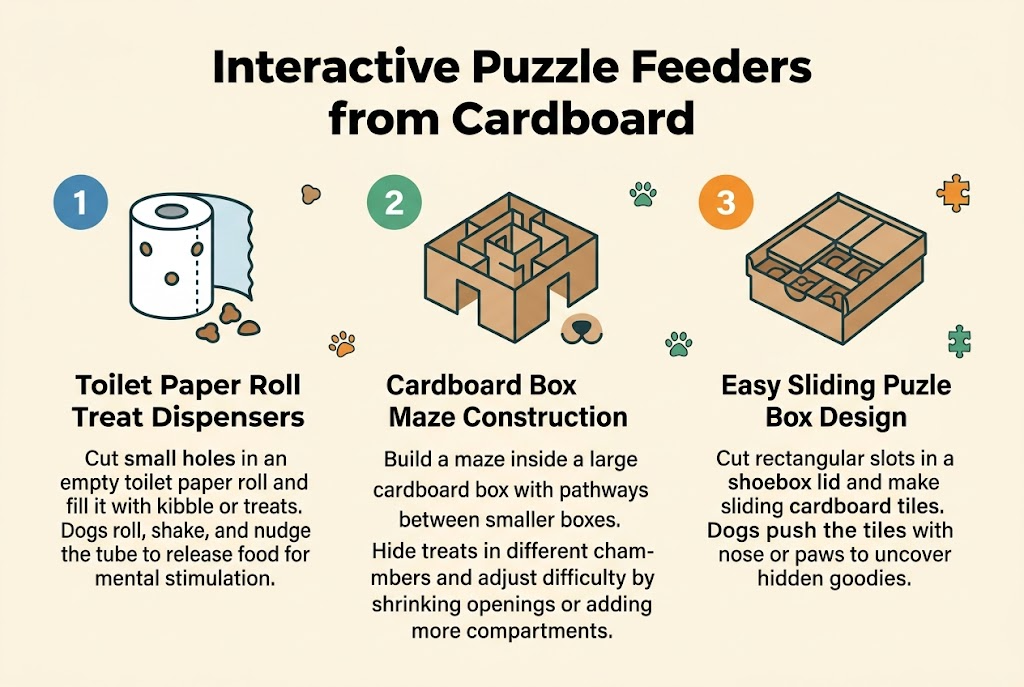
Transform empty toilet paper rolls into engaging puzzle feeders by cutting small holes throughout the tube and filling it with your dog’s favorite kibble or treats. Your dog will need to roll, shake, and manipulate the tube to release the food, providing mental stimulation during mealtime.
Cardboard Box Maze Construction
Create an exciting maze using a large cardboard box by cutting doorways and pathways between smaller boxes placed inside. Hide treats throughout different chambers and watch your dog navigate the maze to find their rewards. You can adjust difficulty by making openings smaller or adding more compartments.
Easy Sliding Puzzle Box Design
Build a simple sliding puzzle by cutting rectangular slots in a shoebox lid and creating cardboard tiles that slide back and forth to reveal treat compartments underneath. Your dog learns to push the tiles with their nose or paws to uncover hidden goodies, turning snack time into an engaging brain game.
Scent Work Games Using Common Supplies
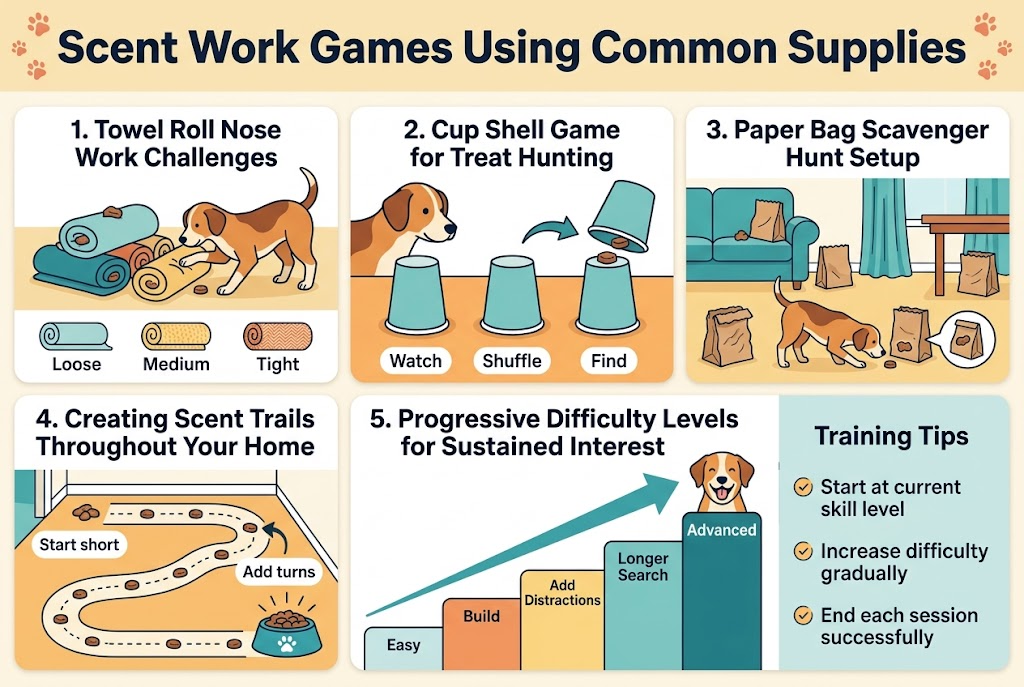
Towel Roll Nose Work Challenges
Roll treats inside old towels, creating different difficulty levels by varying the tightness. Start with loose rolls where treats fall out easily, then progress to tighter wraps that require more pawing and nosing. Use multiple towels of varying textures to keep your dog engaged and challenged.
Cup Shell Game for Treat Hunting
Place treats under one of three identical cups and let your dog watch you shuffle them. Start slowly so your pup can track the correct cup, then increase speed as they master the game. This classic challenge builds focus and memory while providing mental stimulation through problem-solving.
Paper Bag Scavenger Hunt Setup
Hide treats in crumpled paper bags throughout your home, varying the hiding spots from obvious to challenging. Place some bags at nose level, others requiring your dog to search under furniture or behind curtains. Change locations regularly to maintain excitement and prevent your dog from memorizing spots.
Creating Scent Trails Throughout Your Home
Drag high-value treats along floors, creating winding paths that lead to jackpot rewards. Start with short, straight trails and gradually introduce turns, elevation changes, and longer distances. Use different treat types to create varying scent intensities, making some trails stronger than others for progressive difficulty.
Progressive Difficulty Levels for Sustained Interest
Begin each game at your dog’s current skill level and gradually increase complexity over weeks. Add distractions, extend search times, or combine multiple games for advanced challenges. Monitor your dog’s frustration levels and adjust accordingly, ensuring each session ends successfully to maintain enthusiasm and confidence in future play.
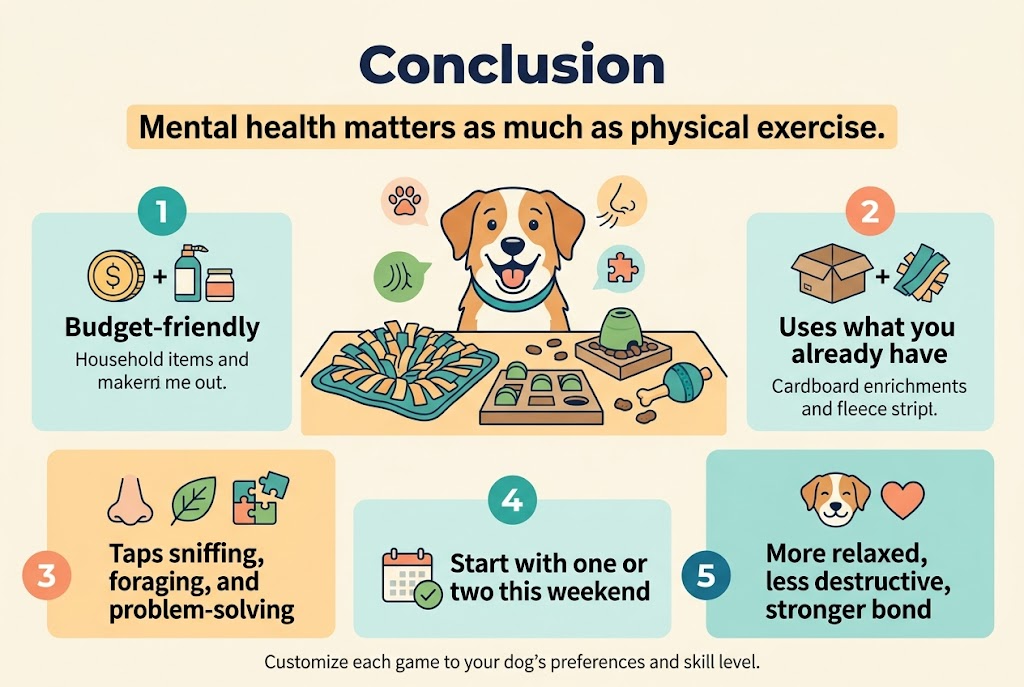
Your dog’s mental health is just as important as their physical exercise, and these simple DIY enrichment games prove you don’t need expensive store-bought toys to keep your pup engaged and happy. From creating snuffle mats with fleece strips to building puzzle feeders from cardboard boxes, you now have five budget-friendly ways to challenge your dog’s mind and satisfy their natural instincts. These activities tap into your dog’s love for sniffing, foraging, and problem-solving while using items you likely already have around the house.
Start with one or two of these projects this weekend and watch how your dog responds. You’ll probably notice they’re more relaxed and content after a good mental workout, and you might even find that some destructive behaviors decrease when their minds are properly stimulated. The best part? You can customize each game to match your dog’s preferences and skill level, making these enrichment activities a fun bonding experience for both of you.


