Skip to content

[email protected] | About Us |ย Privacy Policy | Terms Of Use

Facebook Pinterest
logo
  • Home ImprovementExpand
    • Deck
    • Barn Doors
    • Patio
    • Bathroom
    • Garden Beds
    • Winter Home Prep
  • Mobile HomeExpand
    • Crawl Space
    • Skirting
  • BackyardExpand
    • Landscaping
    • Curb Appeal
    • Water Features
  • Porch
  • Garden
  • Contact
logo
Pet Ideas

Everyday Habits That Make Your Dog Happier

Your dog’s happiness depends on the simple things you do every single day. Small changes to your routine can dramatically improve your furry friend’s mood, energy levels, and overall well-being.

This guide is for dog owners who want to strengthen their bond while creating a more joyful life for their pets. You don’t need expensive gadgets or complicated training programs โ€“ just a few everyday habits that make your dog happier.

We’ll explore how daily exercise routines can transform your dog’s mood and why the right feeding practices do more than just fill their belly. You’ll also discover how to create a living space that helps your dog feel secure and content, plus simple ways to build the trust and communication that every great human-dog relationship needs.

Contents

Toggle
  • Daily Exercise Routines That Boost Your Dog’s Mood
      • Morning Walks That Energize Your Pet for the Day
      • Interactive Play Sessions That Strengthen Your Bond
      • Mental Stimulation Games That Prevent Boredom
      • Outdoor Adventures That Satisfy Natural Instincts
  • Feeding Practices That Enhance Well-Being
      • Consistent meal schedules that reduce anxiety
      • Puzzle feeders that make eating more engaging
      • Healthy treat rewards that reinforce positive behavior
  • Creating a Comfortable Living Environment
      • Designated Safe Spaces Where Your Dog Can Retreat
      • Regular Grooming Routines That Maintain Health and Comfort
      • Temperature Control That Keeps Your Pet Relaxed
      • Noise Management Techniques for Anxious Dogs
  • Building Strong Communication and Trust
      • Positive reinforcement training methods that build confidence
      • Daily bonding activities that strengthen your relationship
      • Consistent commands and boundaries that provide security
      • You Might Also Like!

Daily Exercise Routines That Boost Your Dog’s Mood

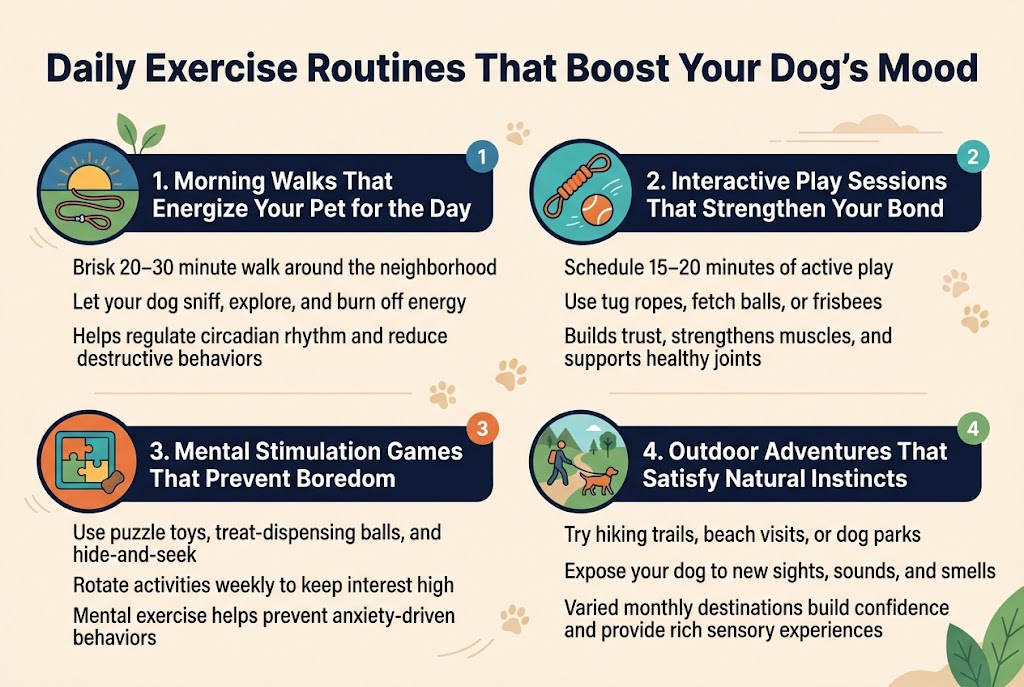
Create a clean, professional full-bleed infographic in a 3:2 aspect ratio with a light warm background, modern flat vector style, and a clear visual hierarchy. Use bold dark navy headline text at the top centered across the width: "Daily Exercise Routines That Boost Your Dog's Mood". Place four wide horizontal content blocks in a 2x2 grid beneath the title, each with a colored circular icon on the left, a bold subheading, and 2โ€“3 short lines of body text. Use friendly dog-themed colors: navy, teal, orange, and green, with simple paw-print accents and subtle motion lines. Use legible sans-serif fonts, bold for headings and regular for body text.Top block left: a sunrise and leash icon, heading "Morning Walks That Energize Your Pet for the Day", body text: "Brisk 20โ€“30 minute walk around the neighborhood", "Let your dog sniff, explore, and burn off energy", "Helps regulate circadian rhythm and reduce destructive behaviors".Top block right: a tug toy and fetch ball icon, heading "Interactive Play Sessions That Strengthen Your Bond", body text: "Schedule 15โ€“20 minutes of active play", "Use tug ropes, fetch balls, or frisbees", "Builds trust, strengthens muscles, and supports healthy joints".Bottom block left: a puzzle toy and treat icon, heading "Mental Stimulation Games That Prevent Boredom", body text: "Use puzzle toys, treat-dispensing balls, and hide-and-seek", "Rotate activities weekly to keep interest high", "Mental exercise helps prevent anxiety-driven behaviors".Bottom block right: a hiking trail and dog park icon, heading "Outdoor Adventures That Satisfy Natural Instincts", body text: "Try hiking trails, beach visits, or dog parks", "Expose your dog to new sights, sounds, and smells", "Varied monthly destinations build confidence and provide rich sensory experiences".Add small numbered markers 1, 2, 3, 4 in colored circles beside each section title. Include subtle decorative elements like leaves, paw prints, and a faint horizon line, but keep the layout clean and uncluttered. Make all text crisp and fully readable.

Morning Walks That Energize Your Pet for the Day

Your dog’s morning walk sets the tone for their entire day. Start with a brisk 20-30 minute walk around your neighborhood, allowing your furry friend to sniff, explore, and burn off energy. This early exercise helps regulate their circadian rhythm and reduces destructive behaviors throughout the day.

Also Read  8 Fresh No-Bake Dog Treat Recipes You Can Make Anytime

Interactive Play Sessions That Strengthen Your Bond

Schedule dedicated playtime with toys like tug ropes, fetch balls, or frisbees. These sessions should last 15-20 minutes and focus on games that require your active participation. Your dog craves this one-on-one attention, and these moments build trust while providing essential physical activity that keeps their muscles strong and joints healthy.

Mental Stimulation Games That Prevent Boredom

Challenge your dog’s mind with puzzle toys, treat-dispensing balls, and hide-and-seek games. Rotate different activities weekly to maintain their interest. You can hide treats around the house, teach new tricks, or create obstacle courses using household items. Mental exercise tires dogs as much as physical activity and prevents anxiety-driven behaviors.

Outdoor Adventures That Satisfy Natural Instincts

Take your dog on hiking trails, beach visits, or trips to dog parks where they can experience new sights, sounds, and smells. These adventures tap into their natural hunting and exploring instincts. Vary your destinations monthly to expose them to different environments, which builds confidence and provides rich sensory experiences that indoor activities simply cannot match.

Feeding Practices That Enhance Well-Being
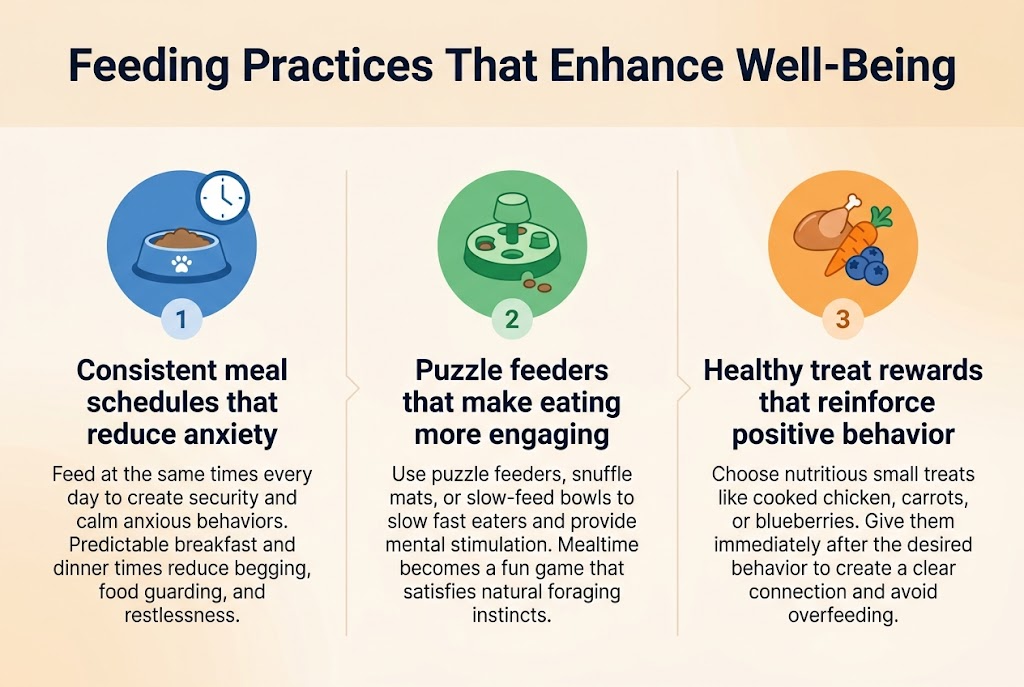
Create a clean, professional full-bleed infographic in a 3:2 aspect ratio with a light warm background, subtle soft gradients, and a modern veterinary-friendly style. Place a bold top heading centered across the upper band in dark navy sans-serif text: "Feeding Practices That Enhance Well-Being". Use a wide horizontal layout with three evenly spaced content blocks across the page, each with a colored circular icon at the top, a numbered label, a bold subheading, and a short body text paragraph.Left block: place a blue circular icon of a dog bowl with a small clock above the number "1" in a small rounded badge. Subheading text: "Consistent meal schedules that reduce anxiety". Body text: "Feed at the same times every day to create security and calm anxious behaviors. Predictable breakfast and dinner times reduce begging, food guarding, and restlessness."Center block: place a green circular icon of a puzzle feeder or treat-dispensing toy above the number "2" in a small rounded badge. Subheading text: "Puzzle feeders that make eating more engaging". Body text: "Use puzzle feeders, snuffle mats, or slow-feed bowls to slow fast eaters and provide mental stimulation. Mealtime becomes a fun game that satisfies natural foraging instincts."Right block: place an orange circular icon of healthy treats like chicken, carrot, and blueberries above the number "3" in a small rounded badge. Subheading text: "Healthy treat rewards that reinforce positive behavior". Body text: "Choose nutritious small treats like cooked chicken, carrots, or blueberries. Give them immediately after the desired behavior to create a clear connection and avoid overfeeding."Use clean dividers or subtle arrows between blocks, balanced spacing, crisp typography, and strong visual hierarchy. Make the section headings darker and larger than the body text. Keep the overall layout wide, airy, and readable with professional flat vector illustration elements.

Consistent meal schedules that reduce anxiety

Your dog thrives on routine, and feeding them at the same times every day creates a sense of security that calms anxious behaviors. When you establish regular breakfast and dinner times, your furry friend knows exactly when their next meal is coming, eliminating the stress of uncertainty. This predictability helps reduce begging, food guarding, and general restlessness throughout the day.

Puzzle feeders that make eating more engaging

Transform mealtime into a fun mental workout by using puzzle feeders that challenge your dog’s problem-solving skills. These interactive toys slow down fast eaters while providing mental stimulation that satisfies their natural foraging instincts. You can choose from treat-dispensing balls, snuffle mats, or slow-feed bowls that turn every meal into an entertaining game that keeps your dog’s mind sharp and engaged.

Also Read  Rustic DIY Wooden Dog Bed You Can Build at Home โ€” 10 Stunning Budget Hacks

Healthy treat rewards that reinforce positive behavior

Choose nutritious treats like small pieces of cooked chicken, carrots, or blueberries when rewarding your dog’s good behavior. Keep treats small โ€“ about the size of your pinky nail โ€“ so you can give multiple rewards without overfeeding. Time your treats perfectly by offering them immediately after your dog displays the desired behavior, creating a clear connection between their actions and your approval.

Creating a Comfortable Living Environment
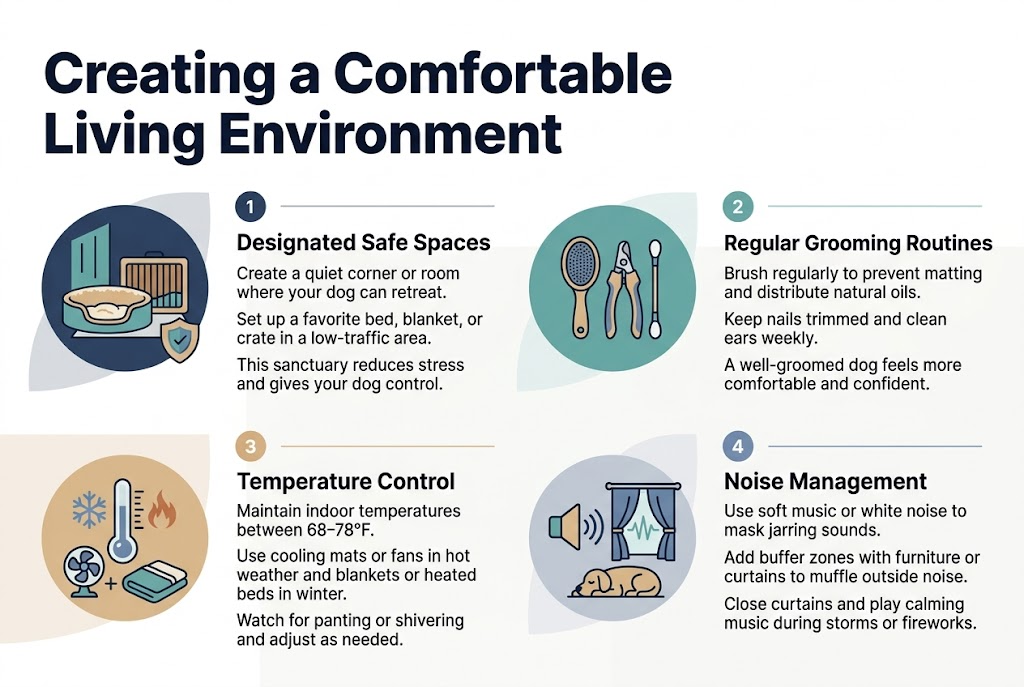
Create a clean professional infographic in a 3:2 aspect ratio, full-bleed layout with no border or frame, using a wide horizontal composition with four clearly separated sections across the page. Top area: bold large heading centered-left in dark navy text, exact title: "Creating a Comfortable Living Environment". Use a modern sans-serif font, strong hierarchy, soft pet-friendly palette of navy, teal, warm beige, light gray, and muted blue accents.Below the title, arrange four horizontal or two-by-two blocks with ample spacing, each block containing a colored circular icon, a numbered label, a bold subheading, and 2โ€“3 short lines of body text. Use simple flat vector icons and clean dividers.Section 1 on the left: icon of a cozy dog bed and crate in a quiet corner, with a small shield symbol. Number label "1". Subheading in bold: "Designated Safe Spaces". Body text: "Create a quiet corner or room where your dog can retreat." "Set up a favorite bed, blanket, or crate in a low-traffic area." "This sanctuary reduces stress and gives your dog control."Section 2 on the upper right: icon of a brush, nail clipper, and ear-cleaning swab. Number label "2". Subheading in bold: "Regular Grooming Routines". Body text: "Brush regularly to prevent matting and distribute natural oils." "Keep nails trimmed and clean ears weekly." "A well-groomed dog feels more comfortable and confident."Section 3 on the lower left: icon of a thermometer with cool and warm symbols, plus a fan and blanket. Number label "3". Subheading in bold: "Temperature Control". Body text: "Maintain indoor temperatures between 68โ€“78ยฐF." "Use cooling mats or fans in hot weather and blankets or heated beds in winter." "Watch for panting or shivering and adjust as needed."Section 4 on the lower right: icon of a speaker with a soundwave, curtains, and a calm dog resting. Number label "4". Subheading in bold: "Noise Management". Body text: "Use soft music or white noise to mask jarring sounds." "Add buffer zones with furniture or curtains to muffle outside noise." "Close curtains and play calming music during storms or fireworks."Use subtle background shapes to separate each section, with icons aligned to the left of each block, text aligned neatly to the right. Keep the design airy, balanced, and easy to scan, with crisp readable typography and modern infographic styling.

Designated Safe Spaces Where Your Dog Can Retreat

Create a quiet corner or room where your dog can escape when feeling overwhelmed. Set up their favorite bed, blanket, or crate in a low-traffic area away from household chaos. This sanctuary gives your dog control over their environment and reduces stress during busy times.

Regular Grooming Routines That Maintain Health and Comfort

Brush your dog regularly to prevent matting and distribute natural oils through their coat. Keep their nails trimmed to avoid discomfort while walking, and clean their ears weekly to prevent infections. A clean, well-groomed dog feels more comfortable and confident in their daily activities.

Temperature Control That Keeps Your Pet Relaxed

Maintain comfortable indoor temperatures between 68-78ยฐF to keep your dog content year-round. Provide cooling mats or fans during hot weather, and cozy blankets or heated beds in winter. Watch for signs of overheating like excessive panting or shivering that indicates your dog needs temperature adjustments.

Noise Management Techniques for Anxious Dogs

Reduce sudden loud sounds by using soft music or white noise machines to mask jarring noises. Create buffer zones with furniture or curtains to muffle external sounds like traffic or construction. During thunderstorms or fireworks, close curtains and play calming music to help your anxious dog feel more secure.

Also Read  5 Easy DIY Dog Enrichment Games You Can Make at Home

Building Strong Communication and Trust
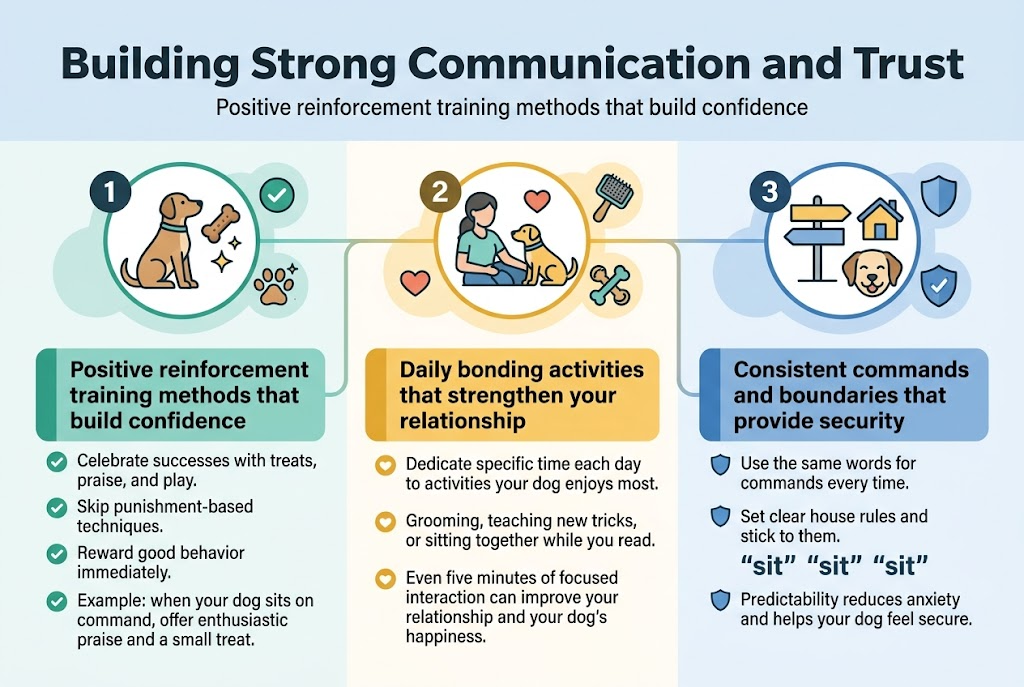
Create a clean professional infographic in a 3:2 landscape aspect ratio, full-bleed background with no poster frame, using a modern sans-serif font and a friendly pet-care color palette of soft blue, teal, warm yellow, and white with dark charcoal text.Top header across the full width: bold title text, large and centered near the top reading "Building Strong Communication and Trust". Add a small subtitle directly beneath in smaller text: "Positive reinforcement training methods that build confidence".Below the header, arrange three wide horizontal content blocks across the page in a balanced multi-column layout with clear spacing, not a narrow vertical stack.Left section:A numbered block labeled "1" with a circular icon of a dog sitting, a treat, and a sparkling paw. Heading text: "Positive reinforcement training methods that build confidence". Body text in short readable lines: "Celebrate successes with treats, praise, and play." "Skip punishment-based techniques." "Reward good behavior immediately." "Example: when your dog sits on command, offer enthusiastic praise and a small treat." Use a green accent bar and checkmark symbols.Center section:A numbered block labeled "2" with a circular icon of a person and dog spending time together, plus grooming brush and toy symbols. Heading text: "Daily bonding activities that strengthen your relationship". Body text: "Dedicate specific time each day to activities your dog enjoys most." "Grooming, teaching new tricks, or sitting together while you read." "Even five minutes of focused interaction can improve your relationship and your dog's happiness." Use a warm yellow accent bar and heart symbols.Right section:A numbered block labeled "3" with a circular icon of a signpost, a house, and a dog with a calm expression. Heading text: "Consistent commands and boundaries that provide security". Body text: "Use the same words for commands every time." "Set clear house rules and stick to them." "Predictability reduces anxiety and helps your dog feel secure." Include a visual example line: "sit" "sit" "sit" shown in consistent quotation marks. Use a blue accent bar and shield symbols.Add subtle connecting lines or soft background shapes linking the three sections to suggest harmony and trust. Keep the layout airy, polished, and easy to read, with bold headings, smaller body text, and strong visual hierarchy.

Positive reinforcement training methods that build confidence

Your dog thrives when you celebrate their successes with treats, praise, and play. Skip punishment-based techniques and focus on rewarding good behavior immediately. This approach builds your dog’s confidence while strengthening your bond. When your dog sits on command, offer enthusiastic praise and a small treat. This creates positive associations with training sessions.

Daily bonding activities that strengthen your relationship

Dedicate specific time each day to activities your dog enjoys most. Whether it’s a grooming session, teaching new tricks, or simply sitting together while you read, these moments matter. Your dog craves your undivided attention. Even five minutes of focused interaction can significantly improve your relationship and your dog’s overall happiness throughout the day.

Consistent commands and boundaries that provide security

Your dog feels most secure when they understand what you expect from them. Use the same words for commands every time – “sit” should always be “sit,” not “sit down” one day and “take a seat” the next. Establish clear house rules and stick to them. This predictability reduces your dog’s anxiety and helps them navigate their world with confidence and peace of mind.

You Might Also Like!

  • Healthy Sweet Potato Pumpkin Dog Treats (Easy Homemade Recipe)
  • 10 Homemade Dog Food Recipes Every Dog Parent Should Know
  • Dog Kennel and Outdoor Dog House Layout Ideas: Stunning DIY Transformations
Rafay Khan

Post navigation

Previous Previous
Essential Dog Training Commands Every Owner Should Teach
NextContinue
5 Easy DIY Dog Enrichment Games You Can Make at Home

You Might Also Like!

  • Healthy Sweet Potato Pumpkin Dog Treats (Easy Homemade Recipe)
  • 10 Homemade Dog Food Recipes Every Dog Parent Should Know
  • Dog Kennel and Outdoor Dog House Layout Ideas: Stunning DIY Transformations

Search More!

About DearWorld

We share practical DIY tips, budget-friendly ideas, and creative inspiration for mobile homes, backyards, patios, porches, gardens, and skirting. Helping you make every space feel like home โ€” one project at a time.

  • About Us
  • Privacy Policy
  • Terms & Conditions
  • Blog

© 2026 Dear World - WordPress Theme by Kadence WP

Facebook Instagram Pinterest
Scroll to top
  • Home Improvement
    • Deck
    • Barn Doors
    • Patio
    • Bathroom
    • Garden Beds
    • Winter Home Prep
  • Mobile Home
    • Crawl Space
    • Skirting
  • Backyard
    • Landscaping
    • Curb Appeal
    • Water Features
  • Porch
  • Garden
  • Contact
Search