
Essential Dog Training Commands Every Owner Should Teach

Teaching your dog basic commands isn’t just about having a well-behaved pet – it’s about creating a safe, happy relationship that benefits both of you. Every dog owner, from first-time puppy parents to experienced handlers, needs a solid foundation of essential dog training commands to navigate daily life with confidence.
When you invest time in proper training, you’ll see dramatic improvements in your dog’s behavior, your stress levels, and the overall bond you share. A dog who responds to clear commands is safer during walks, more welcome in public spaces, and simply more enjoyable to live with.
This guide covers the foundation commands that form the backbone of good behavior, plus the movement and position commands that give you practical control in everyday situations. You’ll also discover how communication commands can deepen your connection while keeping your dog engaged and responsive to your guidance.
Foundation Commands That Build Obedience
You Might Also Love These Ideas


Sit – The Gateway to All Other Training
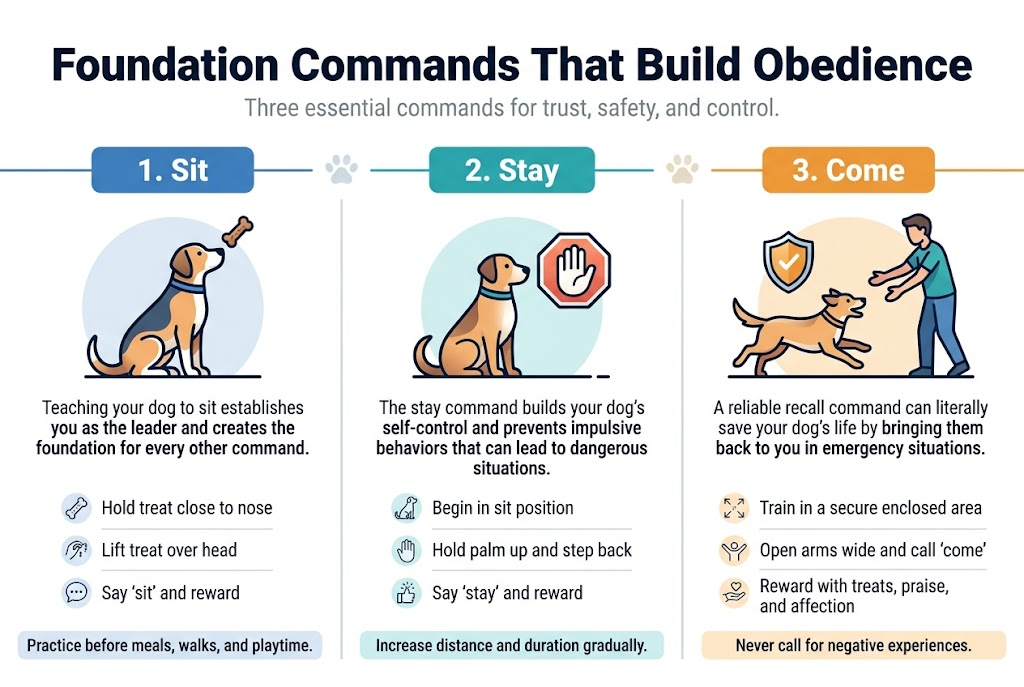
Teaching your dog to sit establishes you as the leader and creates the foundation for every other command. Start by holding a treat close to your dog’s nose, then slowly lift it over their head until they naturally sit down. Say “sit” as their bottom touches the ground, then immediately reward them with the treat and praise. Practice this command before meals, walks, and playtime to reinforce your dog’s understanding that sitting earns them good things.
Stay – Teaching Impulse Control and Patience
The stay command builds your dog’s self-control and prevents impulsive behaviors that can lead to dangerous situations. Begin with your dog in the sit position, then hold your palm up like a stop sign while taking one small step backward. Say “stay” clearly and wait just a few seconds before returning to reward them. Gradually increase the distance and duration as your dog masters each level. This command becomes invaluable when you need your dog to wait at doors, stay calm during greetings, or remain in place while you handle other tasks.
Come – Ensuring Your Dog’s Safety in Any Situation
A reliable recall command can literally save your dog’s life by bringing them back to you in emergency situations. Start training “come” in a secure, enclosed area where your dog can’t run away. Get down to their level, open your arms wide, and call “come” in an excited, happy voice. When they reach you, reward them with treats, praise, and affection. Never call your dog to come for something they perceive as negative, like ending playtime or giving medicine, as this will undermine their willingness to respond to the command.
Movement and Position Commands for Daily Control
Down – Promoting Calm Behavior and Relaxation
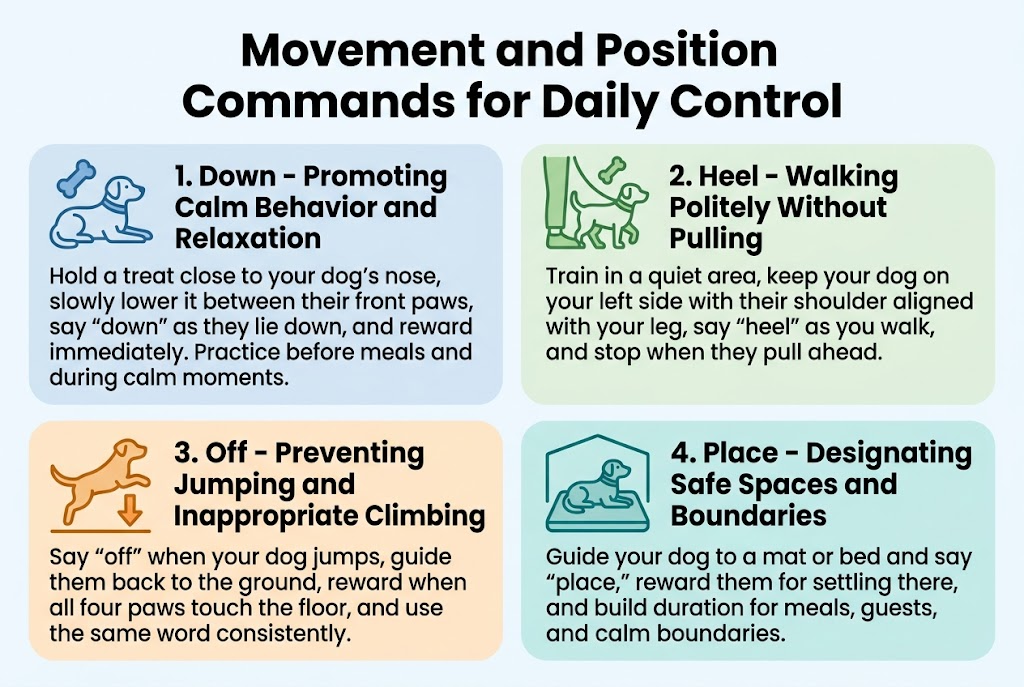
Teaching your dog to lie down on command creates a foundation for relaxation and impulse control. Start by holding a treat close to your dog’s nose, then slowly lower it toward the ground between their front paws. As they follow the treat naturally into a lying position, say “down” and reward immediately. Practice this command before meals and during calm moments to reinforce its association with settling behavior. The down command becomes invaluable when you need your dog to stay calm during visits, meal preparation, or when excitement levels run high.
Heel – Walking Politely Without Pulling
Your daily walks become enjoyable when your dog masters the heel command. Begin training in a quiet area with minimal distractions, keeping your dog on your left side with their shoulder aligned with your leg. Use treats to maintain their attention and position, saying “heel” as you start walking. Stop immediately when they pull ahead, only continuing when they return to the correct position. Consistent practice transforms chaotic walks into pleasant bonding experiences where you control the pace and direction while your dog learns to follow your lead respectfully.
Off – Preventing Jumping and Inappropriate Climbing
The “off” command prevents your dog from jumping on people, furniture, or other inappropriate surfaces. When your dog jumps up, firmly say “off” while gently guiding them back to the ground with your hands or by stepping slightly into their space. Immediately reward them when all four paws touch the floor. This command differs from “down” because it specifically addresses unwanted climbing behavior. Teach family members and visitors to use the same word consistently, ensuring your dog receives clear, uniform messaging about acceptable behavior boundaries.
Place – Designating Safe Spaces and Boundaries
Training your dog to go to a designated “place” creates structure and provides them with a secure retreat space. Choose a specific mat, bed, or area and guide your dog there using treats while saying “place.” Once they settle on the designated spot, reward them and gradually increase the duration they remain there. This command proves essential during meal times, when guests arrive, or whenever you need your dog to stay in a specific location. Your dog learns to view their place as a positive space rather than punishment, making compliance eager and reliable.
Communication Commands That Strengthen Your Bond
Leave It – Protecting Your Dog from Dangerous Items
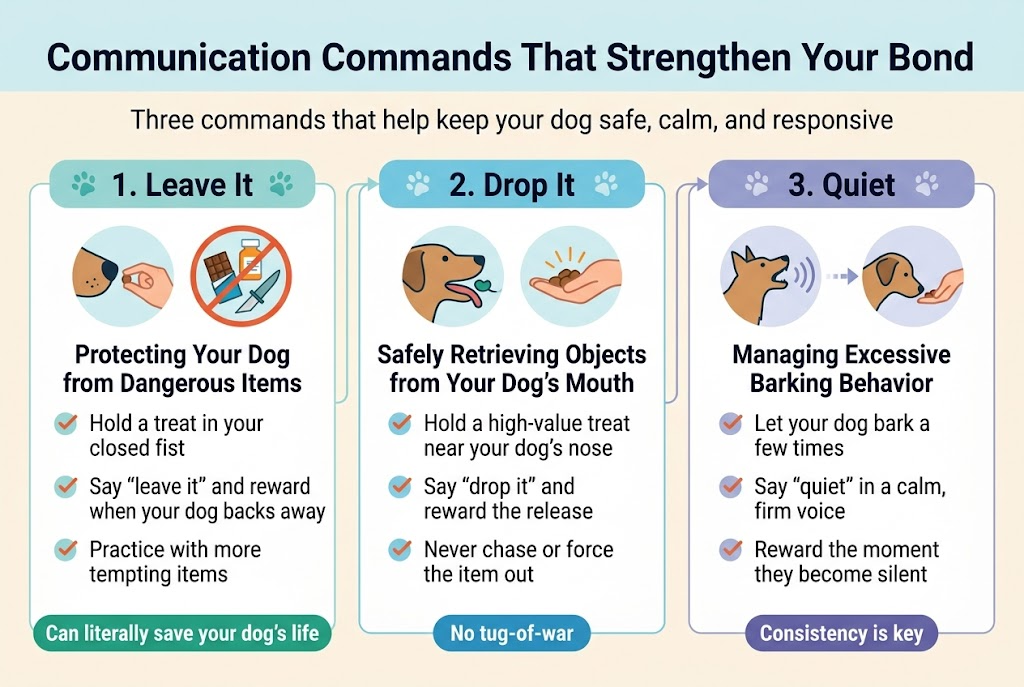
Teaching “leave it” keeps your dog safe from harmful objects like chocolate, medications, or sharp items. Start by holding a treat in your closed fist and saying “leave it.” When your dog stops trying to get the treat and backs away, immediately reward with a different treat and praise. Practice with increasingly tempting items on the ground, always rewarding your dog for ignoring the forbidden object. This command can literally save your dog’s life when they encounter something dangerous during walks or at home.
Drop It – Safely Retrieving Objects from Your Dog’s Mouth
“Drop it” helps you safely remove items from your dog’s mouth without turning it into a tug-of-war game. Hold a high-value treat near your dog’s nose while they’re holding something, then say “drop it.” Most dogs will release the item to investigate the treat. Immediately reward and praise when they comply. Never chase your dog or try to force items from their mouth, as this creates a negative association. Practice regularly with toys and safe objects so your dog responds reliably when they grab something they shouldn’t have.
Quiet – Managing Excessive Barking Behavior
The “quiet” command helps control nuisance barking without suppressing your dog’s natural alert instincts. When your dog barks, let them bark a few times, then say “quiet” in a calm, firm voice. Hold a treat near their nose – most dogs stop barking to sniff. The moment they’re silent, reward immediately with the treat and praise. Practice during low-stimulation times first, then gradually work up to more exciting situations. Consistency is key – everyone in your household should use the same command and technique for best results.
Advanced Commands for Enhanced Safety and Control
Wait – Teaching Patience at Doors and Thresholds
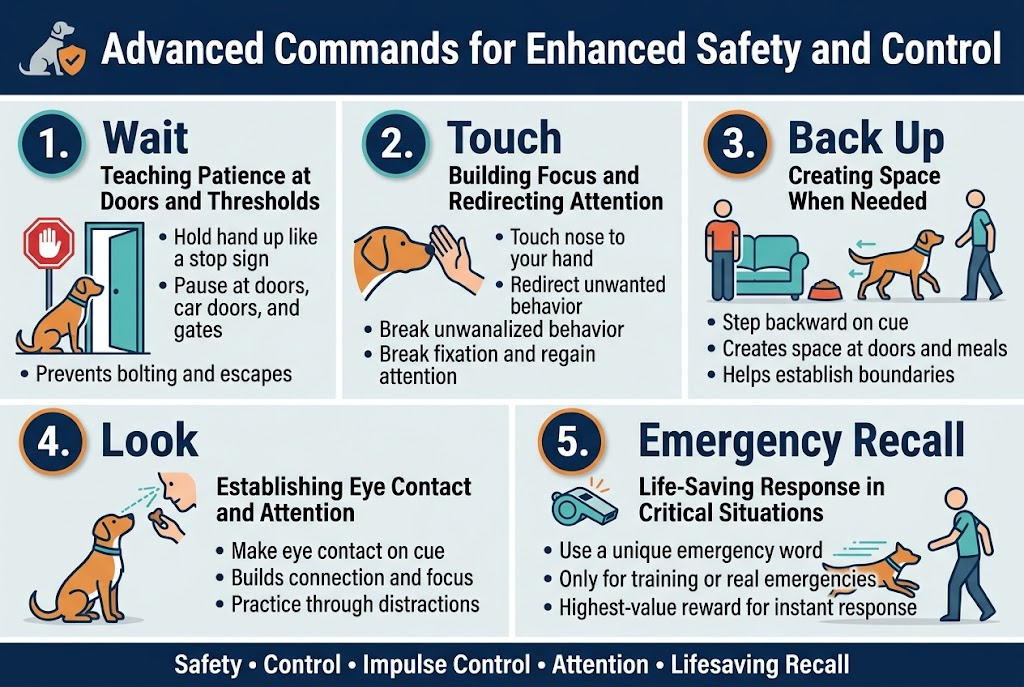
Master the “wait” command to prevent your dog from bolting through doorways or rushing out of cars. Start by holding your hand up like a stop sign while saying “wait” at an open door. Your dog should pause and look to you for permission before moving forward. This command prevents dangerous escapes and teaches impulse control. Practice at thresholds, car doors, and gates until your dog automatically pauses before crossing any boundary you’ve established.
Touch – Building Focus and Redirecting Attention
Train “touch” by holding your palm out and saying the command when your dog’s nose makes contact with your hand. This simple exercise becomes a powerful tool for redirecting unwanted behavior and regaining attention during distractions. Use “touch” to guide your dog away from dangerous situations, interrupt fixation on other dogs, or simply reconnect when they’re ignoring you. The physical contact strengthens your bond while giving you a reliable way to break your dog’s focus on anything problematic.
Back Up – Creating Space When Needed
Teaching “back up” helps you manage your dog’s space without physical corrections. Start by walking toward your dog while saying “back up” and reward when they take steps backward. This command prevents jumping on guests, creates space at feeding time, and helps establish boundaries around furniture or doorways. Your dog learns to respect your personal space and move away on cue, making daily interactions smoother and more controlled.
Look – Establishing Eye Contact and Attention
The “look” command builds the foundation for all other training by ensuring your dog focuses on you. Hold a treat near your eyes and say “look” until your dog makes eye contact, then reward immediately. Eye contact shows respect, builds connection, and prepares your dog to receive other commands. Practice “look” in increasingly distracting environments until your dog can give you attention even with squirrels, other dogs, or exciting activities happening nearby.
Emergency Recall – Life-Saving Response in Critical Situations
Your emergency recall should be a separate command from everyday “come” – something your dog has never heard you say casually. Choose a unique word like “NOW” or whistle pattern, and only use it during training or real emergencies. Make this recall irresistible by pairing it with the highest-value rewards your dog has ever received. Practice randomly but sparingly, ensuring your dog drops everything and races to you immediately. This command could save your dog’s life in dangerous situations.


